Understanding Physical vs Chemical Change Lab
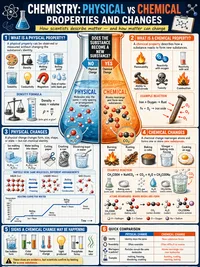
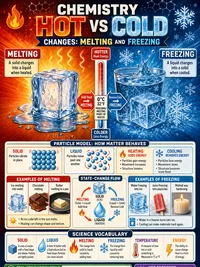
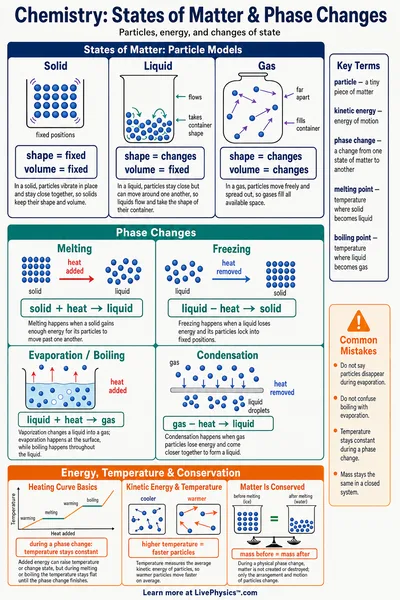
A change is best identified by asking what particles are present before and after the event. In a physical change, the same substance remains, even when its shape, size, state, or arrangement looks very different. Ice melting gives liquid water because water particles gain motion and spread farther apart.
The particles have not become a new kind of substance. Crushing a can, dissolving sugar, and cutting paper work in similar ways. Their appearances change, yet the material itself can often be recovered or described by the same chemical formula.
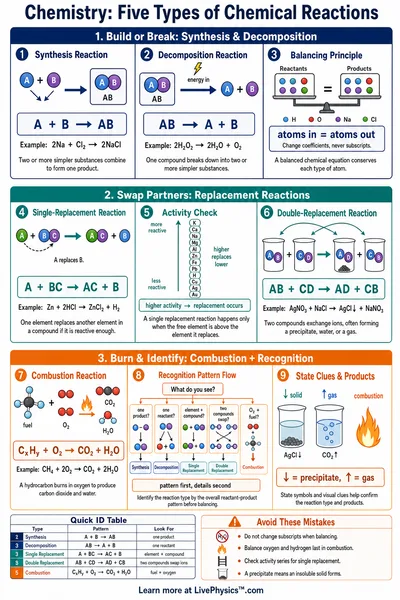
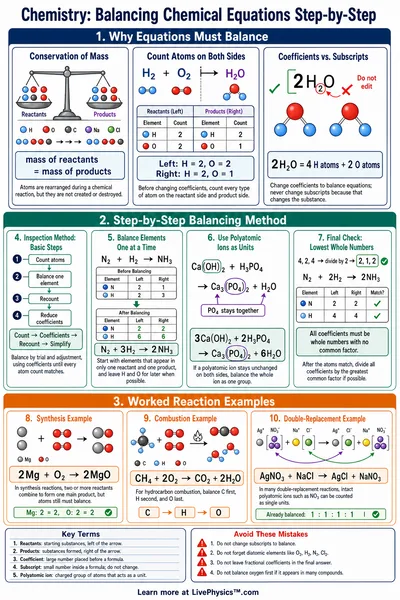
A chemical change rearranges atoms into substances with different properties. The original particles break apart or connect in new patterns, which takes energy and may release energy. Rust forms when iron reacts with oxygen and water over time.
The reddish material is not iron with a different shape. It is a new iron compound with different color, strength, and behavior.
Burning wood creates ash, gases, light, and heat because the wood reacts with oxygen. These products cannot be changed back into the original wood by a simple physical step.
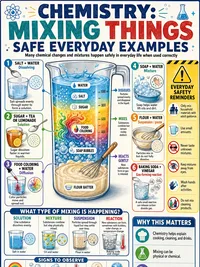
Visible clues can help, but no single clue proves that a chemical change happened. Bubbles may show a gas forming in a reaction, yet boiling water makes bubbles without making a new substance. A color change can be important, but food coloring mixing into water is only a physical mixing process.
Heat or light may be produced during a reaction, though heating something does not automatically mean it reacts. Students should use several observations together and think about whether a new material has evidence behind it.
Reversibility is useful, but it is not a perfect test. Water can freeze after melting, so this is an easy physical change to reverse. However, a torn sheet of paper is still a physical change even if putting it back together is difficult.
Some chemical reactions can be reversed with other reactions or special conditions. The key point is not whether reversal is easy in a classroom. The key point is whether the original substances still exist unchanged or whether atoms have been rearranged into new substances.
Many everyday cases need careful thinking because more than one process occurs at once. When salt dissolves in water, salt particles separate and spread through the water, but they remain salt particles. Evaporating the water can leave the salt behind.
When an egg cooks, proteins change their structure through chemical reactions, creating a firm texture that does not return to raw egg. In a lab record, write specific evidence rather than vague statements such as it changed.
Note observations such as a lasting new color, a solid forming from two liquids, a temperature change without outside heating, or a gas produced. Clear evidence makes the classification easier to defend.