Practice identifying nodes and edges, drawing simple graphs, and using graphs to model real-world connections.
Read each problem carefully. Use the words node and edge in your explanations when helpful. Show your work in the space provided.
Modeling connections with points and lines
Math - Grade 6-8
- 1
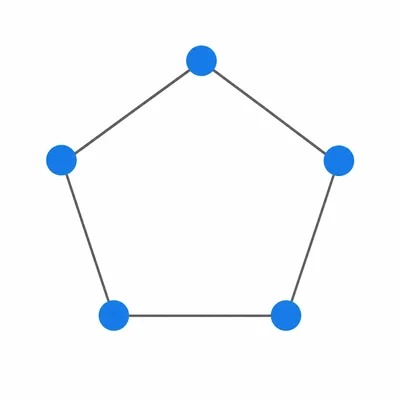
A graph has 5 nodes labeled A, B, C, D, and E. It has edges AB, AC, BD, DE, and CE. How many nodes and how many edges are in the graph?
- 2
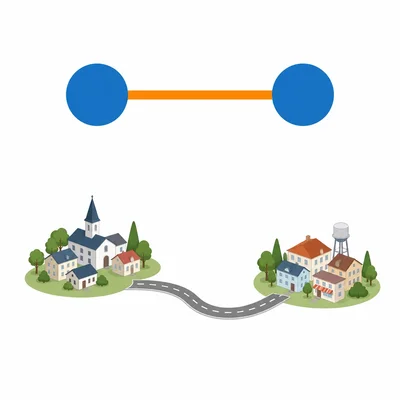
In a graph, what is the difference between a node and an edge? Give a real-world example of each.
- 3

A friendship graph shows four students: Maya, Luis, Priya, and Jordan. Maya is friends with Luis and Priya. Luis is friends with Jordan. Priya is friends with Jordan. List all the edges in the graph.
- 4
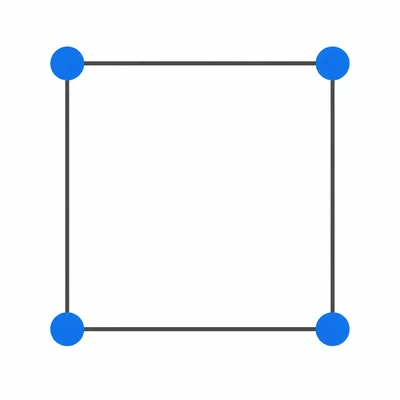
Look at a graph with nodes P, Q, R, and S. The edges are PQ, QR, RS, and SP. Draw the graph and describe its shape.
- 5

A graph has nodes A, B, C, and D. Every pair of nodes is connected by exactly one edge. How many edges does the graph have?
- 6
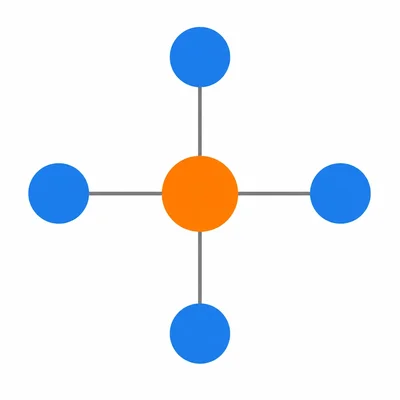
The degree of a node is the number of edges that touch it. In a graph, node X is connected to A, B, C, and D. What is the degree of node X?
- 7
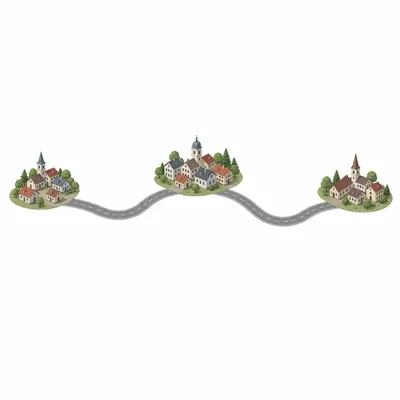
A road map can be modeled as a graph. Suppose towns are nodes and roads are edges. If there is a road from Town A to Town B and a road from Town B to Town C, but no road from Town A to Town C, what edges should be included?
- 8

A graph has 7 nodes and 0 edges. What does this tell you about the connections in the graph?
- 9
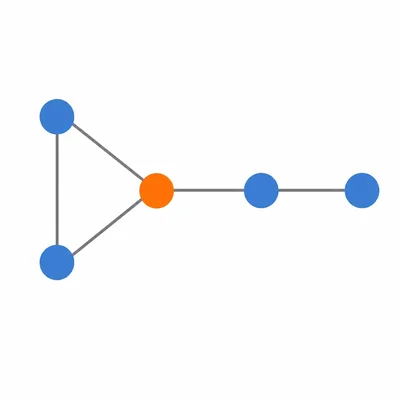
In the graph with edges AB, AC, BC, CD, and DE, find the degree of node C.
- 10

Create a simple graph to model a group project with 5 students. Each edge should mean that two students worked together. Your graph must have at least 4 edges. Then write the list of edges you used.