Practice analyzing fingerprints, DNA evidence, trace evidence, and crime scene observations using careful scientific reasoning.
Read each problem carefully. Use evidence from the question to support your answer. Show your reasoning in the space provided.
Using clues to make evidence-based conclusions
Science - Grade 6-8
- 1
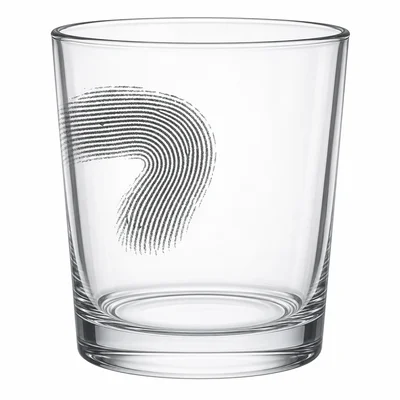
A detective finds a fingerprint on a glass. The print has many ridges that enter from one side, curve around, and leave from the same side. Which basic fingerprint pattern is this most likely: loop, whorl, or arch? Explain your choice.
- 2
A fingerprint found at a scene matches a suspect's fingerprint at 12 ridge characteristics. Does this prove the suspect committed the crime? Explain why or why not.
- 3
A DNA sample from a crime scene matches a suspect's DNA profile at several tested locations. What does this tell investigators, and what should they be careful not to assume?
- 4

Look at the DNA banding patterns. Crime scene DNA has bands at positions 1, 3, 4, and 6. Suspect A has bands at 1, 2, 4, and 6. Suspect B has bands at 1, 3, 4, and 6. Suspect C has bands at 2, 3, 5, and 6. Which suspect's DNA pattern matches the crime scene sample?
- 5
A student says, "Hair found at a scene always identifies exactly one person." Explain why this statement is not scientifically accurate.
- 6
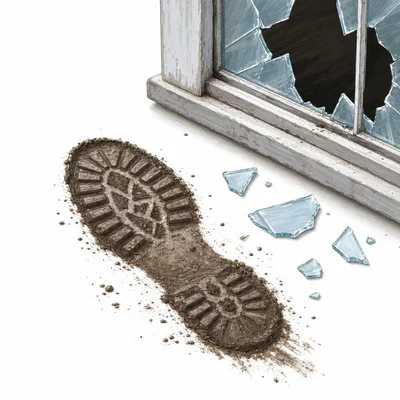
At a scene, investigators collect a muddy shoeprint near a broken window. Name two observations they could make from the shoeprint and explain how each observation might help the investigation.
- 7
Why should investigators photograph evidence before moving it?
- 8
A white powder is found on a table. A student wants to smell it closely to identify it. Explain why this is unsafe and describe a safer scientific approach.
- 9
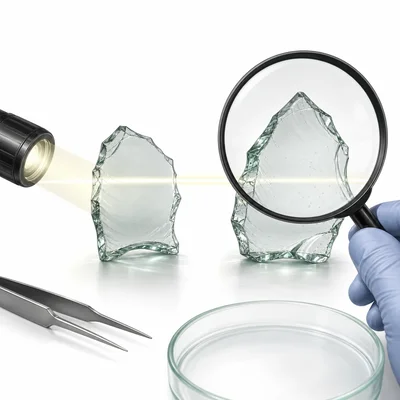
Investigators collect a small piece of broken glass from a suspect's jacket. They also collect glass from a broken window. What properties could scientists compare to see whether the glass pieces may have come from the same source?
- 10
What is chain of custody, and why is it important in forensic science?
- 11
A fingerprint is found on a door handle at a busy school office. Why might this fingerprint be less useful than a fingerprint found on a locked cabinet inside the office?
- 12
A crime scene has three clues: a partial fingerprint on a drawer, a shoeprint in mud, and a DNA sample on a cup. Explain why using all three clues together is stronger than using only one clue.