Practice understanding static electricity using balloons, hair, paper bits, and charges.
Read each problem carefully. Write your answer in complete sentences. Show what you know about pushes, pulls, and electric charges.
Explore how tiny charges can push and pull
Science - Grade 2-3
- 1

You rub a balloon on your hair. Then some of your hair stands up and sticks to the balloon. What force is making the hair move toward the balloon?
- 2
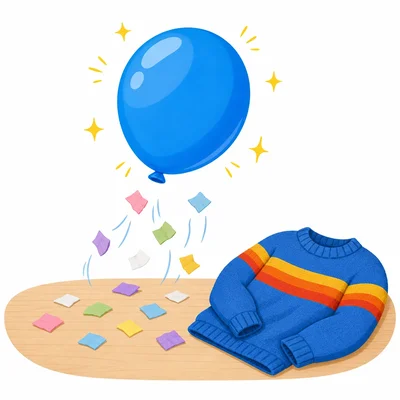
A balloon is rubbed on a sweater and then placed near tiny paper pieces. The paper pieces jump up to the balloon. What caused the paper pieces to move?
- 3
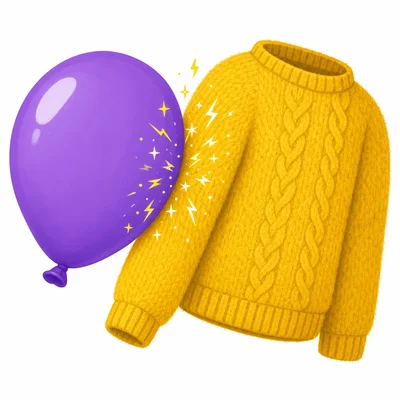
True or false: Static electricity can build up when two objects rub against each other. Explain your answer.
- 4
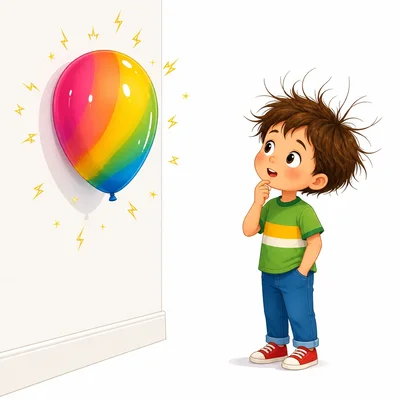
Mia rubs a balloon on her hair. The balloon can now stick to a wall for a short time. Why can the balloon stick to the wall?
- 5

Circle the object that would be easiest for a charged balloon to pick up: a tiny paper scrap, a heavy book, or a metal lunchbox. Explain why.
- 6
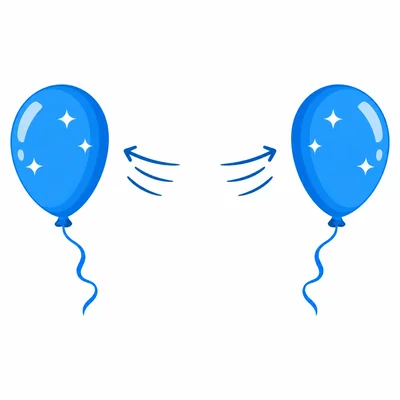
Two balloons have the same kind of electric charge. When they are held near each other, they move apart. What does this show about same charges?
- 7
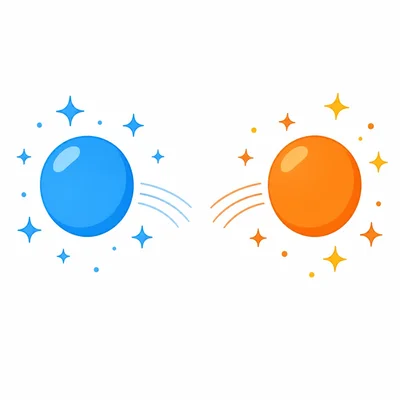
Two objects have different kinds of electric charges. Will they push away or pull together? Explain your answer.
- 8
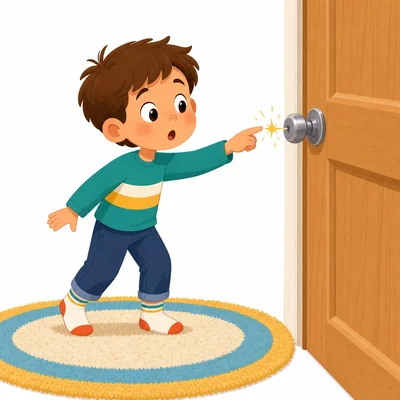
After rubbing socks on a carpet, you touch a doorknob and feel a tiny zap. What happened?
- 9
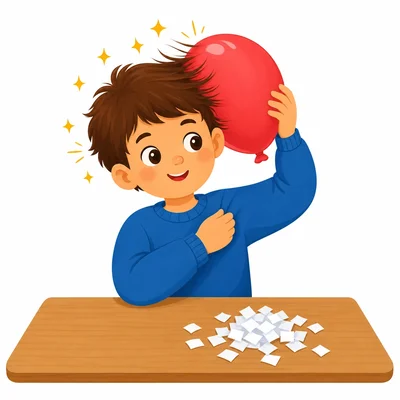
Lena wants to test static electricity with a balloon. Write the first two steps she should do.
- 10
Why is static electricity called static?