Practice explaining the steps a bill follows in Congress, including committees, debate, voting, presidential action, and veto overrides.
Read each problem carefully. Use complete sentences when explaining your answers. Show your thinking in the space provided.
Tracing the path from an idea to a signed law
Social Studies - Grade 6-8
- 1

Put these steps in the correct order: committee review, bill is introduced, president signs or vetoes, both chambers vote, debate and possible changes.
- 2
Explain the difference between an idea for a law and a bill.
- 3
Who can introduce a bill in Congress, and why is that important?
- 4

A student council wants longer lunch periods and asks a U.S. representative for help. Describe one way this idea could become part of the lawmaking process.
- 5
What is the main job of a congressional committee when it receives a bill?
- 6
Why might a bill be changed before members of Congress vote on it?
- 7
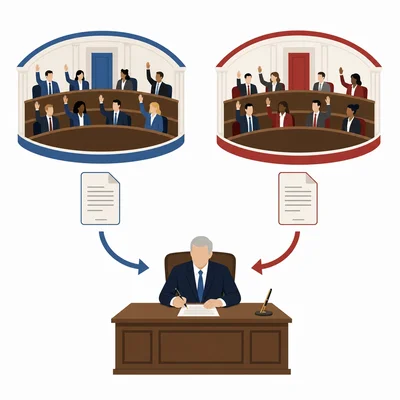
Complete the sentence and explain it: For a bill to go to the president, it must pass in both the House of Representatives and the Senate.
- 8
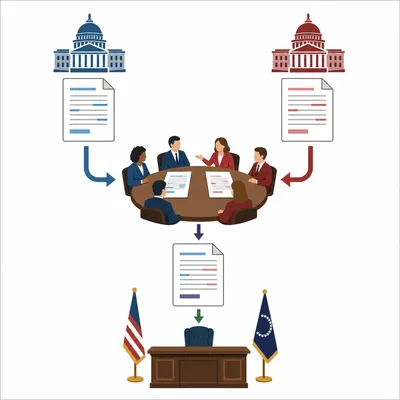
The House passes a bill, but the Senate passes a different version of the same bill. What must happen before the bill can go to the president?
- 9
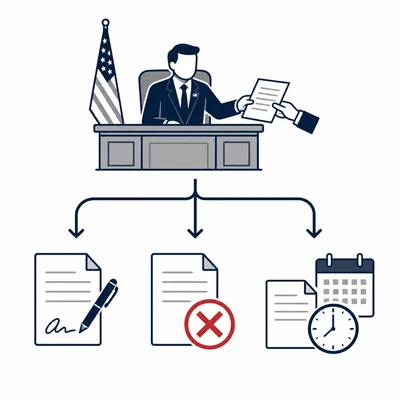
List three choices the president can make after Congress sends a bill to the White House.
- 10
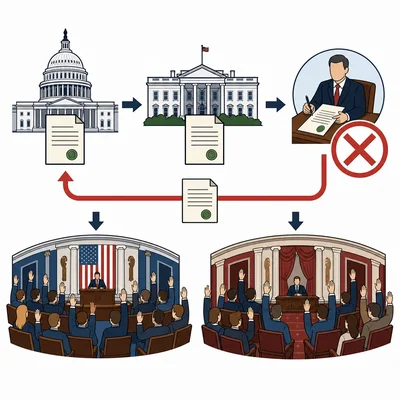
What is a veto, and how can Congress respond to it?
- 11

A bill receives 290 votes in favor in the House, which has 435 members. Explain whether this is enough to meet a two-thirds veto override requirement.
- 12
Write a short paragraph explaining why the lawmaking process has many steps instead of just one quick vote.