Sign in to save

Bookmark this page so you can find it later.

Sign in to save

Bookmark this page so you can find it later.

Health elementary May 24, 2026

Why Do You Need to Brush Your Teeth?

How tiny microbes can harm teeth
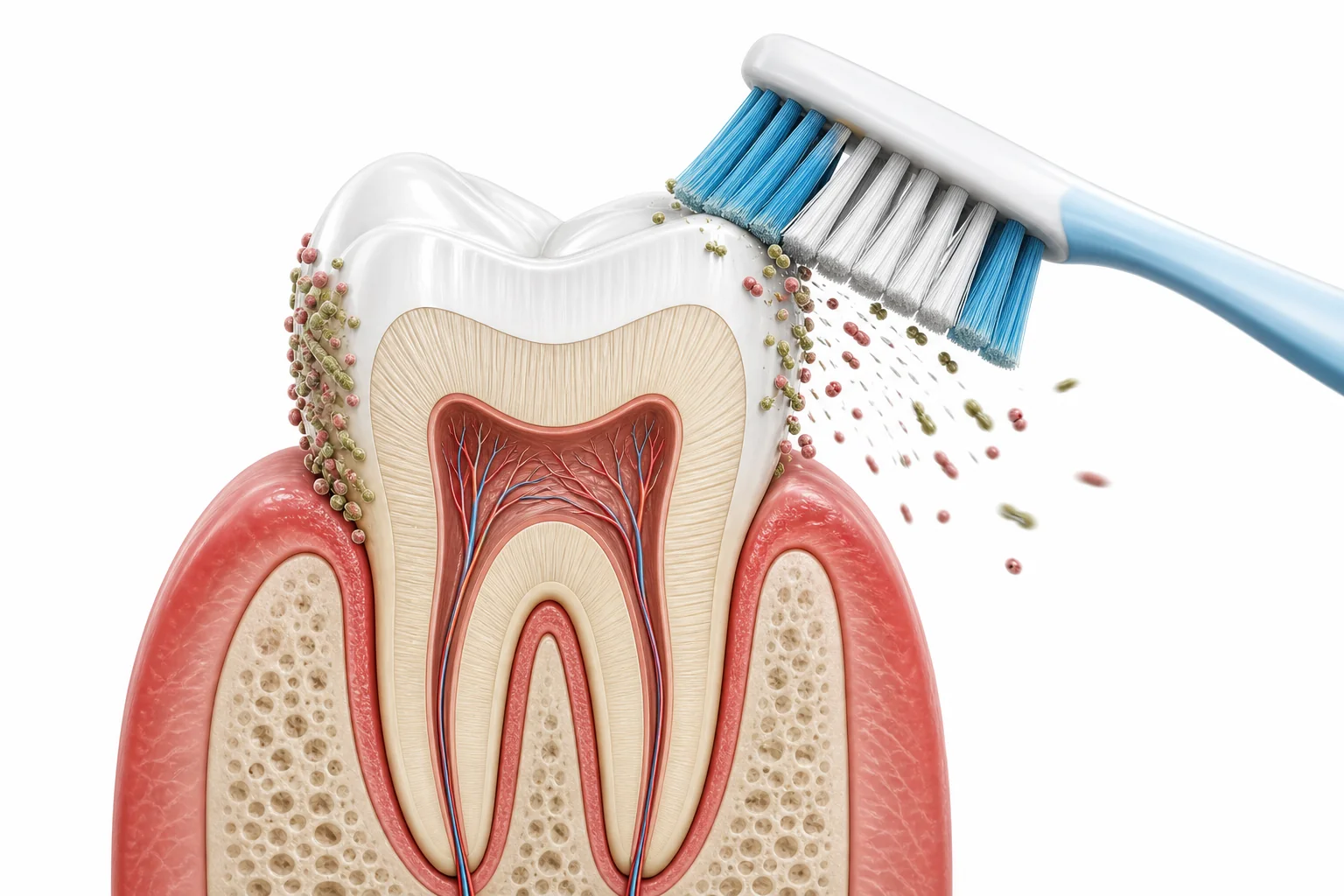
A child brushing teeth while a cutaway tooth shows plaque being removed from the tooth surface.

You need to brush your teeth because sticky plaque builds up on them every day. Some plaque germs use sugar from food and drinks to make acid. Brushing with fluoride toothpaste helps remove plaque and protects the hard outside of each tooth.

Big Idea. NGSS K-2-ETS1-1 connects tooth brushing to defining a human health problem and comparing simple solutions.

Teeth look smooth, but they are busy places. After you eat, tiny living things in your mouth stick to your teeth. They mix with spit and bits of food to make a soft film called plaque. Plaque likes sugar. When plaque germs get sugar, they make acid. That acid can weaken the hard outside layer of a tooth, called enamel. If the weak spot grows, it can become a cavity. Brushing helps because it scrubs plaque away before it can sit on teeth for too long. Fluoride toothpaste helps too. Fluoride can help enamel get stronger again after early acid damage. A simple habit can protect a part of your body that you use every day. For a quick review, see the Dental Health and Oral Hygiene cheat sheet.

Plaque is a sticky film
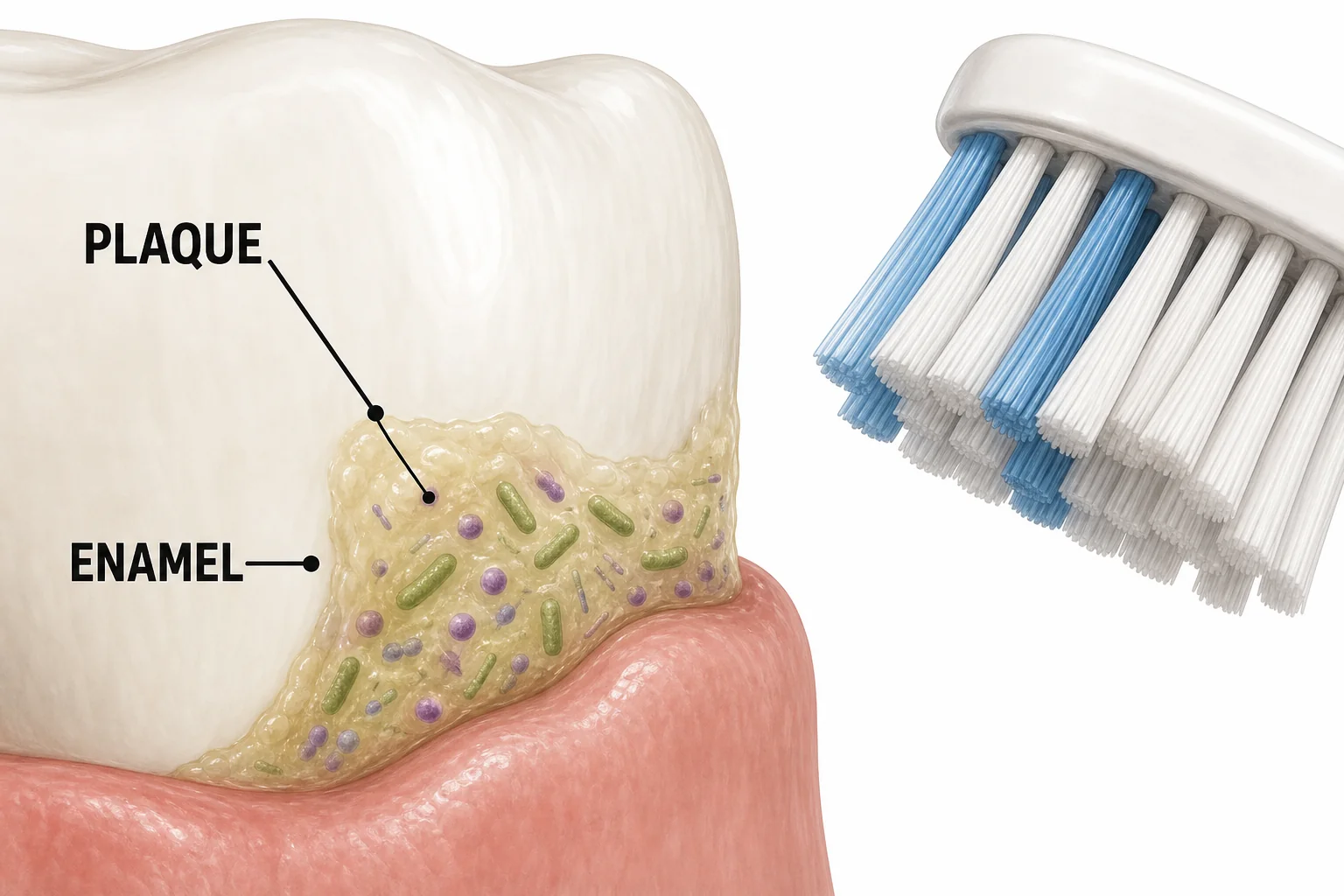
A close view of a tooth surface with a sticky plaque film holding bacteria near the enamel and gumline.
Plaque sticks to teeth and holds bacteria in place.
Your mouth has many kinds of tiny living things called bacteria. Many are harmless, and some help keep your mouth balanced. Some bacteria stick to teeth and form plaque. Plaque is not the same as leftover food. It is a soft, sticky film that can hold bacteria close to the tooth surface. You may feel it if your teeth feel fuzzy before brushing. Plaque can build up along the gumline, between teeth, and in the grooves of back teeth. These spots are easy to miss. Brushing helps by rubbing the film loose. A toothbrush with soft bristles can reach many surfaces if you move it slowly and gently. Floss or other between-teeth cleaners help where bristles do not fit. Plaque returns each day, so brushing is not a one-time fix. It is daily care for a surface that is always being used.

Plaque is sticky, so teeth need regular brushing.

Sugar can become acid
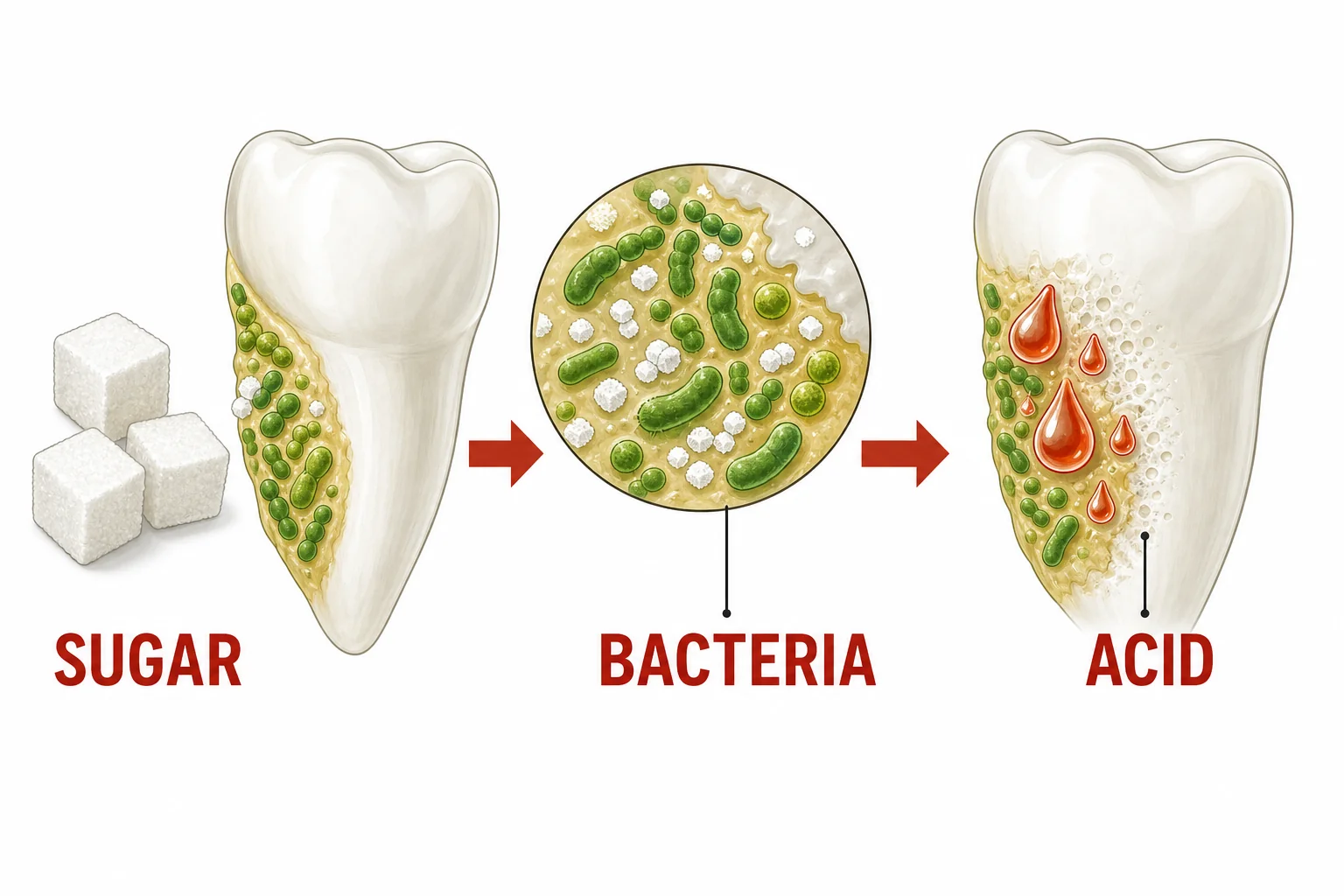
A simple sequence showing sugar entering plaque bacteria and acid touching the enamel surface.
Plaque bacteria can turn sugar into acid.
Sugar does not drill holes in teeth by itself. The trouble starts when plaque bacteria feed on sugar from food or drinks. After a sweet snack or sip, bacteria can change some of that sugar into acid. The acid stays close to the tooth because plaque holds it there. Acid attacks enamel by pulling out minerals. This is called demineralization. At first, the tooth may only have a weak spot. The weak spot can sometimes recover if acid is removed and minerals return. But frequent sugar gives bacteria many chances to make acid. Sipping juice or soda for a long time can keep acid levels high. Sticky sweets can also stay on teeth. Brushing, drinking water, and choosing snacks that are not sugary can all reduce how long acid touches enamel.

Less time with sugar can mean less time with acid.

Enamel can lose minerals
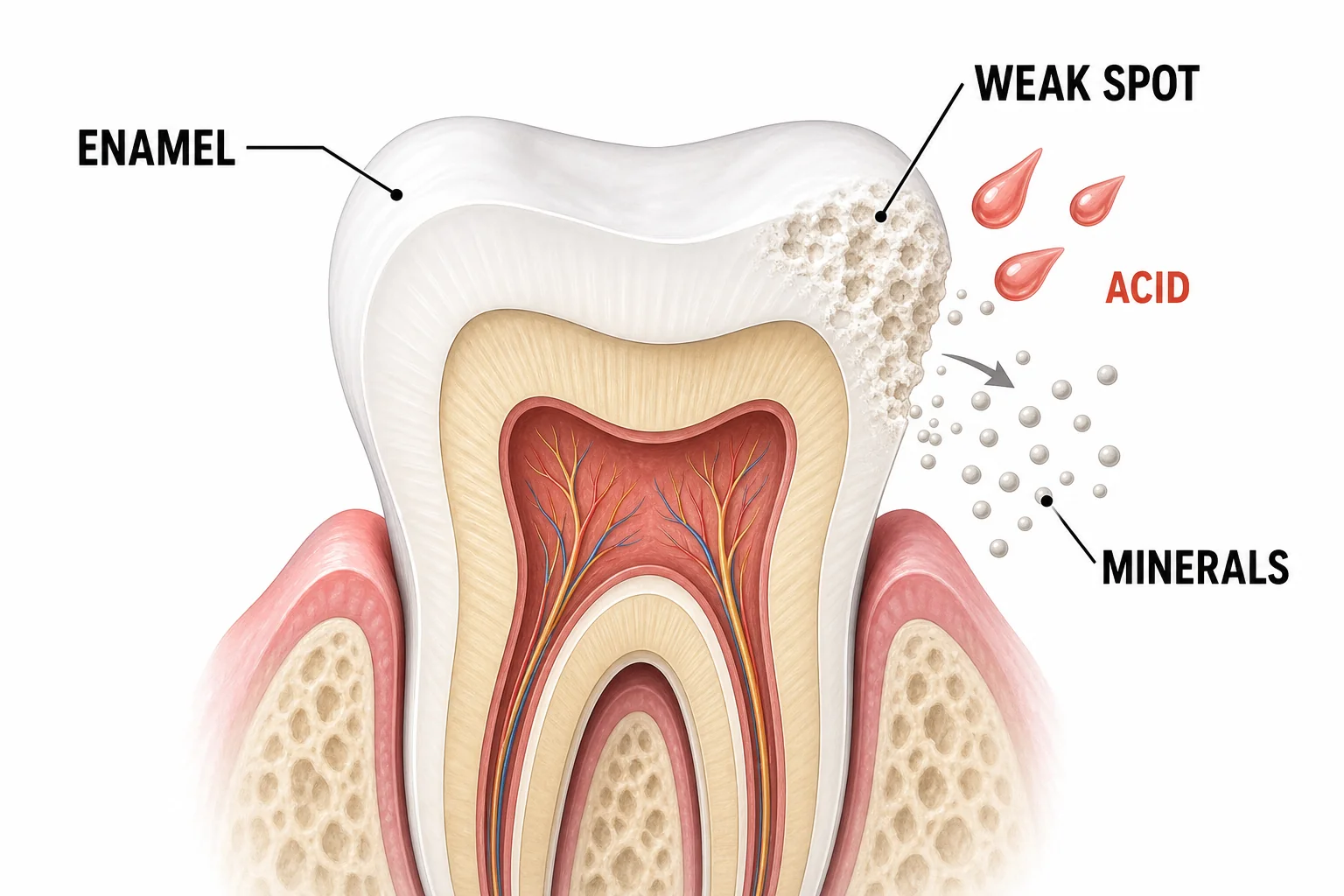
A tooth cross section showing strong enamel on one side and early mineral loss on the other side.
Acid can weaken enamel before a cavity forms.
Enamel is the hard outer covering of a tooth. It protects the softer parts inside. Enamel is very strong, but it is not alive like skin. It cannot grow back after a deep hole forms. Acid can pull minerals out of enamel little by little. This makes the surface weaker. Early damage may look like a dull white spot. At that stage, good brushing and fluoride may help the surface repair. If acid attacks continue, the weak area can break down. Then a cavity can form. A cavity is a hole in the tooth. It can trap more plaque and food, which makes the problem worse. Dentists can repair cavities, but preventing them is easier. Brushing removes plaque, and fluoride helps minerals return to weak enamel before damage gets too deep.

Early enamel damage can sometimes be repaired before it becomes a hole.

Fluoride helps enamel
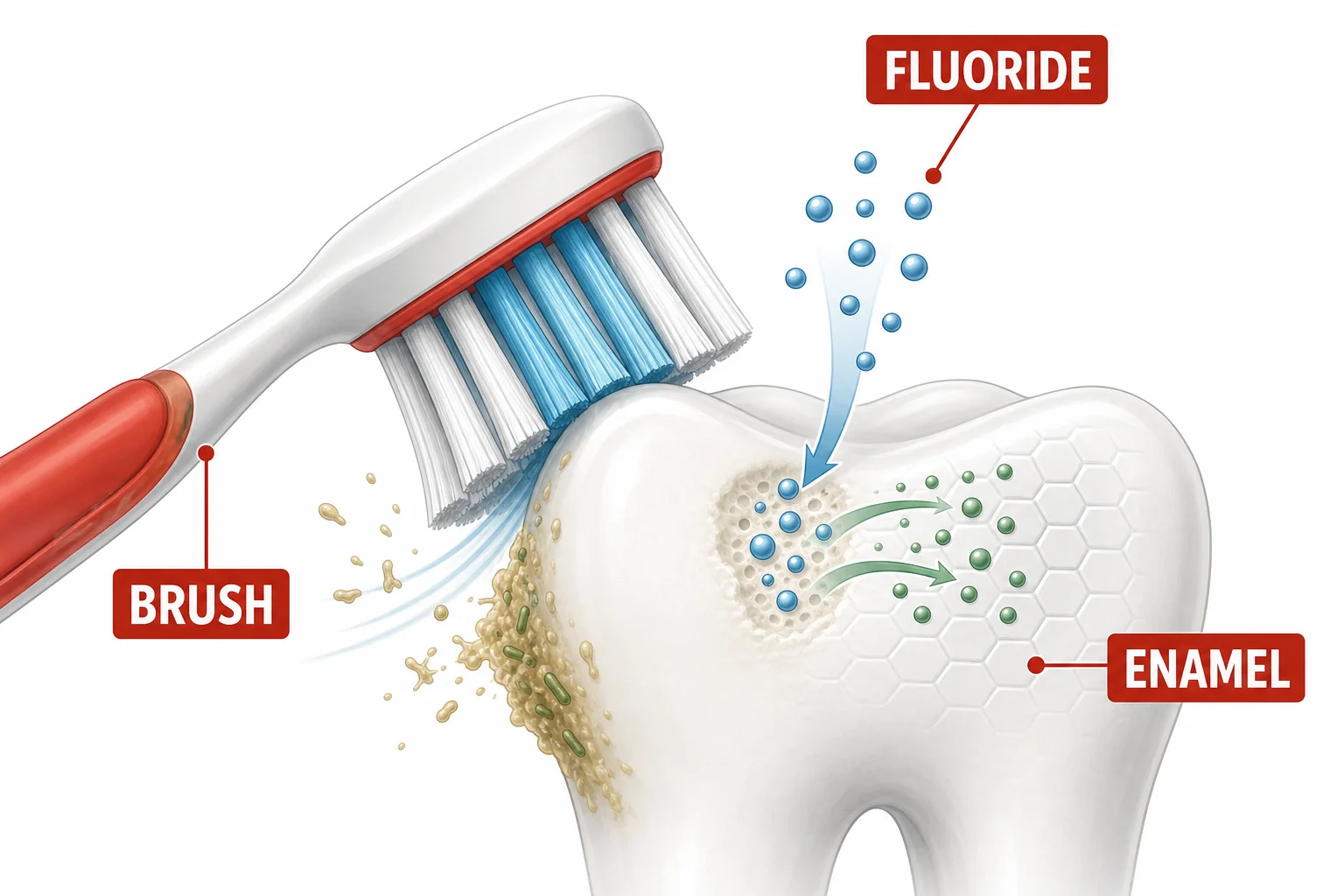
Fluoride particles from toothpaste helping minerals return to a weak enamel spot after plaque is brushed away.
Fluoride helps strengthen early weak spots.
Fluoride is a mineral that can help protect teeth. Many toothpastes have fluoride because it helps enamel hold on to minerals. It can also help early weak spots become stronger again. Fluoride does not replace brushing. Plaque still needs to be removed from tooth surfaces. Think of brushing and fluoride as two parts of the same job. The brush moves plaque away, and the fluoride in toothpaste helps protect the enamel that is left behind. A pea-sized amount of toothpaste is often recommended for children old enough to spit it out. Younger children need help from an adult. After brushing, spit out the toothpaste. Many dentists suggest not rinsing with lots of water right away, so some fluoride can stay on the teeth for a little while.

Fluoride works best when plaque is brushed away first.

A routine protects teeth
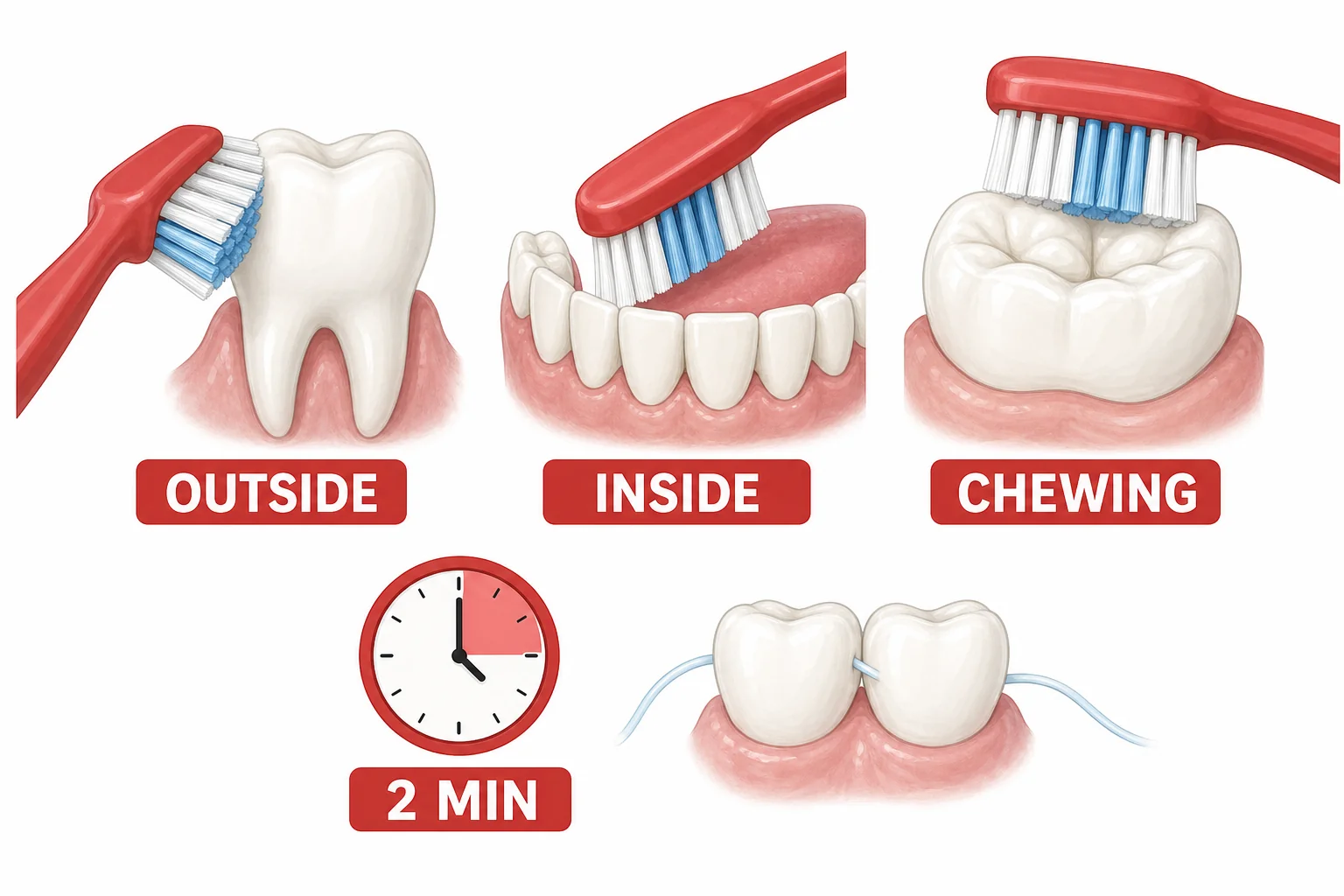
A child-friendly brushing routine diagram showing a toothbrush cleaning outside, inside, and chewing tooth surfaces.
Brush all tooth surfaces every day.
A good brushing routine is simple and repeatable. Brush two times each day, usually in the morning and before bed. Use small circles or gentle back-and-forth strokes. Clean the outside, inside, and chewing surfaces of every tooth. The gumline matters because plaque often collects there. Take about two minutes. That gives enough time to reach the whole mouth instead of only the front teeth. Spit out the toothpaste when you finish. Cleaning between teeth is important too because cavities can start where toothbrush bristles do not reach. Visiting a dentist helps find small problems early. The goal is not to make teeth look perfect. The goal is to keep plaque, acid, and cavities from getting ahead of your daily care.

A short routine works best when it happens every day.

Vocabulary

Plaque
A sticky film on teeth that contains bacteria and bits from the mouth.
Bacteria
Tiny living things. Some mouth bacteria can turn sugar into acid.
Enamel
The hard outside layer of a tooth that protects the softer parts inside.
Demineralization
The loss of minerals from enamel when acid touches teeth for too long.
Cavity
A hole in a tooth caused by damage that breaks down enamel.
Fluoride
A mineral that helps enamel resist acid and repair early weak spots.

In the Classroom

Plaque Patrol Model

20 minutes | Grades K-2

Give students a picture of a tooth and have them place removable sticky notes where plaque can hide. Students explain why the gumline, grooves, and spaces between teeth need careful cleaning.

Sugar to Acid Story Cards

25 minutes | Grades 1-3

Students put picture cards in order to show sugar, bacteria, acid, weak enamel, and cavity risk. They then draw one action that can interrupt the chain.

Two-Minute Brushing Map

15 minutes | Grades K-3

Students divide a mouth diagram into four sections and plan how to spend about 30 seconds on each section. The class discusses why a plan can help solve a health problem.

Key Takeaways

  • Plaque is a sticky film that builds up on teeth every day.
  • Some plaque bacteria use sugar to make acid.
  • Acid can pull minerals from enamel and start tooth decay.
  • Brushing removes plaque, and fluoride helps strengthen enamel.
  • A daily routine protects teeth better than brushing only sometimes.