Practice understanding what germs are, how illness can spread, and healthy habits that help protect yourself and others.
Read each problem carefully. Write your answers in complete sentences when you can.
Learning how germs move and how to slow them down
Health - Grade 2-3
- 1
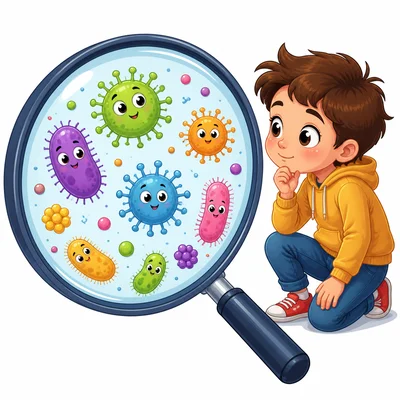
What are germs? Write one sentence that explains what germs are in a kid-friendly way.
- 2
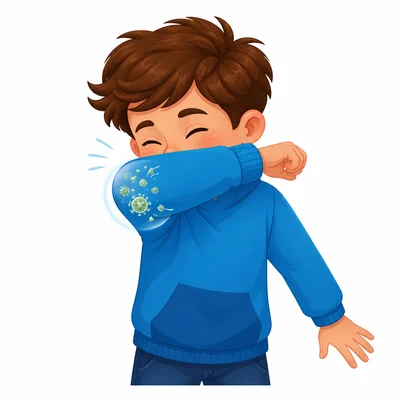
Circle the healthy choice: You sneeze. Should you sneeze into your hands or into your elbow?
- 3
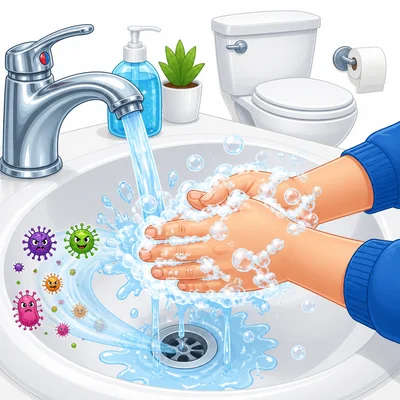
Why is it important to wash your hands with soap and water after using the bathroom?
- 4
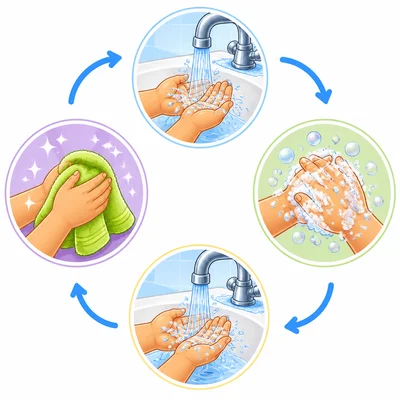
Put these handwashing steps in the correct order: rinse, scrub with soap, wet hands, dry hands.
- 5
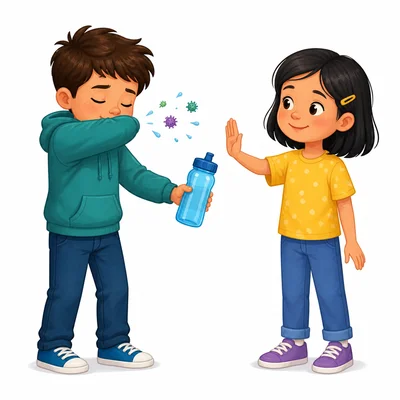
A friend has a cough and offers you a sip from their water bottle. What should you do, and why?
- 6
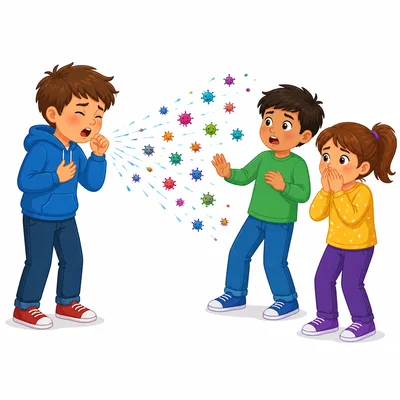
True or false: Germs can spread when a sick person coughs or sneezes near other people.
- 7
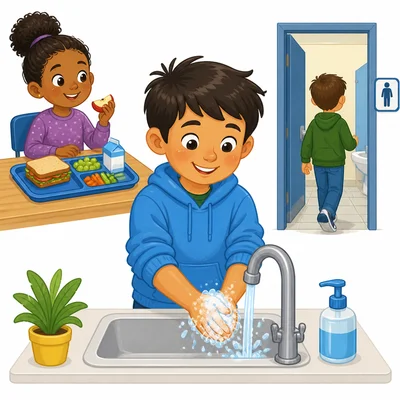
Name two times during the school day when it is a good idea to wash your hands.
- 8
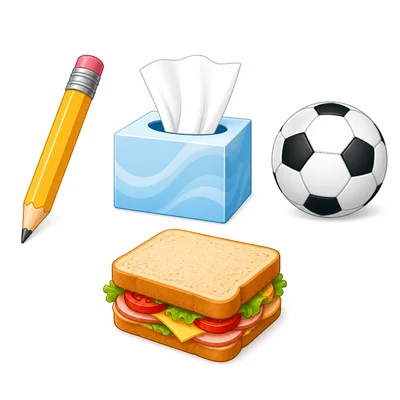
Look at the choices: pencil, tissue, soccer ball, sandwich. Which one should you use to cover or catch a runny nose?
- 9
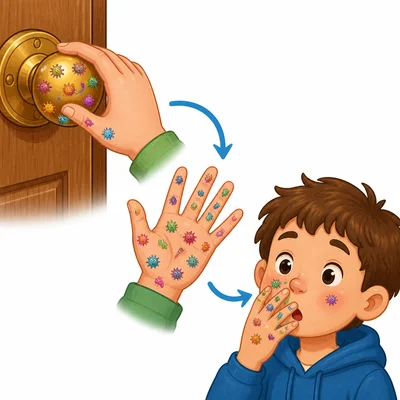
Explain how germs might travel from a doorknob to your body.
- 10
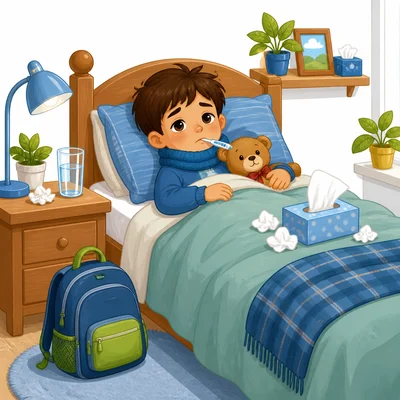
Mia feels sick and has a fever. What is one way she can help keep classmates from getting sick?
- 11
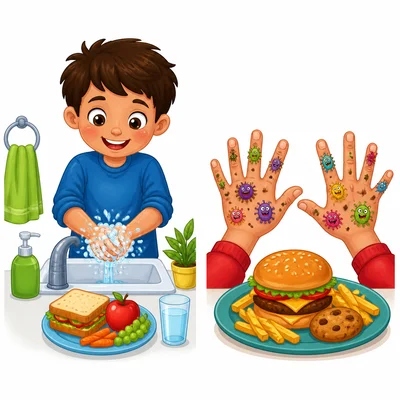
Which action helps stop germs from spreading: washing hands before eating or touching food with dirty hands? Explain your choice.
- 12
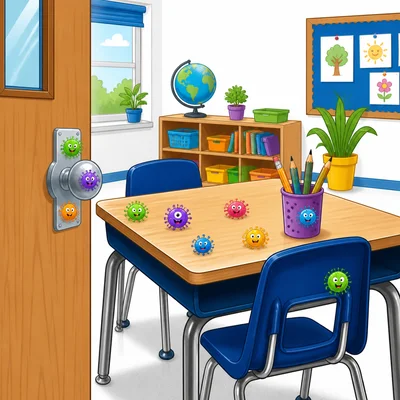
Draw or describe one place in a classroom where germs can often be found because many students touch it.
- 13
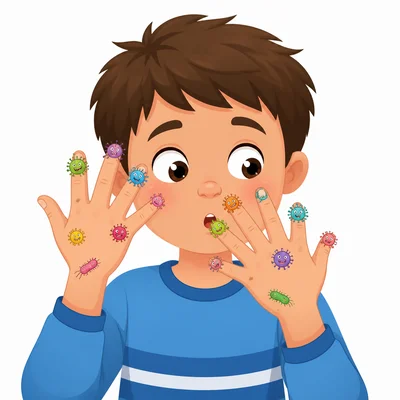
Why should you try not to touch your eyes, nose, or mouth with unwashed hands?
- 14
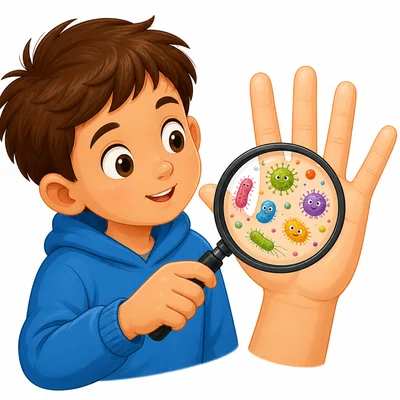
A classmate says, "I cannot see germs, so they are not there." Is this correct? Explain your answer.
- 15
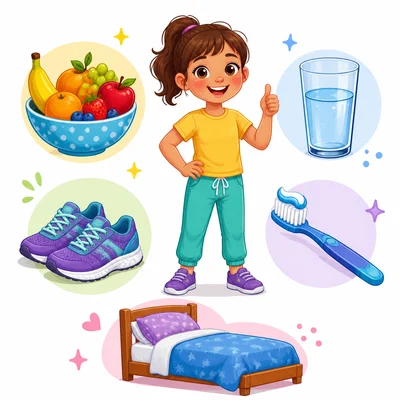
Write one healthy habit that helps your body stay strong against illness.