Practice interpreting fossils, rock layers, and clues from the fossil record to learn about past environments and changes in life over time.
Read each problem carefully. Use evidence from fossils, rock layers, and geologic principles to explain your answers.
Using fossils and rock layers to understand Earth's past
Earth Science - Grade 6-8
- 1
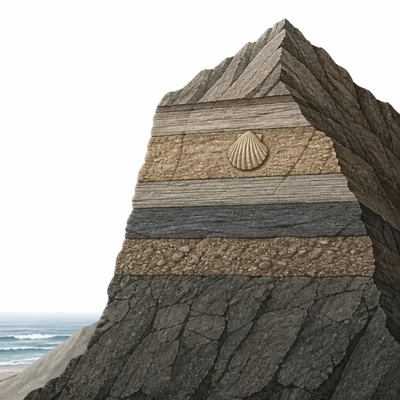
A fossil shell is found in a rock layer on top of a mountain. What does this fossil suggest about the environment where the rock originally formed?
- 2
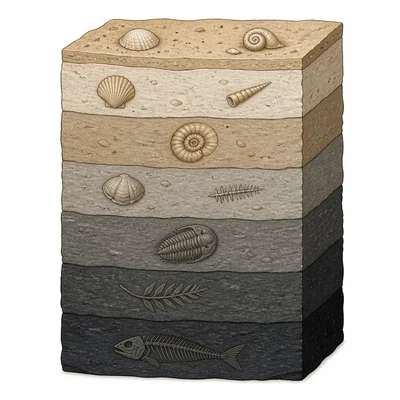
Explain the law of superposition and how it helps paleontologists read the fossil record.
- 3
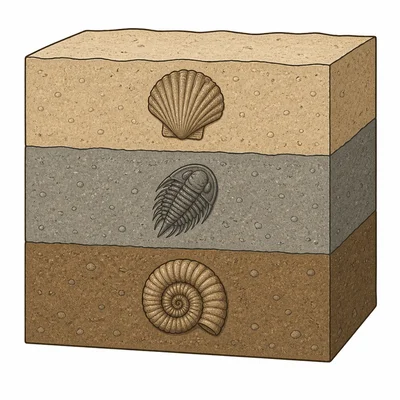
A student finds three fossils in different rock layers. Fossil A is in the lowest layer, Fossil B is in the middle layer, and Fossil C is in the top layer. Which fossil is probably the oldest, and why?
- 4
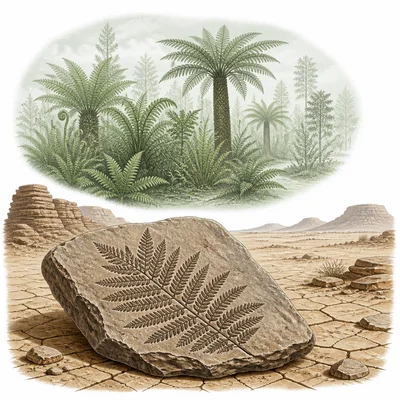
A fossil of a fern is found in an area that is now a dry desert. What can scientists infer about the past environment of that area?
- 5
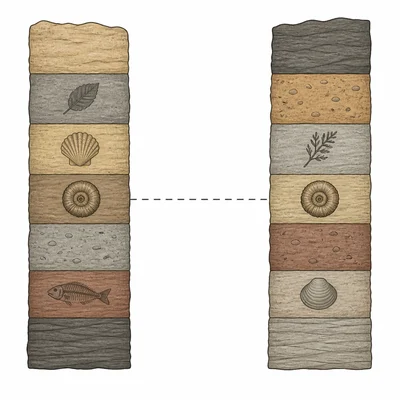
What is an index fossil, and why is it useful for comparing the ages of rock layers in different places?
- 6
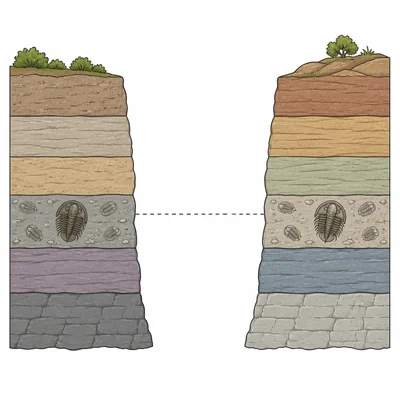
Two rock layers in different states both contain the same index fossil. What conclusion can geologists reasonably make about these two layers?
- 7
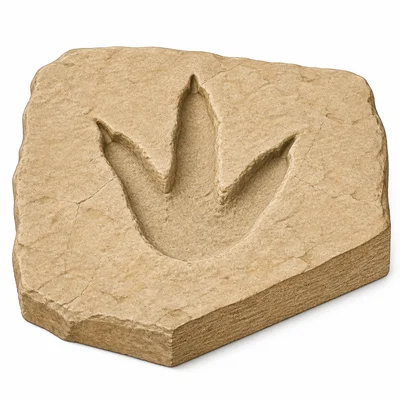
A fossilized footprint is found in sandstone. Is the footprint a body fossil or a trace fossil? Explain your answer.
- 8
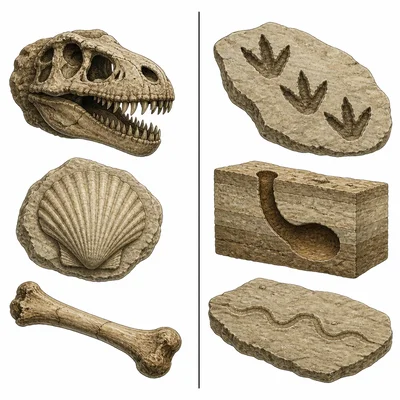
List two examples of body fossils and two examples of trace fossils.
- 9
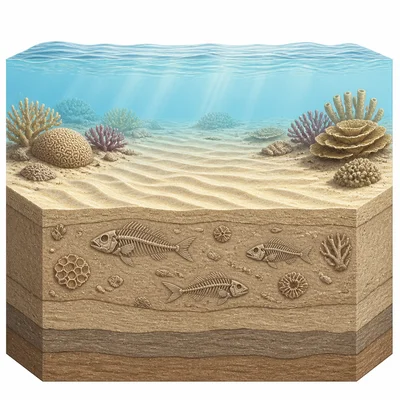
A rock layer contains fossil fish, fossil coral, and ripple marks. What type of environment did this layer most likely form in? Use evidence to support your answer.
- 10
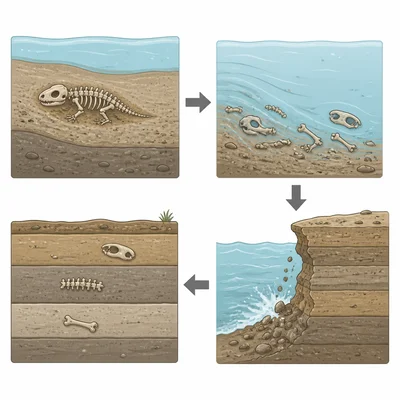
Why is the fossil record incomplete?
- 11
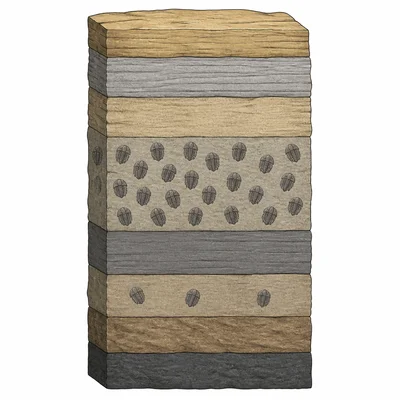
In one rock sequence, a certain fossil species appears in older layers, becomes common in middle layers, and then disappears from younger layers. What might this pattern suggest?
- 12
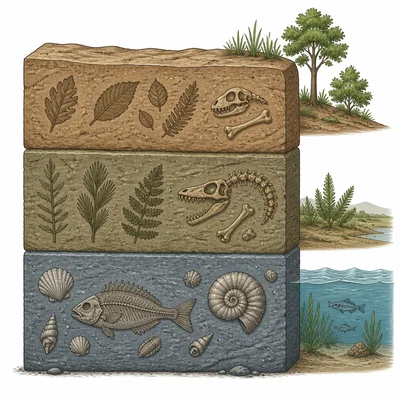
How can fossils provide evidence that Earth's environments and life forms have changed over time?