Practice key ideas in civil and structural engineering, including loads, forces, materials, shapes, foundations, and design tradeoffs.
Read each problem carefully. Use complete sentences when explaining your thinking. Show calculations when a problem includes numbers.
Designing safe structures that support loads
Engineering - Grade 6-8
- 1
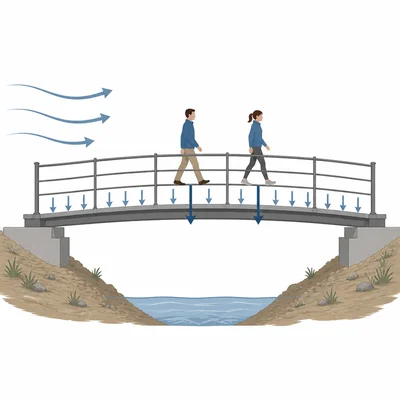
A small pedestrian bridge must support its own weight, people walking across it, and occasional strong winds. Identify each of these as a dead load, live load, or environmental load.
- 2
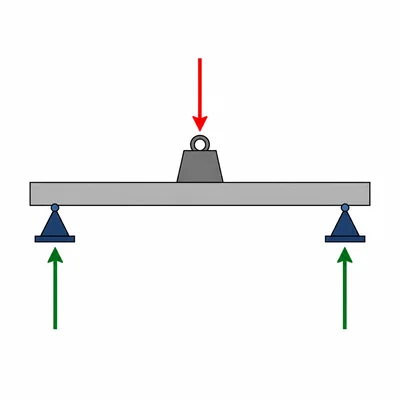
A beam rests on two supports and holds a 60-newton load in the middle. If the load is shared equally by the two supports, how much upward force does each support provide?
- 3
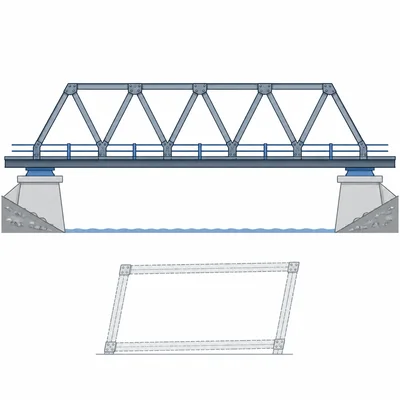
Explain why triangles are often used in bridge trusses and roof frames.
- 4
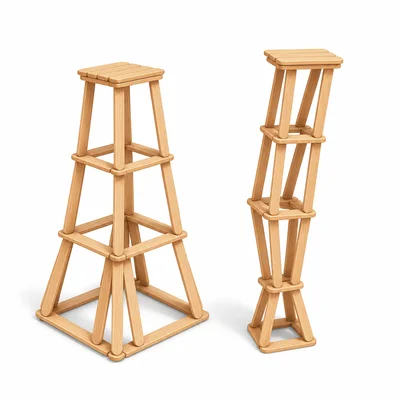
A student builds two towers from the same number of craft sticks. Tower A has a wide base, and Tower B has a narrow base. Which tower is likely to be more stable, and why?
- 5
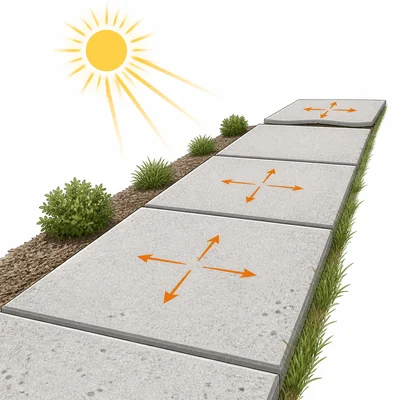
A concrete sidewalk expands slightly on a hot day. Engineers often place small gaps between sidewalk sections. What problem do these expansion joints help prevent?
- 6
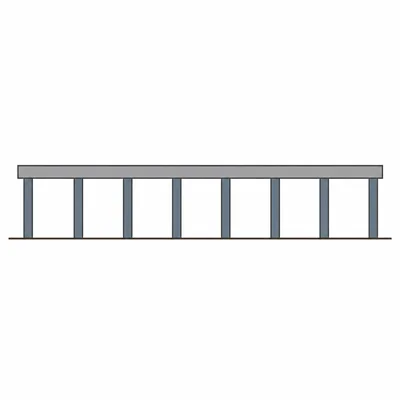
A bridge deck is 24 meters long. Engineers plan to place support posts every 6 meters, including at both ends. How many support posts are needed?
- 7
Name one advantage and one disadvantage of using steel instead of wood for a large bridge.
- 8
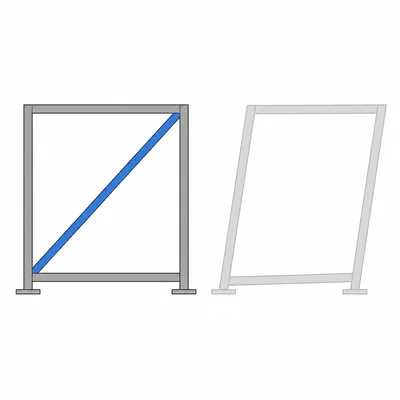
A rectangular frame is wobbly until a diagonal brace is added from one corner to the opposite corner. Explain how the diagonal brace improves the frame.
- 9
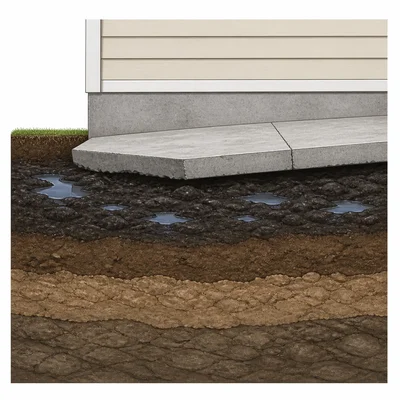
During a site investigation, engineers find soft, wet soil where a building is planned. Why is this a concern for the foundation?
- 10
A model bridge can safely hold 12 kilograms before it fails. The required safety factor is 3. What is the greatest load the bridge should be allowed to carry during normal use?
- 11
List two types of infrastructure that civil engineers help design, and describe the purpose of each.
- 12
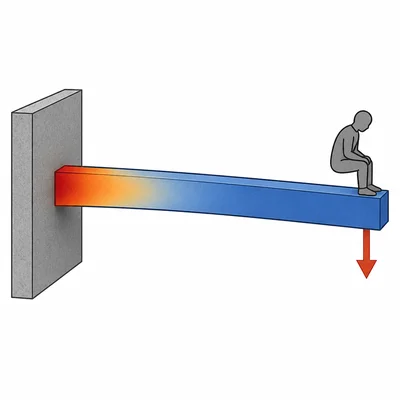
A cantilever is a beam supported at only one end, like a diving board. Where would the beam experience the most stress: near the fixed support or near the free end? Explain your answer.
- 13
A city wants a new bridge that is low cost, safe, attractive, and quick to build. Explain why engineers may not be able to maximize all four goals at the same time.
- 14
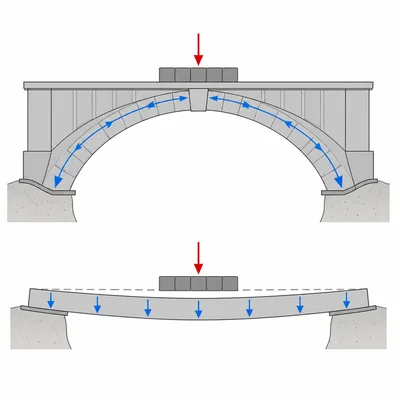
Look at a simple arch bridge. Explain how an arch helps carry loads compared with a flat beam.
- 15
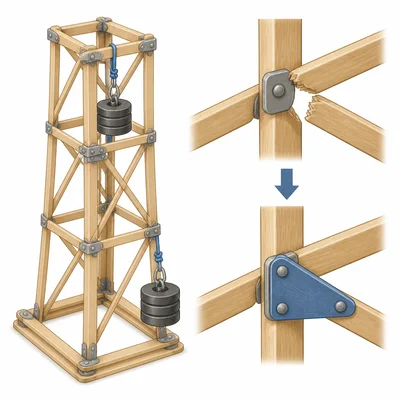
A team tests a model tower. It fails when a side joint pulls apart. What is one design change the team could make, and how should they test whether it worked?