Practice core ideas in civil and structural engineering, including loads, stress, strain, materials, trusses, foundations, and design tradeoffs.
Read each problem carefully. Show calculations, units, and reasoning where needed. Use complete sentences for explanations.
Forces, materials, design constraints, and safety in the built environment
Engineering - Grade 9-12
- 1
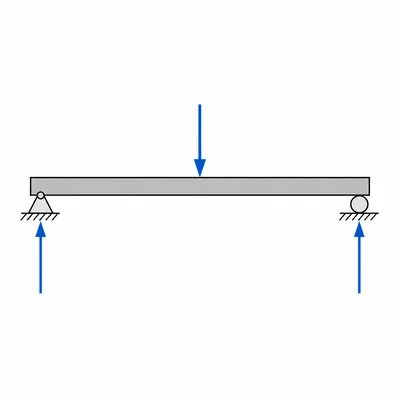
A simply supported beam is 6.0 m long and carries a single 12,000 N point load at its center. What is the upward reaction force at each support?
- 2
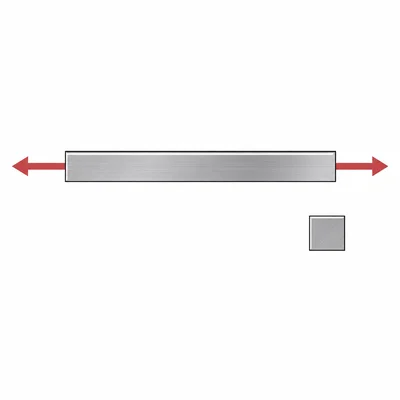
A steel tension member carries a force of 45,000 N. Its cross-sectional area is 0.0030 m². Calculate the tensile stress in pascals.
- 3
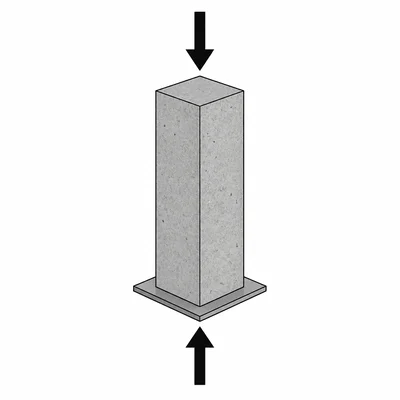
A concrete column supports a compressive load of 800,000 N. The column has a square cross section that is 0.40 m by 0.40 m. What is the compressive stress in the column?
- 4
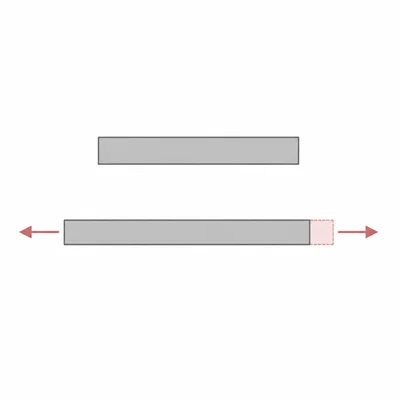
A structural member has an original length of 2.00 m. Under load, it stretches by 0.0015 m. Calculate the strain.
- 5
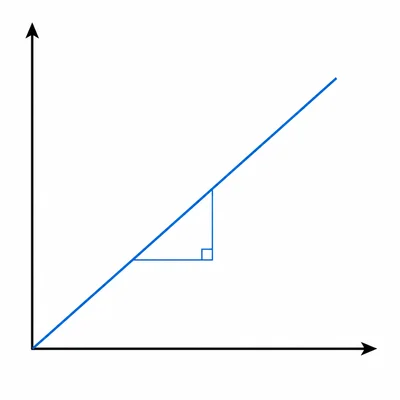
A material has a stress of 120 MPa and a strain of 0.00060 while still behaving elastically. Estimate its Young's modulus.
- 6
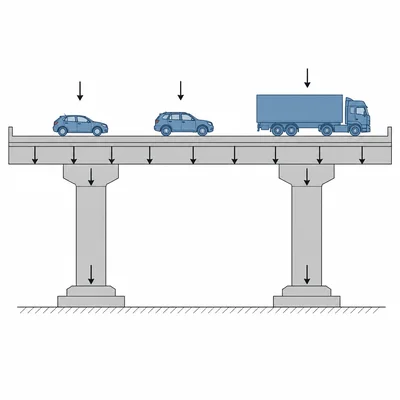
A bridge deck must support dead load and live load. Explain the difference between dead load and live load, and give one example of each for a highway bridge.
- 7
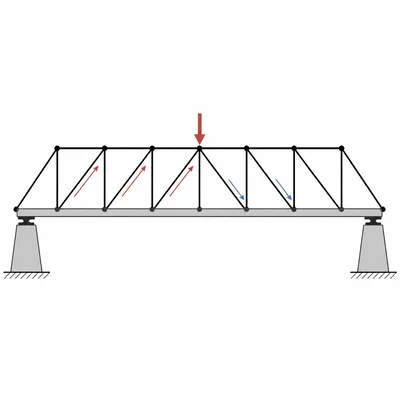
A truss bridge uses many triangles instead of rectangles. Explain why triangles are useful in structural design.
- 8
A design code requires a factor of safety of 2.5. If a cable is expected to carry a working load of 20,000 N, what minimum breaking strength should the cable have?
- 9
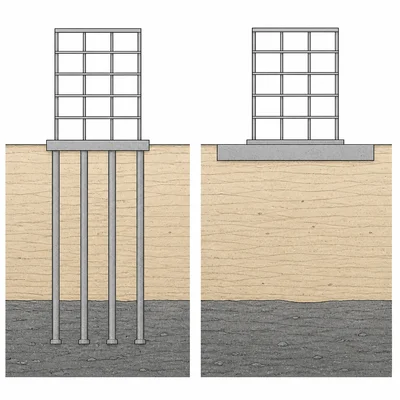
A building is planned for an area with soft clay soil. Name two foundation strategies engineers might consider and explain why foundations are important.
- 10
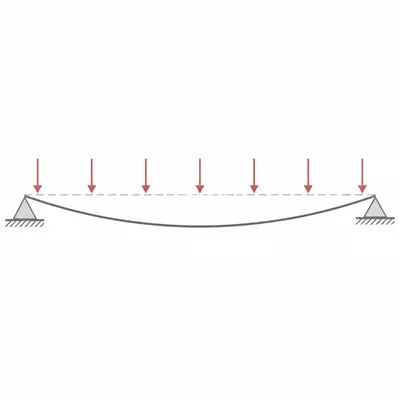
A beam bends too much under service loads, even though it does not break. Explain why excessive deflection can still be a serious engineering problem.
- 11
A civil engineering team is choosing between steel, reinforced concrete, and timber for a small pedestrian bridge. List one advantage and one limitation of each material.
- 12
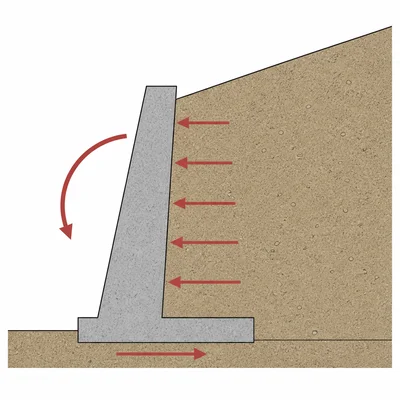
A retaining wall holds back soil on a sloped site. Describe two forces or failure modes the engineer must consider when designing the wall.
- 13
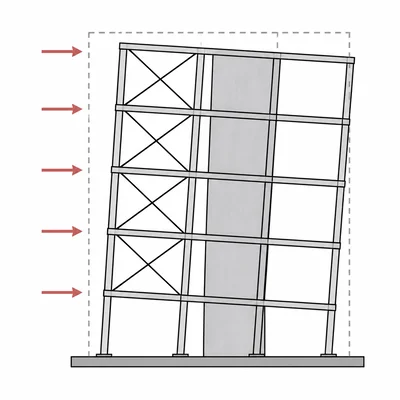
A structure in an earthquake zone must be designed for lateral loads. Explain what a lateral load is and name two building features that can help resist lateral loads.
- 14
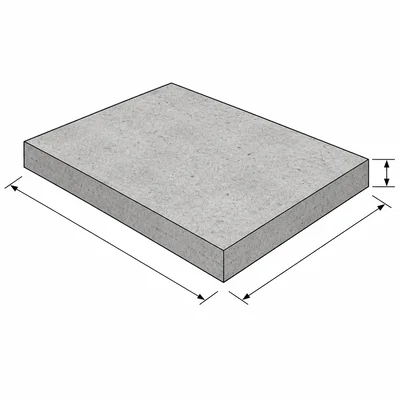
A rectangular concrete slab is 5.0 m long, 3.0 m wide, and 0.20 m thick. If the density of concrete is about 2400 kg/m³, estimate the mass of the slab.
- 15
A city wants to replace an old bridge. Identify three constraints or criteria civil engineers should consider before choosing a final design.