Practice calculating determinants and using Cramer's Rule to solve systems of linear equations.
Read each problem carefully. Show your work in the space provided. Simplify all answers when possible.
Solving linear systems with matrices
Math - Grade 9-12
- 1
Find the determinant of the matrix [[4, 7], [2, 5]].
- 2
Find the determinant of the matrix [[-3, 6], [4, -2]].
- 3
Find the determinant of the matrix [[1, 2, 3], [0, 4, 5], [0, 0, 6]].
- 4
Find the determinant of the matrix [[2, 1, 0], [3, -1, 4], [1, 2, 5]].
- 5
Use Cramer's Rule to solve the system: 2x + y = 7 and x - y = 2.
- 6
Use Cramer's Rule to solve the system: 3x - 2y = 4 and x + y = 5.
- 7
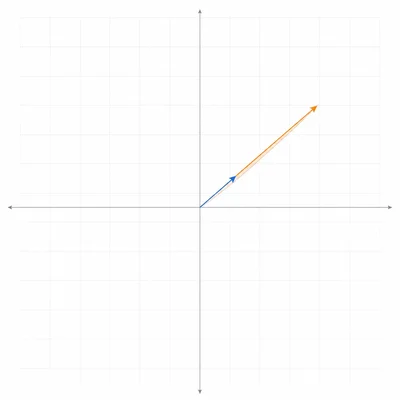
A system has coefficient matrix [[5, 2], [10, 4]]. Explain why Cramer's Rule cannot give a unique solution for this system.
- 8
Use Cramer's Rule to solve the system: 4x + 3y = 18 and 2x - y = 0.
- 9
Find the determinant of the matrix [[0, 3, -1], [2, 1, 4], [5, 0, 2]] using cofactor expansion along the first row.
- 10
Use Cramer's Rule to solve the system: x + y + z = 6, 2x - y + z = 3, and x + 2y - z = 2.
- 11
For the system ax + by = e and cx + dy = f, write the Cramer's Rule formulas for x and y, assuming the coefficient determinant is not 0.
- 12
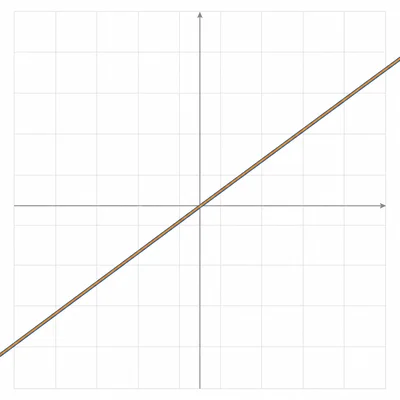
Use determinants to decide whether the system 6x - 9y = 12 and -2x + 3y = -4 has a unique solution. Then explain your conclusion.