Practice creating, simplifying, and comparing equivalent fractions using common factors, scaling, and number lines.
Read each problem carefully. Show your work in the space provided and explain your reasoning when asked.
Using multiplication, division, and reasoning to write equivalent fractions
Math - Grade 6-8
- 1
Write three fractions that are equivalent to 5/8. Use multiplication to show how you made each one.
- 2
Simplify 42/56 to lowest terms. Show the common factor you used.
- 3
Fill in the missing number: 7/9 = ?/45.
- 4
Fill in the missing number: 24/36 = 2/?.
- 5
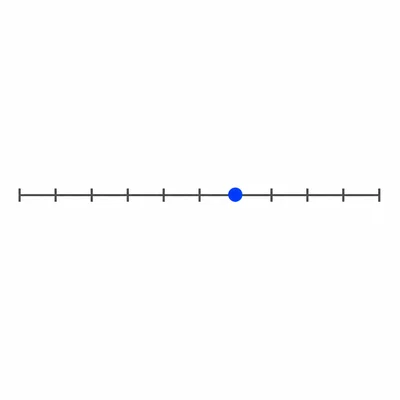
A number line from 0 to 1 is divided into 12 equal parts. Point A is at 8/12. Write an equivalent fraction for Point A in lowest terms.
- 6
Decide whether 18/30 and 3/5 are equivalent. Explain your reasoning.
- 7
Create an equivalent fraction to 11/14 with a denominator of 98.
- 8
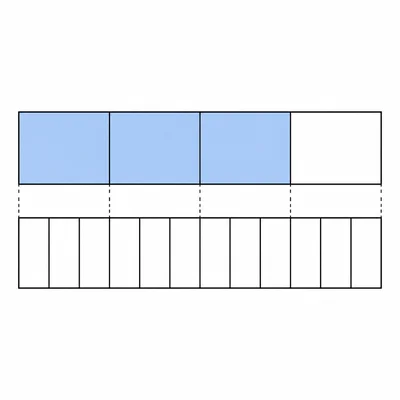
Two fraction bars represent the same whole. The first bar is divided into 4 equal parts with 3 shaded. The second bar is divided into 12 equal parts. How many parts should be shaded in the second bar to show an equivalent fraction?
- 9
Which fraction is equivalent to 6/15: 2/5, 3/10, 12/20, or 5/12? Explain how you know.
- 10
Find the missing number in this proportion: 16/20 = 24/?.
- 11
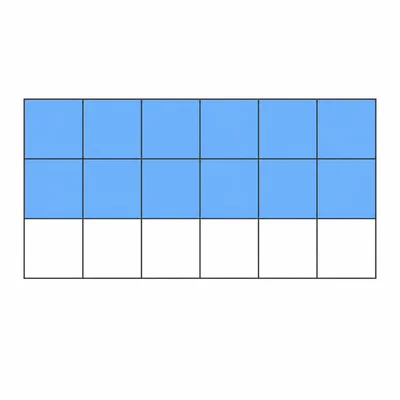
A rectangle is divided into 18 equal squares, and 12 squares are shaded. What fraction is shaded in lowest terms?
- 12
Explain why multiplying the numerator and denominator of 4/7 by the same nonzero number creates an equivalent fraction.
- 13
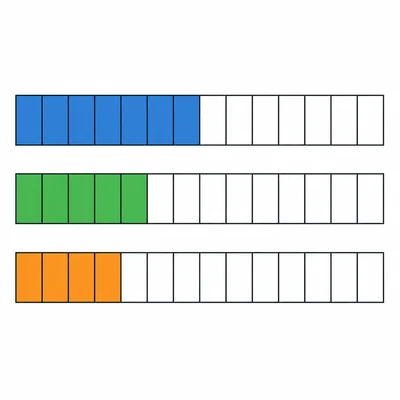
Order these fractions from least to greatest by rewriting them with a common denominator: 1/2, 3/8, 5/16.
- 14
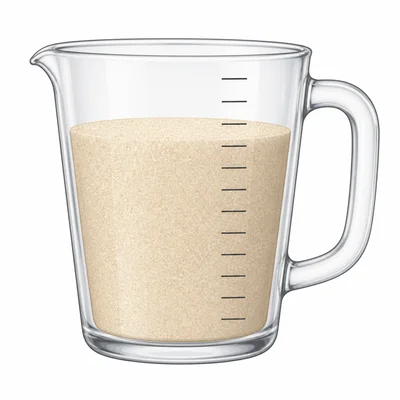
A recipe uses 3/4 cup of sugar. You want to measure the same amount using twelfths of a cup. How many twelfths of a cup are equal to 3/4 cup?
- 15
Use cross multiplication to decide whether 14/21 and 10/15 are equivalent. Show both products.