Practice evaluating improper integrals over infinite intervals and intervals with vertical asymptotes, and use common convergence tests to justify whether integrals converge or diverge.
Read each problem carefully. Rewrite each improper integral as a limit before evaluating or testing convergence. Show your work in the space provided.
Evaluating improper integrals and deciding convergence
Math - Grade 9-12
- 1
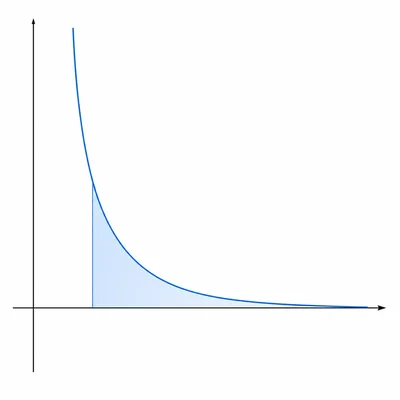
Evaluate the improper integral ∫ from 1 to infinity of 1/x^2 dx, or state that it diverges.
- 2
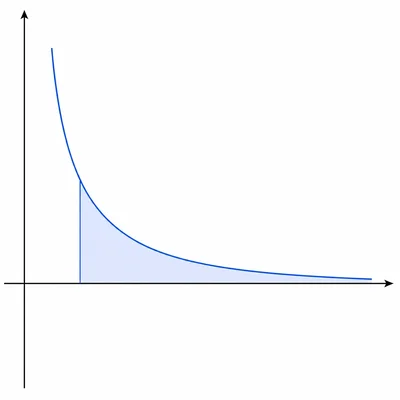
Determine whether ∫ from 1 to infinity of 1/x dx converges or diverges. Explain your reasoning.
- 3
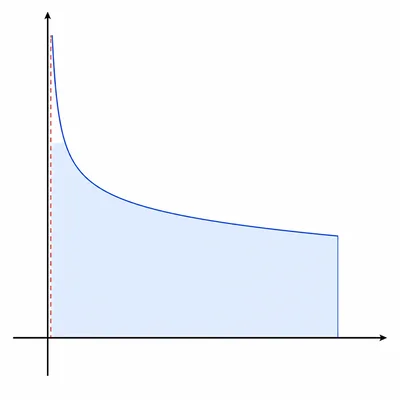
Evaluate the improper integral ∫ from 0 to 1 of 1/sqrt(x) dx, or state that it diverges.
- 4
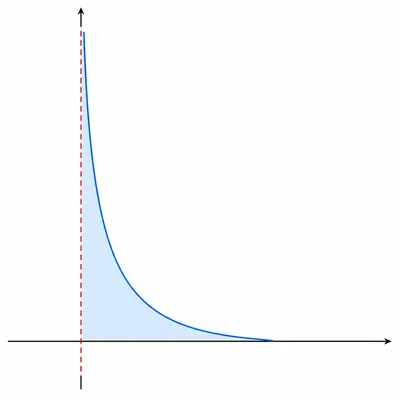
Determine whether ∫ from 0 to 1 of 1/x^2 dx converges or diverges. Explain your reasoning.
- 5
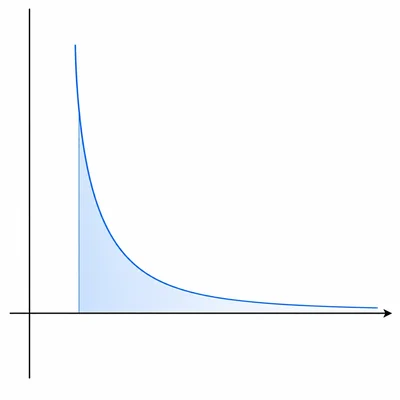
Use the p-integral test to determine whether ∫ from 1 to infinity of 1/x^p dx converges when p = 3/2. Do not compute the exact value unless needed.
- 6
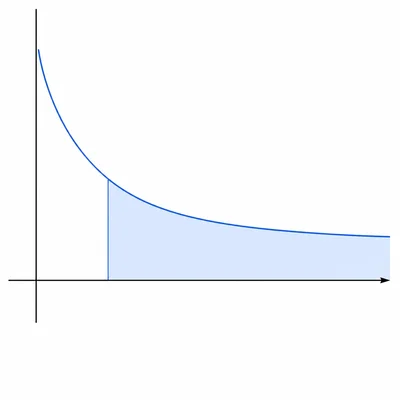
Use the p-integral test to determine whether ∫ from 1 to infinity of 1/x^0.8 dx converges or diverges.
- 7
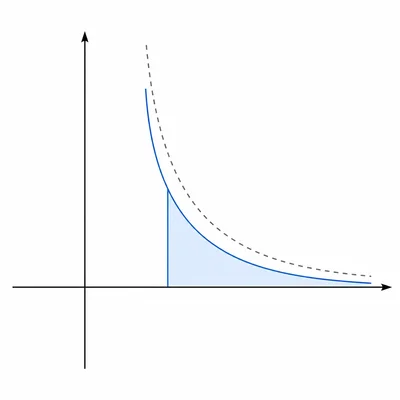
Determine whether ∫ from 2 to infinity of 5/(x^2 + 1) dx converges or diverges. Use comparison with a simpler function.
- 8
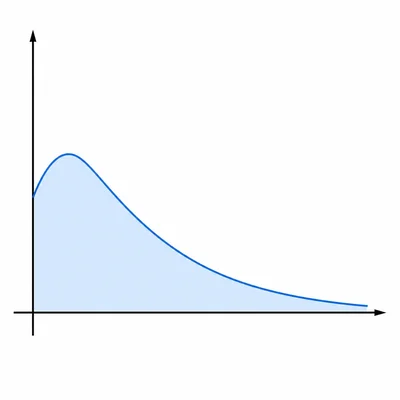
Determine whether ∫ from 1 to infinity of x/(x^2 + 1) dx converges or diverges.
- 9
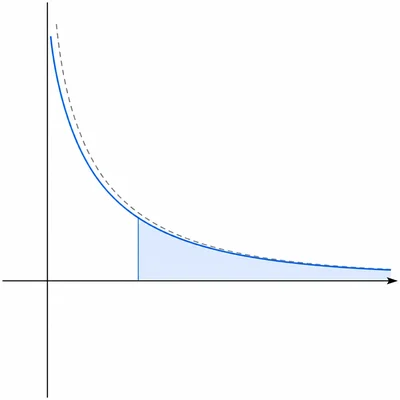
Use limit comparison to determine whether ∫ from 1 to infinity of (3x + 2)/(x^2 + 4) dx converges or diverges.
- 10
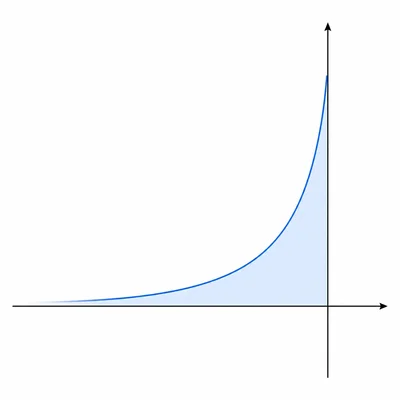
Evaluate ∫ from negative infinity to 0 of e^x dx, or state that it diverges.
- 11
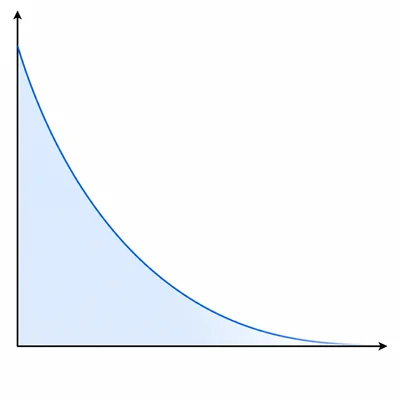
Determine whether ∫ from 0 to infinity of e^-x dx converges, and find its value if it converges.
- 12
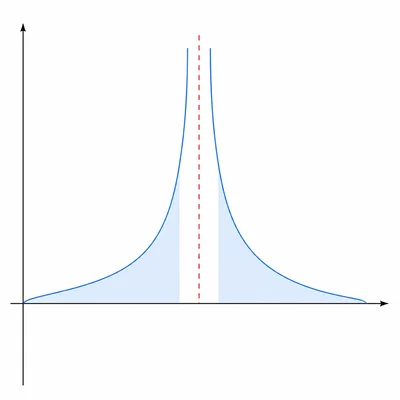
An improper integral is written as ∫ from 0 to 3 of 1/(x - 2)^2 dx. Explain why it must be split before testing convergence, then determine whether it converges or diverges.