Practice the basic science behind DNA fingerprinting, gel electrophoresis, chromatography, evidence handling, and careful forensic conclusions.
Read each problem carefully. Use evidence from the question to support your answer. Show calculations when needed.
Using DNA patterns and chemical separation to analyze evidence
Science - Grade 9-12
- 1
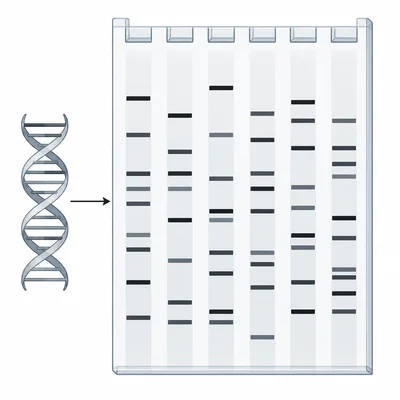
Explain what a DNA fingerprint is and why it can be useful in a forensic investigation.
- 2

A gel electrophoresis result shows evidence DNA bands at 120, 200, and 350 base pairs. Suspect A has bands at 120, 200, and 350 base pairs. Suspect B has bands at 100, 200, and 360 base pairs. Which suspect matches the evidence most closely, and why?
- 3
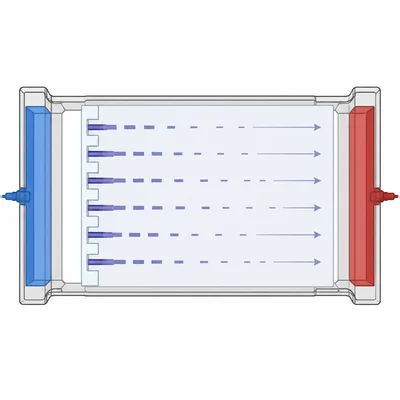
In gel electrophoresis, DNA samples are placed near the negative end of the gel. Explain why DNA moves toward the positive end.
- 4

During gel electrophoresis, a 100 base pair DNA fragment and a 900 base pair DNA fragment are placed in the same gel. Which fragment is expected to travel farther, and why?
- 5

A chromatography strip has a solvent front that moved 8.0 cm from the starting line. A dye spot moved 3.2 cm from the starting line. Calculate the Rf value for the dye.
- 6

Two black pens are compared with ink found on a ransom note. The note ink separates into blue, purple, and yellow spots. Pen 1 separates into blue, purple, and yellow spots. Pen 2 separates into blue and green spots. Which pen is more consistent with the note ink?
- 7
Describe two reasons forensic scientists use control samples or reference samples when analyzing DNA evidence.
- 8
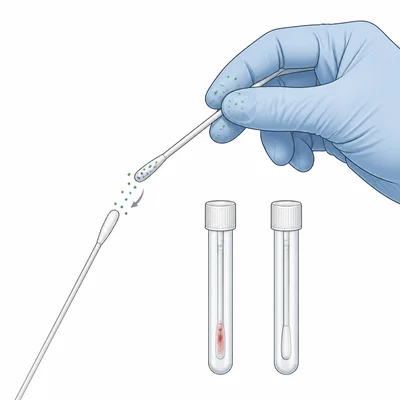
A technician touches a swab from a crime scene without changing gloves after handling a suspect's sample. Explain why this is a problem.
- 9
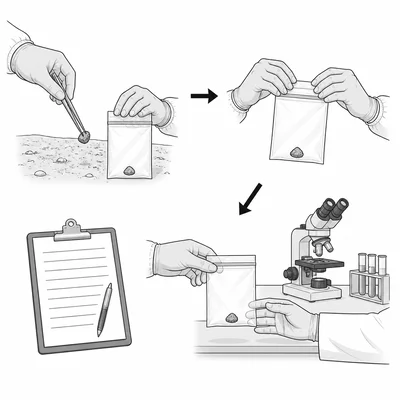
Explain the purpose of a chain of custody in a forensic investigation.
- 10

A paper chromatography test separates a marker ink into several colors. Explain what causes the colors to separate.
- 11
At three independent DNA loci, the chance of a random person matching the evidence is 1 in 10, 1 in 20, and 1 in 5. Calculate the combined random match probability.
- 12
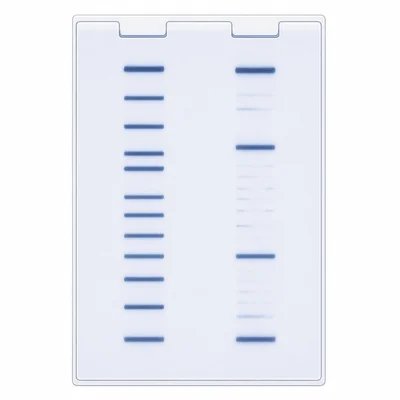
A DNA profile from a crime scene is partial because the sample was degraded. It matches a suspect at two tested locations, but several other locations could not be read. Explain why investigators should be cautious.
- 13

List the correct basic steps for paper chromatography using ink: place the ink spot, place the strip in solvent, mark the solvent front, and compare the separated spots. Explain why the ink spot must start above the solvent level.
- 14
A lab report says that a suspect's DNA profile is consistent with evidence from a crime scene. Explain the difference between saying the suspect is consistent with the evidence and saying the suspect is definitely guilty.
- 15
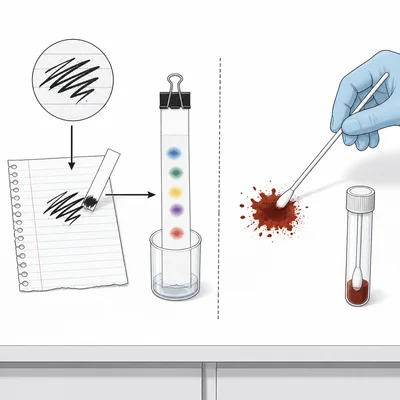
A crime scene has a note written in black ink and a small blood stain. Describe one forensic test that could be used for each type of evidence and what each test could show.