Practice applying laboratory safety rules, reading MSDS and SDS information, and choosing appropriate emergency procedures for common lab situations.
Read each lab safety situation carefully. Use complete sentences and include the safest action whenever a response is required.
Using safety rules, chemical safety information, and emergency response steps
Science - Grade 9-12
- 1
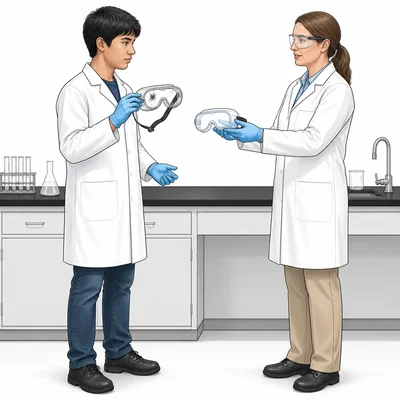
Before beginning a chemistry lab, a student notices that their safety goggles are scratched and do not fit tightly. What should the student do before handling any materials?
- 2
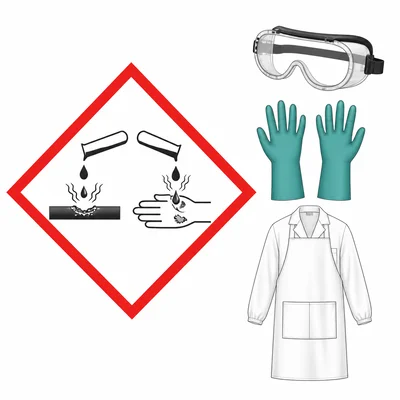
A bottle of hydrochloric acid has a label showing the pictogram for corrosion. What does this hazard warning mean, and what personal protective equipment should be used?
- 3
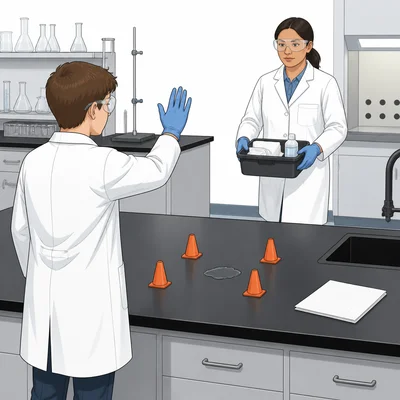
A student spills a small amount of an unknown liquid on the lab bench. The student thinks it is just water and starts wiping it up with a paper towel. Explain what the student should do instead.
- 4
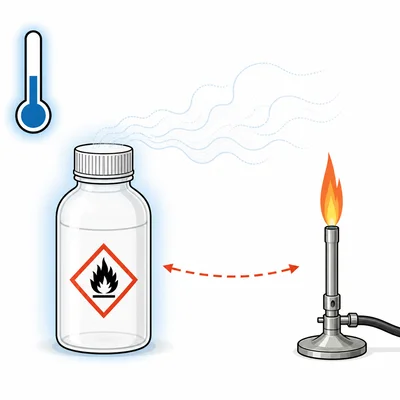
An MSDS or SDS lists the chemical's flash point as 12 degrees Celsius. What safety concern does this create in a lab?
- 5
Use the SDS section names to identify where you would find each piece of information: first-aid measures, accidental release measures, handling and storage, and exposure controls and personal protection.
- 6
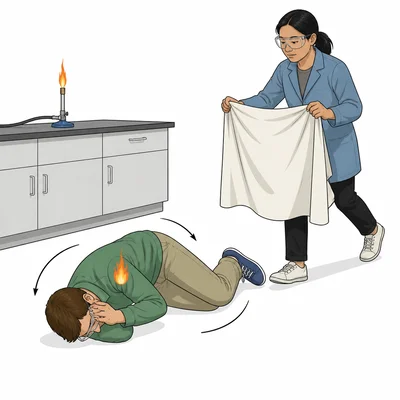
During a lab, a student's sleeve catches fire from a burner flame. Describe the correct emergency response.
- 7
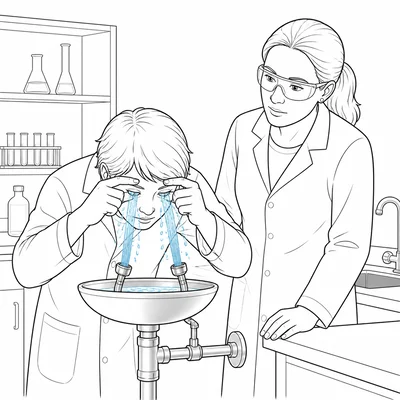
A student gets a chemical splash in one eye. What should happen immediately, and for how long should the eye be rinsed?
- 8
Explain why eating, drinking, or applying lip balm in the lab is unsafe, even if no dangerous chemicals are being used that day.
- 9
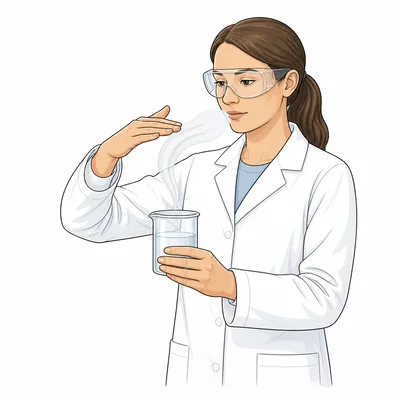
A classmate begins smelling a chemical directly from a beaker to identify it. What is the safer method, and why is direct smelling dangerous?
- 10
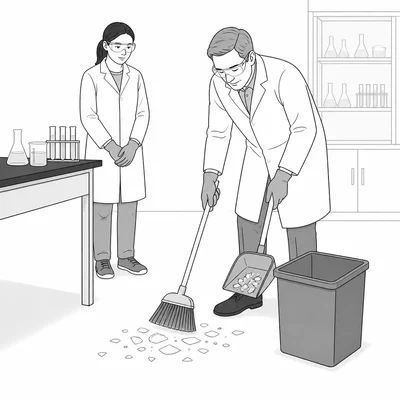
A student finds broken glass on the floor near a lab table. Describe the correct way to handle this situation.
- 11
An SDS lists a chemical with the signal word Danger instead of Warning. What does this tell you about the hazard level?
- 12
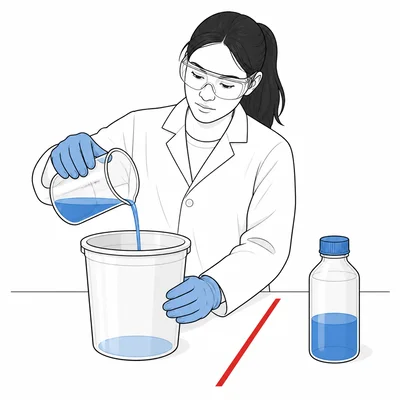
A student wants to pour leftover copper sulfate solution back into the original stock bottle to avoid wasting it. Explain why this is not allowed and what should happen instead.
- 13
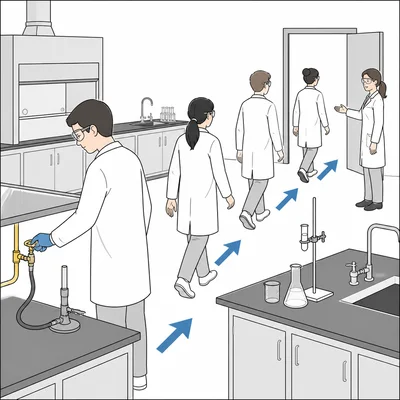
The lab fire alarm sounds while students are heating solutions at their stations. List three actions students should take during the evacuation.
- 14
A lab partner is not wearing gloves while transferring a solution labeled toxic by skin contact. The partner says they will be careful and not spill. Write a safety response you could say to them.
- 15
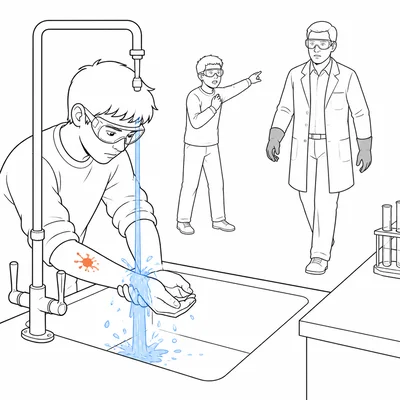
Create a short emergency plan for a chemical splash on a student's forearm. Include what the student should do, what classmates should do, and what the teacher should do.