Practice identifying, planning, and improving the major parts of a formal science lab report, including purpose, hypothesis, methods, data, analysis, conclusion, and sources of error.
Read each problem carefully. Write clear, complete responses using formal scientific language. Show your reasoning where needed.
Organizing evidence, analysis, and conclusions in scientific writing
Science - Grade 9-12
- 1
List the major sections that are usually included in a formal lab report in the order they should appear.
- 2
A student titles a lab report "Plant Lab." Rewrite this as a more specific and formal title for an experiment testing how different amounts of light affect bean plant growth.
- 3
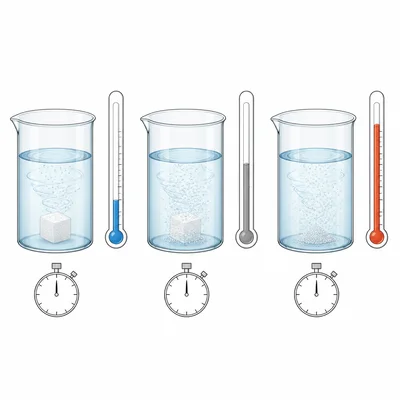
Identify the independent variable, dependent variable, and one controlled variable in this experiment: Students test how water temperature affects the time needed for sugar to dissolve.
- 4
Write a testable hypothesis for this question: How does the concentration of saltwater affect the germination rate of radish seeds?
- 5
A student writes this purpose statement: "We did a lab to see stuff happen." Rewrite it as a formal purpose statement for a lab that measures how ramp height affects the speed of a toy car.
- 6
Explain why the procedure section of a lab report should be written clearly enough for another student to repeat the experiment.
- 7
Improve this procedure step so it is more precise: "Heat the liquid for a while."
- 8
A data table for a reaction-rate lab has columns labeled "Trial," "Temperature," and "Time." Explain what important detail is missing from at least two column headings.
- 9
Write a formal results sentence using this data: At 20 degrees Celsius, the average reaction time was 48 seconds. At 40 degrees Celsius, the average reaction time was 25 seconds.
- 10
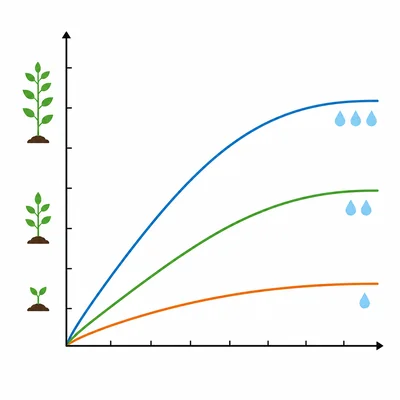
A graph shows plant height over 4 weeks for plants given 0 mL, 50 mL, and 100 mL of water per day. State what should be placed on the x-axis and y-axis.
- 11
Describe the difference between the results section and the conclusion section of a formal lab report.
- 12
A student concludes, "My hypothesis was right because the experiment worked." Rewrite this as a stronger scientific conclusion using evidence from this result: Plants receiving 100 mL of water per day grew an average of 12 cm, while plants receiving 25 mL per day grew an average of 5 cm.
- 13
Identify two possible sources of error in a lab that measures the effect of fertilizer amount on plant growth, and explain how each could affect the results.
- 14
Rewrite this sentence in a more formal scientific style: "I think the hot water made the tablet fizz way faster."
- 15
Review this mini data display: Trial 1 was 10.2 g, Trial 2 was 10.4 g, Trial 3 was 10.3 g. Calculate the average mass and write one sentence that could appear in the analysis section.