Sign in to save

Bookmark this page so you can find it later.

Sign in to save

Bookmark this page so you can find it later.

Astronomy elementary May 24, 2026

Why Are There Eight Planets and Not Nine?

How scientists sort worlds in our solar system
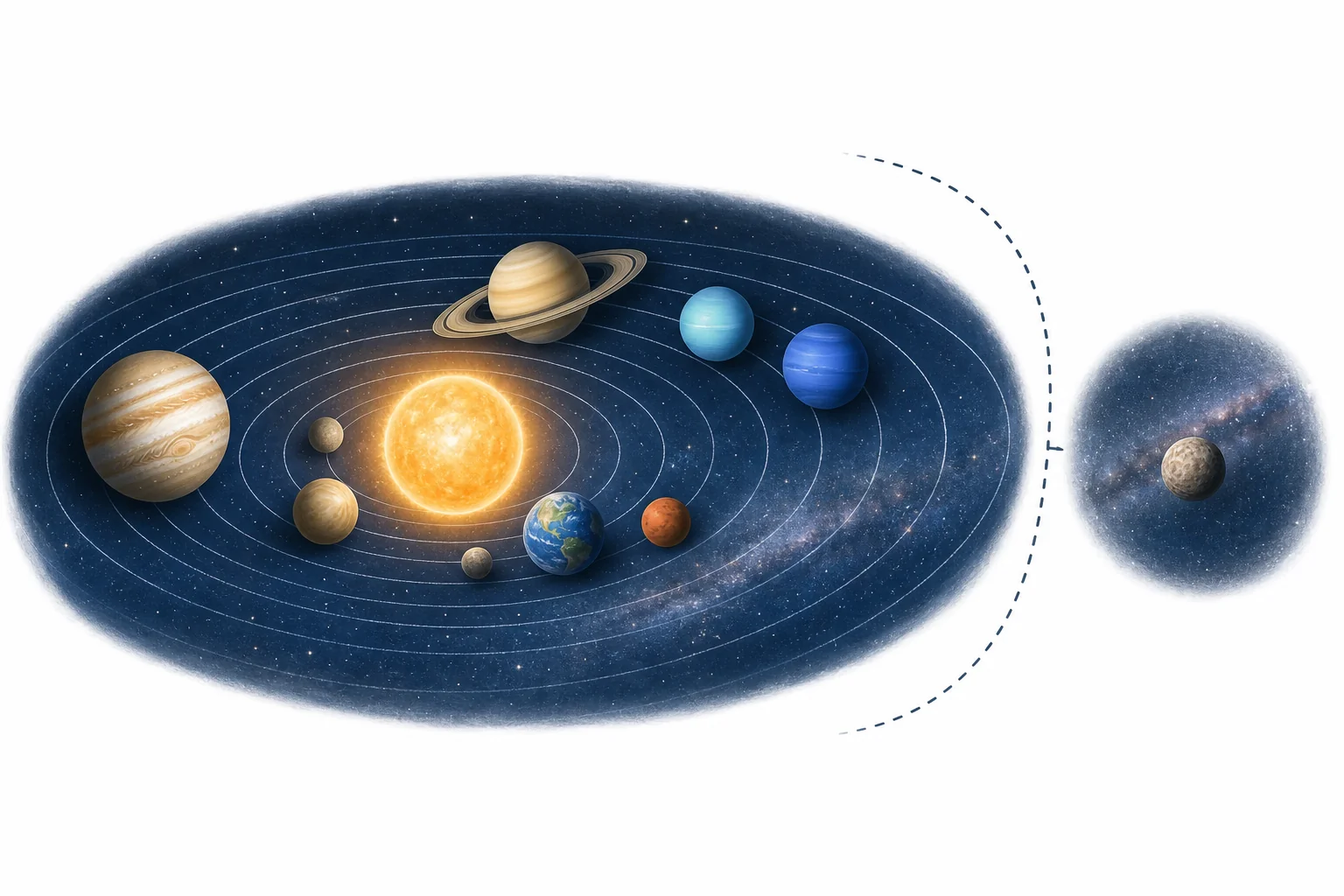
The Sun with eight planets in order, plus Pluto shown separately as a dwarf planet beyond Neptune

There are eight planets because scientists use a rule for what counts as a planet. Pluto orbits the Sun and is round, but it has not cleared many other objects from its path. That is why Pluto is called a dwarf planet now.

Big Idea. NGSS 5-ESS1-2 asks students to use models to describe patterns in Earth and space.

For many years, school posters showed nine planets. Mercury, Venus, Earth, Mars, Jupiter, Saturn, Uranus, Neptune, and Pluto marched across classroom walls. Then, in 2006, astronomers changed Pluto’s group. They did not erase Pluto. They gave it a more exact name. Pluto became a dwarf planet. This happened because scientists needed a clear way to sort objects in the solar system. They had found other icy worlds far past Neptune. Some were a lot like Pluto. If Pluto was a planet, some of those worlds might need to be planets too. The International Astronomical Union, or IAU, made three rules for planets. A planet must orbit the Sun, be round because of its own gravity, and clear its orbital neighborhood. Pluto meets the first two rules. It does not meet the third. That is why today’s list has eight planets.

The old list changed
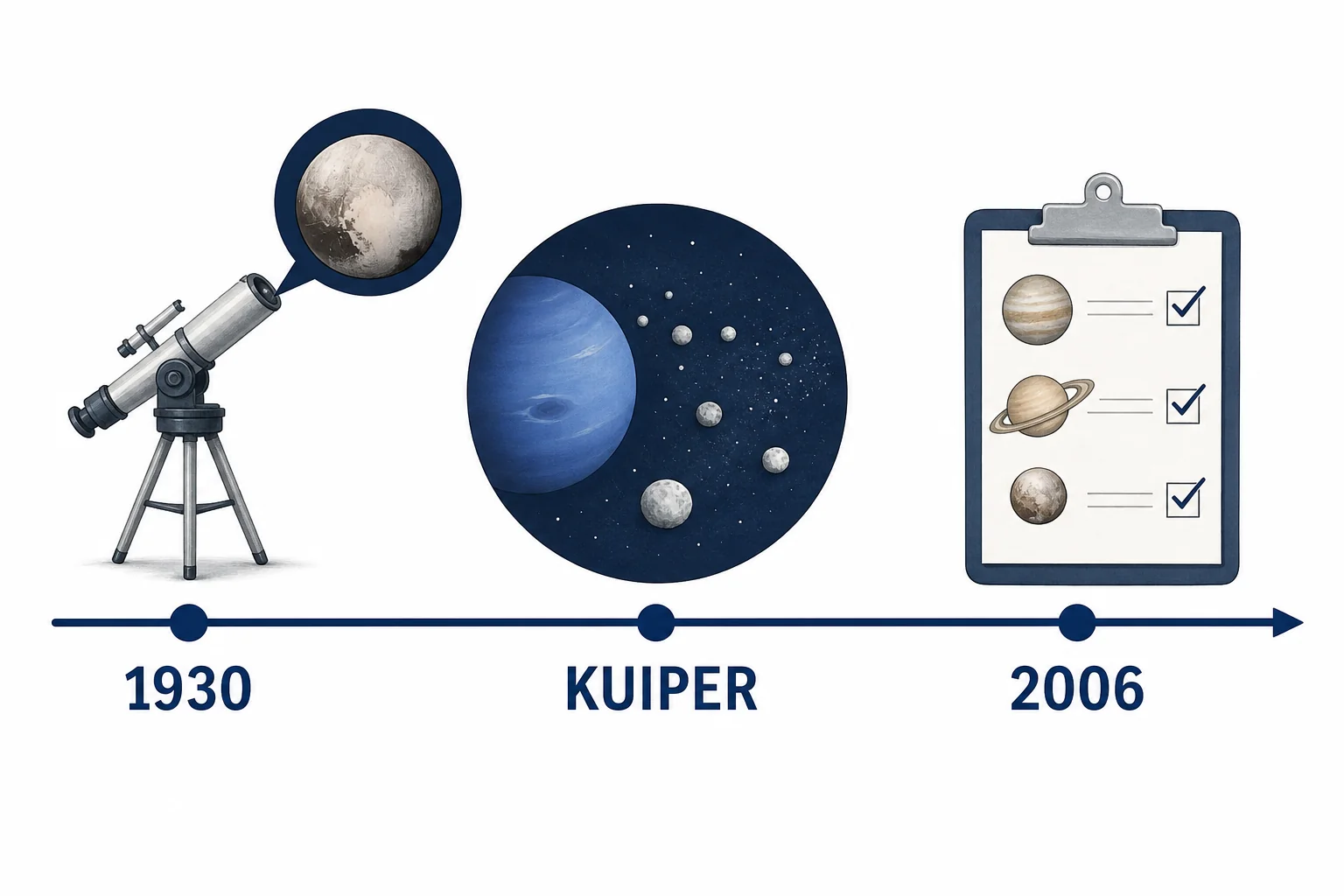
Timeline showing Pluto discovered in 1930, new icy worlds found beyond Neptune, and Pluto reclassified in 2006
Pluto’s name changed after scientists found more worlds like it.
Pluto was discovered in 1930. At first, scientists thought it might be larger than Earth. Better telescopes showed that Pluto is much smaller. It is even smaller than Earth’s Moon. For a long time, that did not stop people from calling it the ninth planet. Pluto was far away, hard to see, and special. Then astronomers found more small icy worlds beyond Neptune. This area is called the Kuiper Belt. Some of those worlds followed paths like Pluto’s path. One object, Eris, seemed close to Pluto in size. Scientists had to make a choice. They could add many new planets, or they could define the word planet more carefully. In 2006, the IAU chose a clear definition. That new definition moved Pluto into a new group called dwarf planets.

Science changes when new evidence makes old labels less useful.

Rule 1: Orbit the Sun

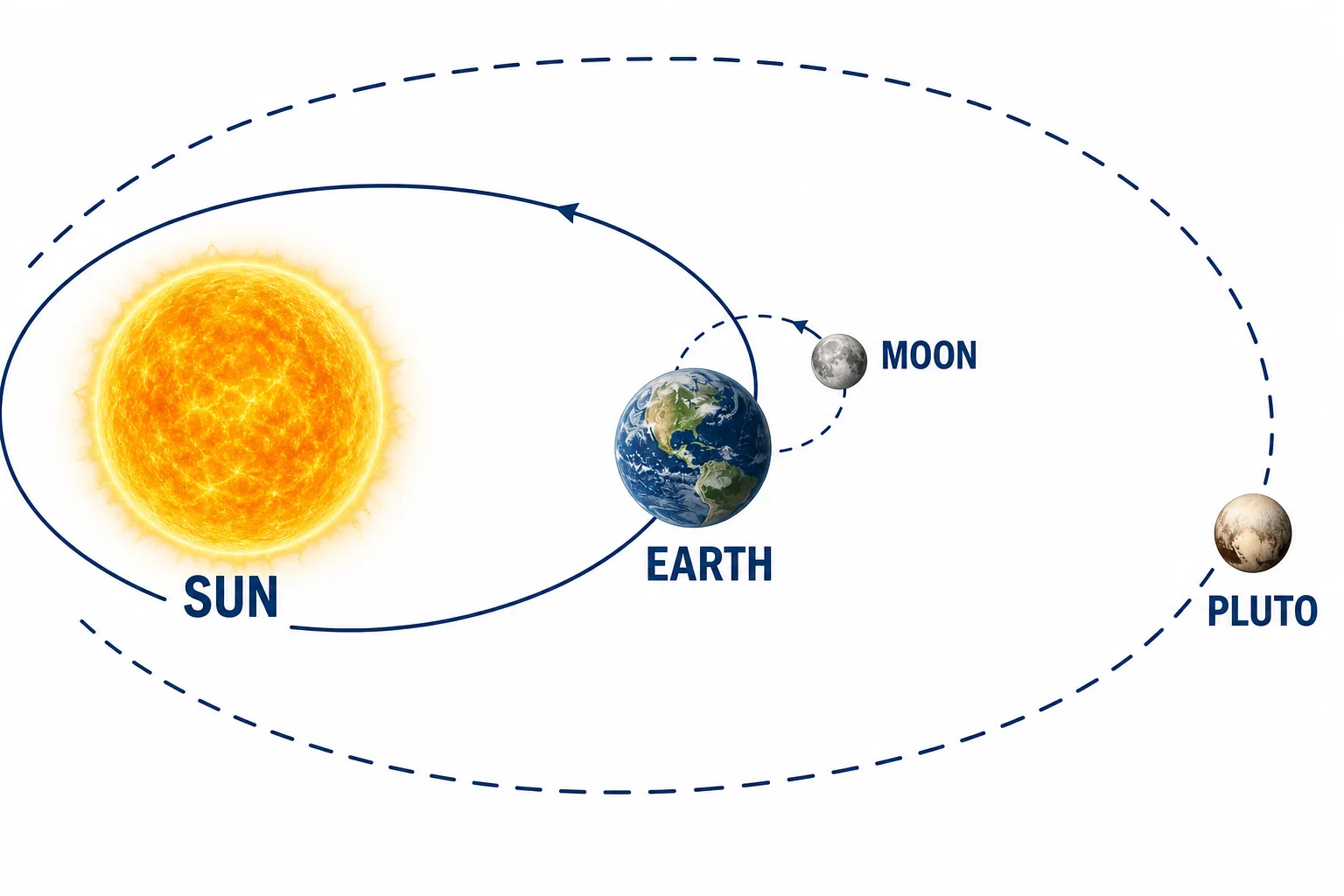
Diagram showing Earth and Pluto orbiting the Sun, while the Moon orbits Earth
Planets orbit the Sun. Moons orbit planets.
The first rule is simple. A planet must travel around the Sun. Earth does this once every year. Mars does it too. So do Jupiter, Saturn, and the other planets. Pluto also orbits the Sun, so it passes the first rule. Moons do not pass this rule. Earth’s Moon goes around Earth while Earth goes around the Sun. That makes the Moon a moon, not a planet. Some objects orbit other stars. Those are called exoplanets. They are real planets, but they are not part of our solar system’s planet list. The IAU rule used in 2006 was written for objects in our solar system. It helps scientists sort the many things that travel around our Sun.

Pluto passes the rule about orbiting the Sun.

Rule 2: Be round

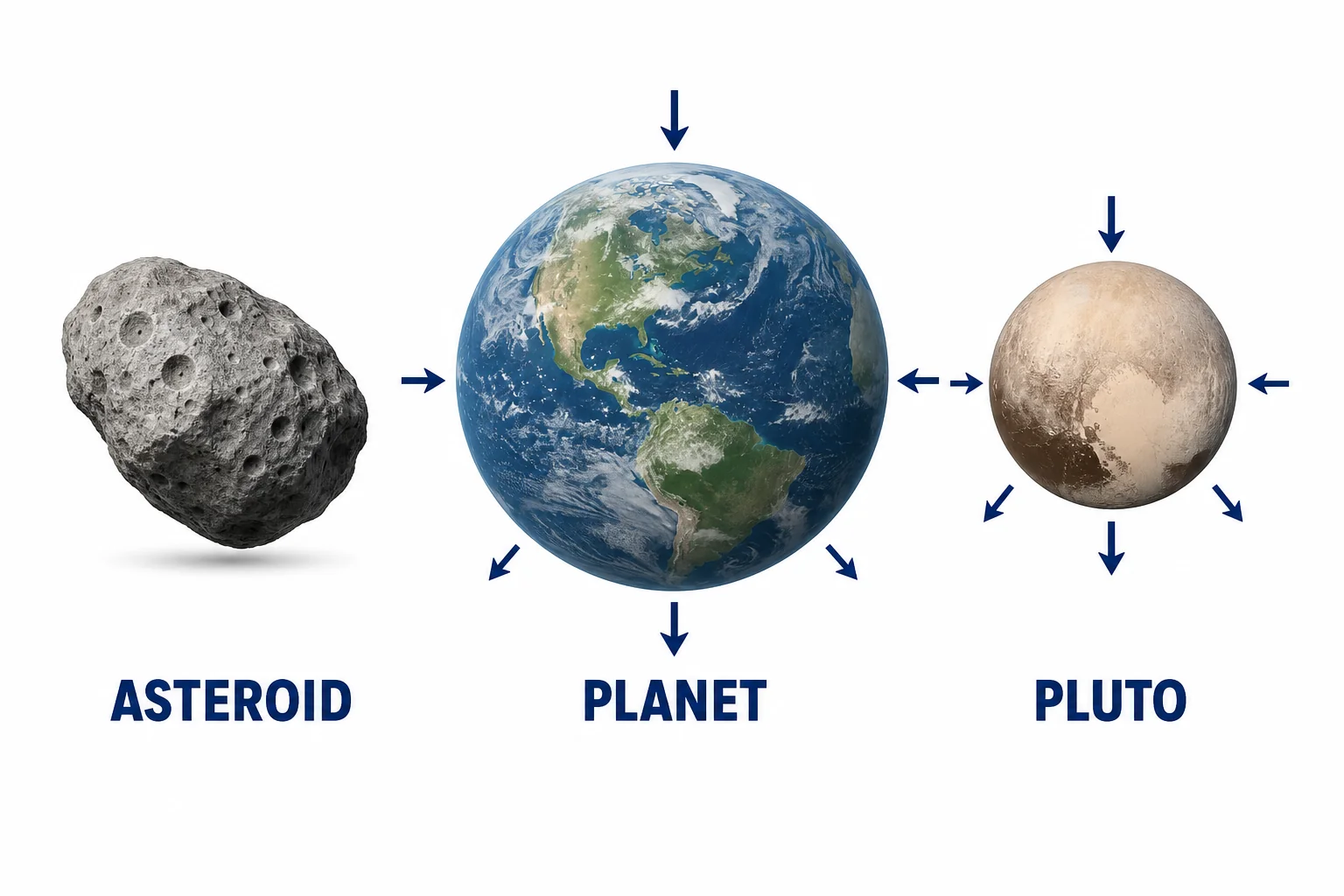
Comparison of a lumpy asteroid, a round planet, and round Pluto to show how gravity shapes larger objects
Gravity can pull large worlds into round shapes.
The second rule says a planet must be round, or nearly round. This happens when an object has enough mass for gravity to pull it into a ball shape. Small rocks in space can have lumpy shapes. They may look like potatoes or broken pieces. Larger worlds have stronger gravity, so tall bumps get pulled down over time. Earth is round. Jupiter is round. Pluto is round too, so it passes the second rule. This does not mean every round world is a planet. Many moons are round. Some dwarf planets are round. Being round is one part of the test, not the whole test. Scientists use all three rules together.

Pluto is round, so it passes the shape rule.

Rule 3: Clear the path

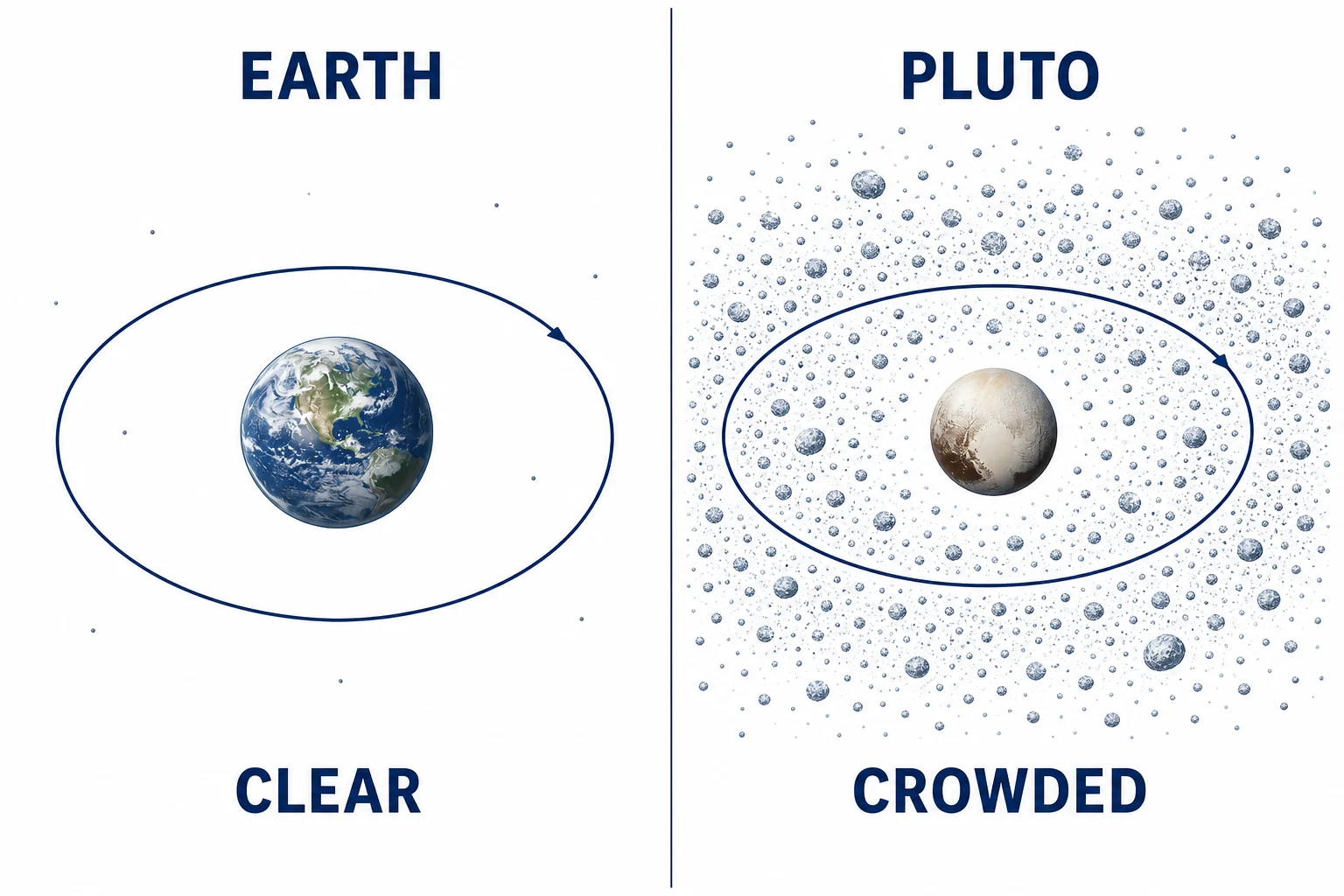
Comparison showing Earth in a mostly clear orbit and Pluto moving among many icy Kuiper Belt objects
A planet is the main object in its orbital neighborhood.
The third rule is the one Pluto does not pass. A planet must clear its neighborhood around its orbit. That means it has become the main large object in its path. It has pulled in, pushed away, or controlled many smaller objects nearby. Earth has cleared its path well. So has Neptune. Pluto has not. Pluto moves through the Kuiper Belt, a wide region filled with many icy bodies. Its orbit also crosses Neptune’s orbit path, although the two do not crash because their timing keeps them apart. Pluto shares its region with many objects. That is why scientists say it has not cleared its neighborhood. This rule separates the eight planets from dwarf planets.

Pluto shares its path with many icy objects.

Dwarf planet is not an insult
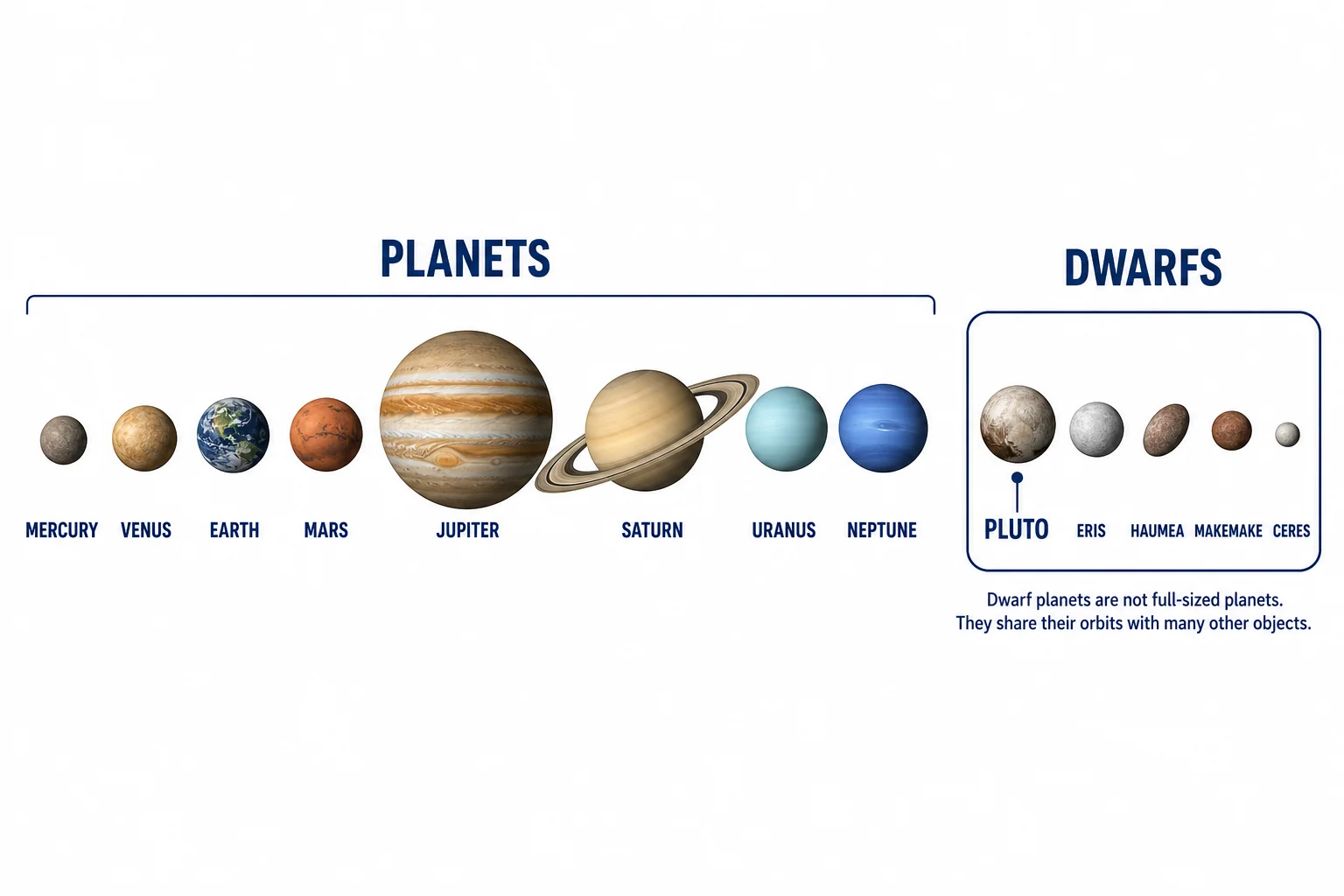
Group portrait of the eight planets with Pluto and other dwarf planets shown in a separate smaller group
Dwarf planets are real worlds with their own features.
A dwarf planet is still an important world. Pluto has mountains, plains, ice, and moons. It has a thin atmosphere at some times in its orbit. NASA’s New Horizons spacecraft flew past Pluto in 2015 and showed that it is active and interesting. The name dwarf planet tells scientists where Pluto fits in the solar system. It means Pluto orbits the Sun, is round, and has not cleared its neighborhood. Other dwarf planets include Ceres, Eris, Haumea, and Makemake. The eight planets and the dwarf planets are all part of one solar system. The new labels help scientists compare them fairly. Pluto did not disappear. It became the best known member of a group of small round worlds.

Pluto is not gone. It belongs to the dwarf planet group.

Vocabulary

planet
An object in our solar system that orbits the Sun, is round, and has cleared its orbital neighborhood.
dwarf planet
A round object that orbits the Sun but has not cleared its orbital neighborhood.
orbit
The path an object follows as it moves around another object in space.
Kuiper Belt
A faraway region beyond Neptune that contains many icy objects, including Pluto.
IAU
The International Astronomical Union, a group that helps set official names and definitions in astronomy.

In the Classroom

Sort the solar system

20 minutes | Grades 3-5

Give students cards for planets, moons, asteroids, and dwarf planets. Students sort each card by asking whether it orbits the Sun, is round, and has cleared its neighborhood.

Model a crowded orbit

25 minutes | Grades 4-5

Use a large circle for an orbit path and small counters for objects nearby. Students compare a mostly empty orbit with a crowded orbit and explain why Pluto fits the dwarf planet group.

Write Pluto’s new label

15 minutes | Grades 3-5

Students write a short claim with evidence about why Pluto is a dwarf planet. They must use all three planet rules in their explanation.

Key Takeaways

  • The solar system has eight planets under the 2006 IAU definition.
  • A planet must orbit the Sun, be round, and clear its orbital neighborhood.
  • Pluto orbits the Sun and is round, but it has not cleared its neighborhood.
  • Pluto is a dwarf planet because it shares its region with many Kuiper Belt objects.
  • Changing Pluto’s label helped scientists sort many solar system objects more clearly.