Why Do We Forget Things?
How the brain keeps and loses memories
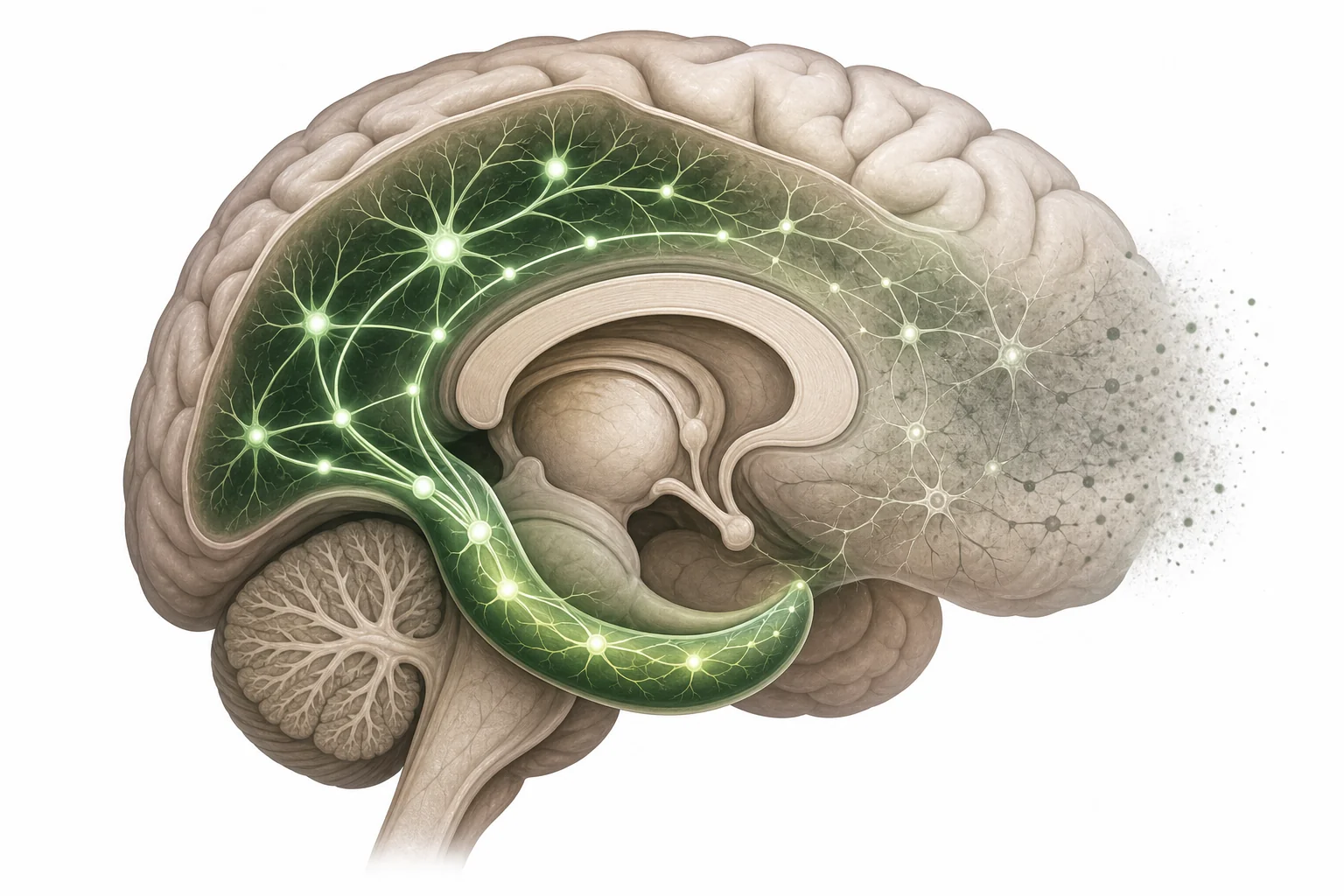
The brain saves some experiences and lets others fade. We forget when a memory was not stored well, when clues are missing, or when newer learning gets in the way. Forgetting can also help the brain remove details that are no longer useful.
Forgetting can feel like a mistake in the brain. It is often part of how a living system stays useful. Your brain takes in far more information than it can keep in active detail. It must strengthen some connections, weaken others, and search for stored patterns when you need them again. A name, a formula, or a lab direction can disappear for different reasons. It may have been weakly stored. It may be stored but hard to reach. It may be crowded out by similar information. Sleep, attention, stress, repetition, and time all change what happens next. In biology, this question connects to cells, tissues, and organ systems. Neurons communicate through networks, and those networks change with use. Forgetting is not one single event. It is a set of processes that shape learning, memory, and behavior.
Memory starts as a pattern
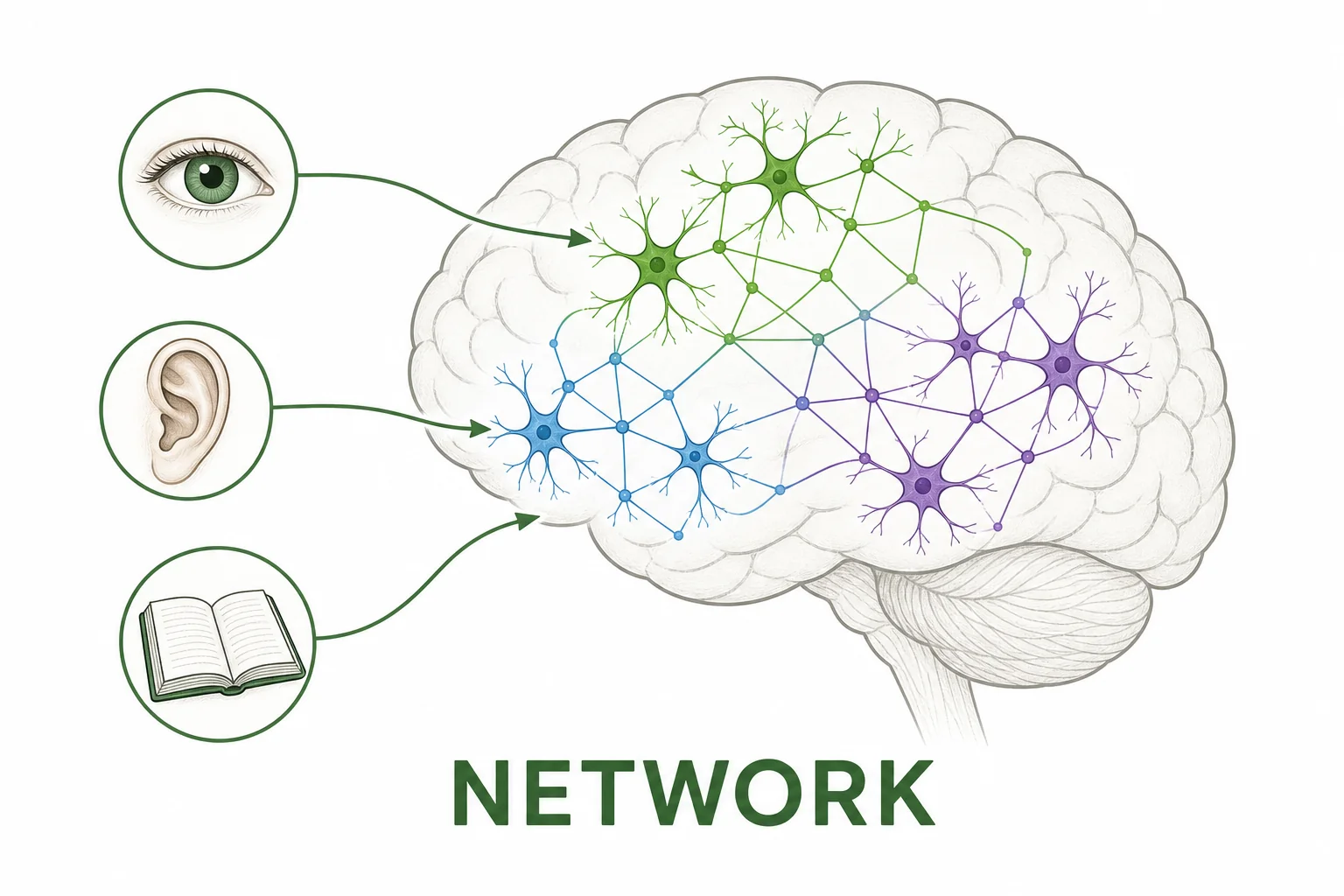
A memory is built from connected activity across many neurons.
Consolidation makes memories sturdier
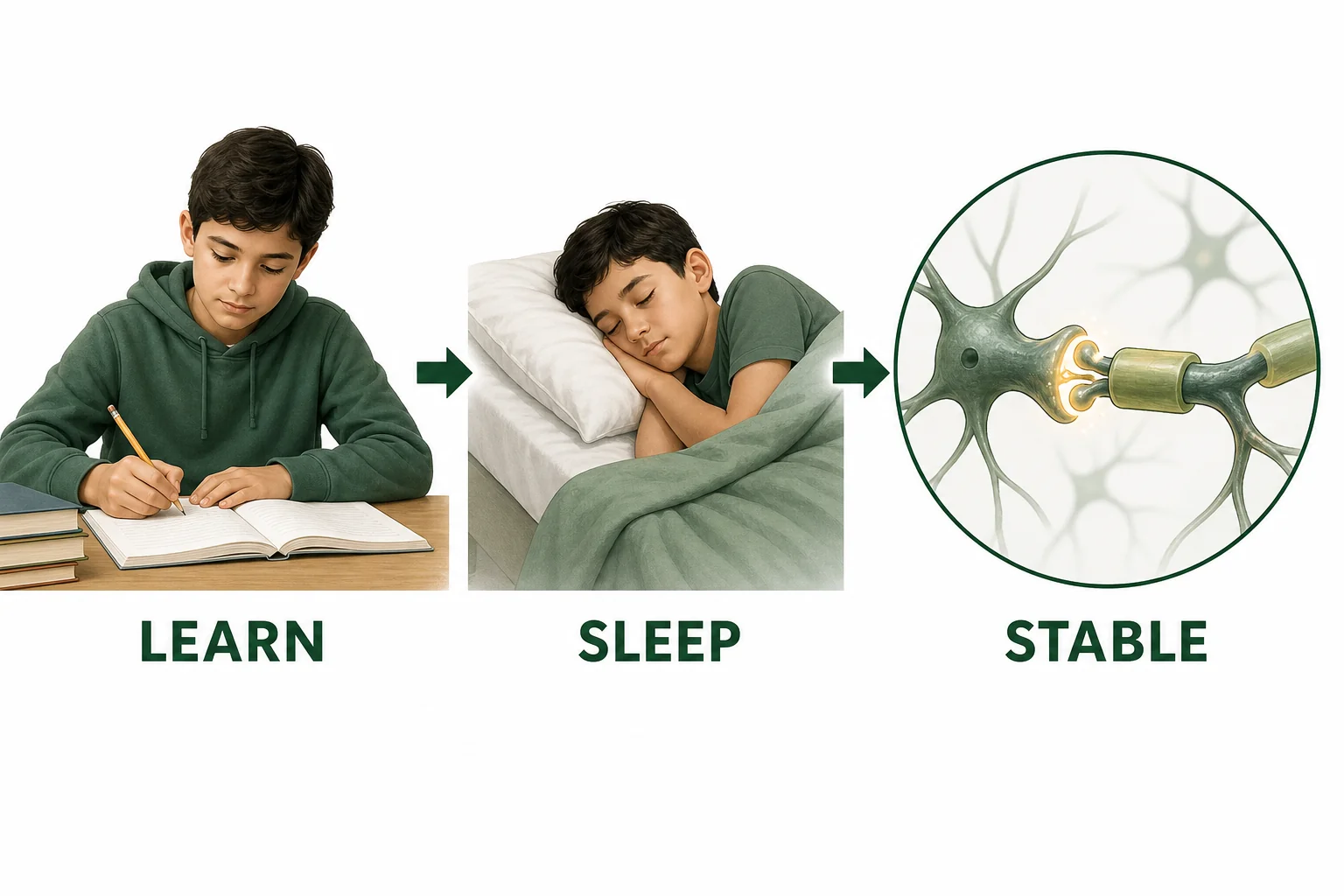
Sleep gives the brain time to strengthen recent learning.
The forgetting curve shows time at work
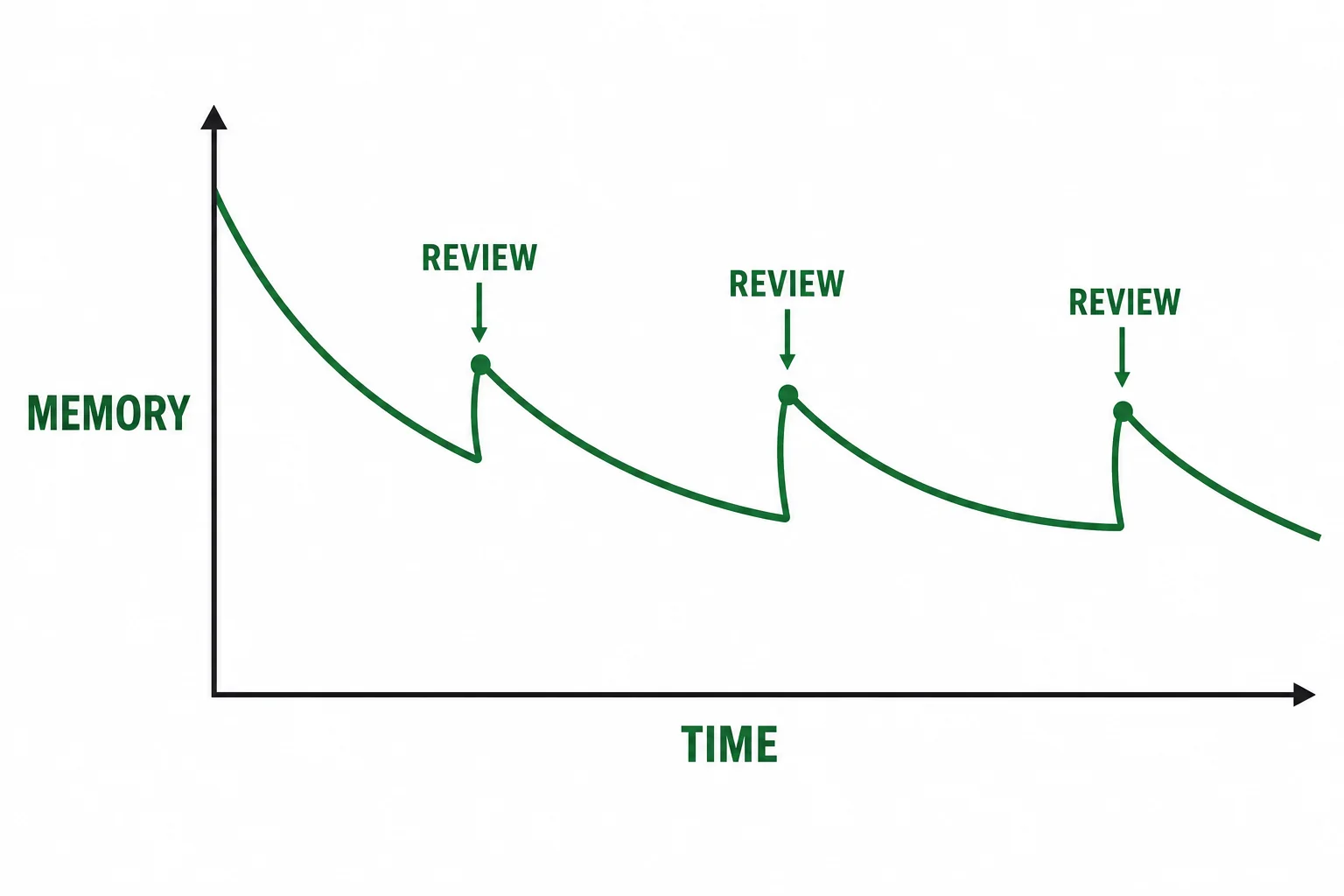
Spacing out recall helps keep memories reachable.
Retrieval can fail
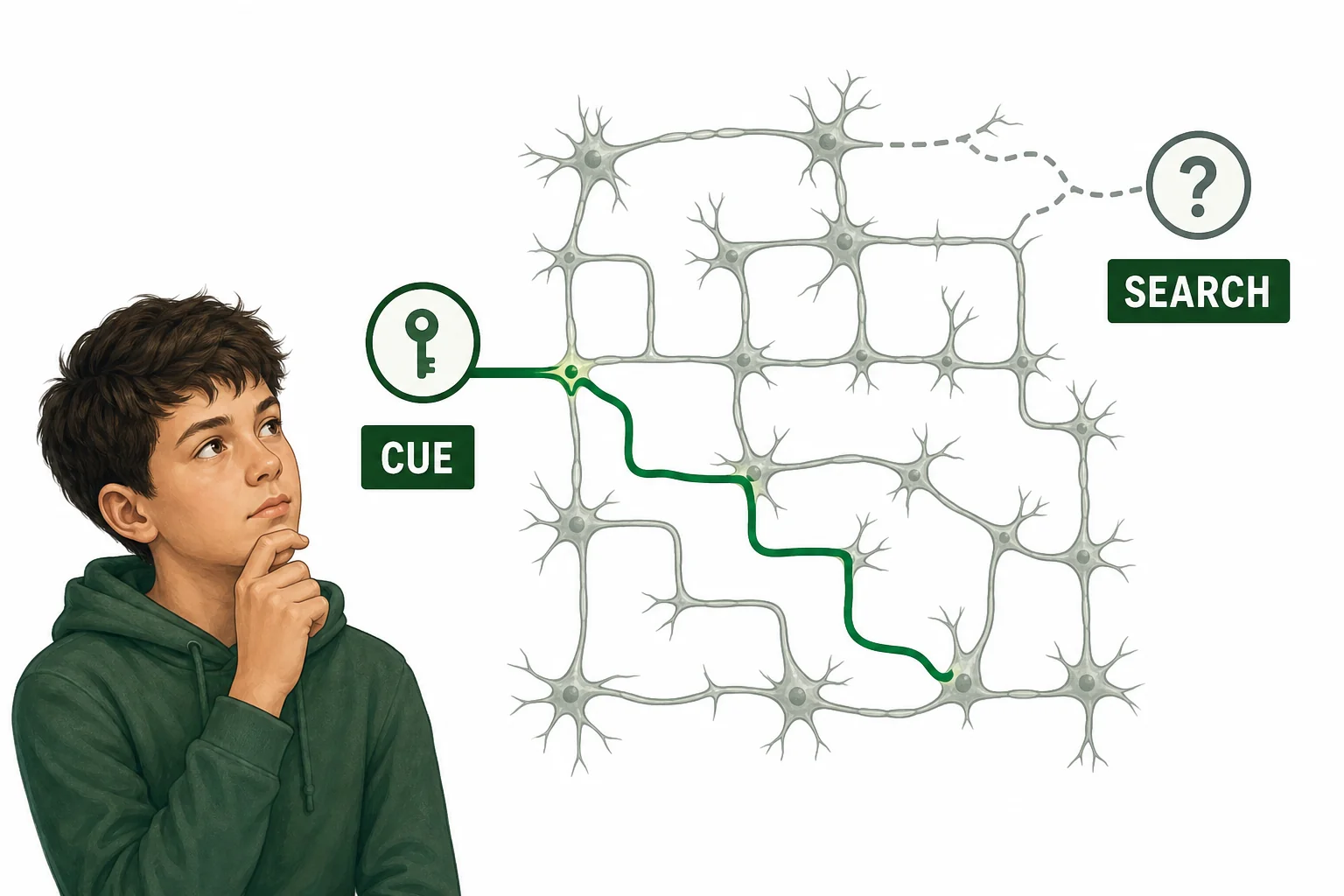
A good cue can make a stored memory easier to find.
Pruning keeps networks efficient
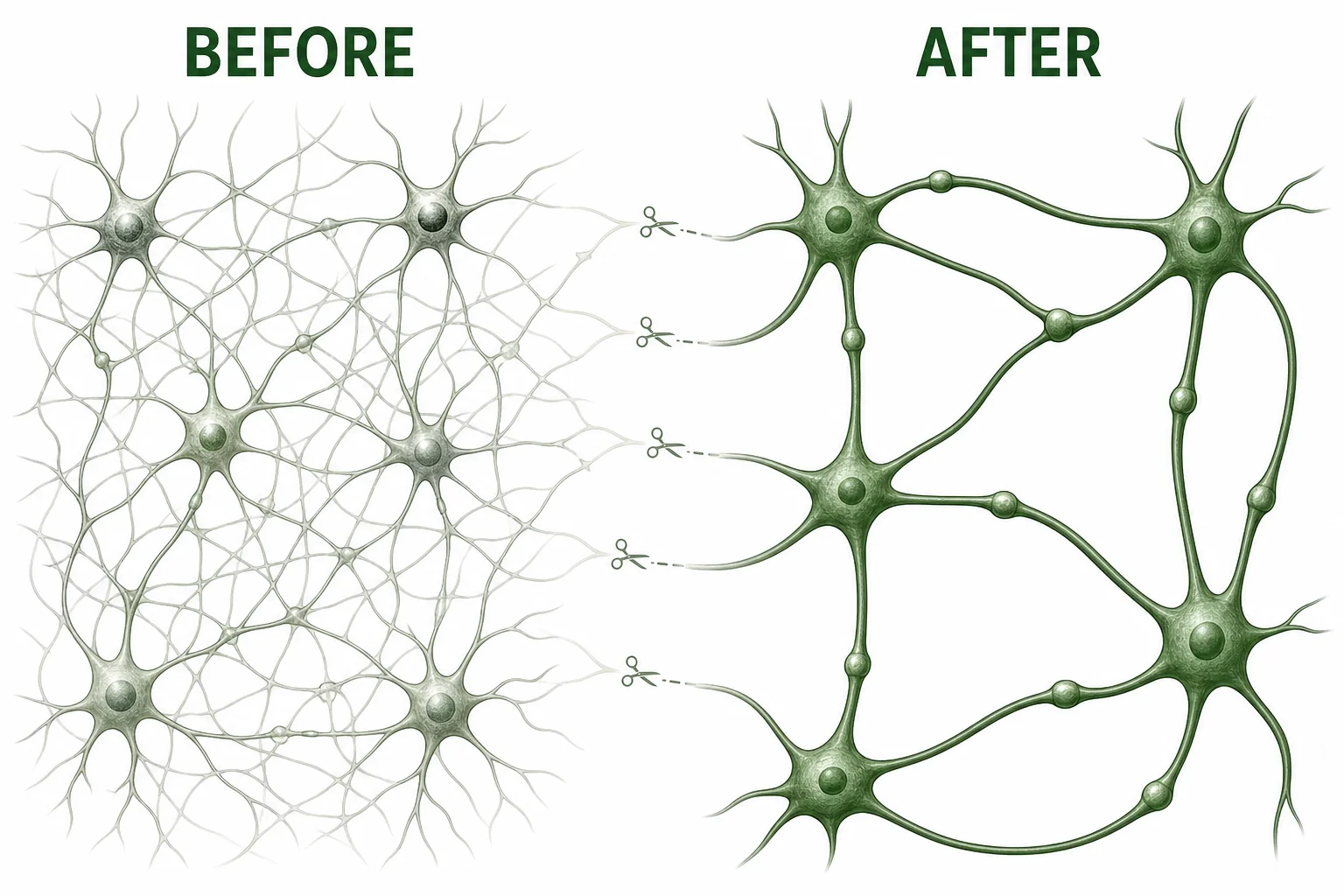
Forgetting can make brain networks less cluttered.
Vocabulary
- Neuron
- A nerve cell that sends and receives signals in the brain and body.
- Consolidation
- The process that helps a new memory become more stable over time.
- Hippocampus
- A brain structure that helps connect parts of an experience into a memory.
- Retrieval
- The act of bringing stored information back into active use.
- Pruning
- The weakening or removal of connections that are used less often.
- Forgetting curve
- A pattern showing that memory often fades quickly at first, then more slowly.
In the Classroom
Make a class forgetting curve
30 minutes | Grades 9-12
Give students a list of 15 neutral words and test recall after 2 minutes, 10 minutes, and the next class period. Graph class averages and discuss why repeated recall changes the shape of the curve.
Cue versus no cue recall
20 minutes | Grades 9-12
Students study paired words, then try to recall the second word with and without the first word as a cue. Use the results to explain retrieval failure and the role of context.
Model pruning with string networks
25 minutes | Grades 9-12
Students build a web of strings between paper neurons, then remove connections that were not used in a practice pattern. The class compares a crowded network with a pruned network and links the model to efficiency and limits.
Key Takeaways
- • Forgetting can happen during storage, consolidation, retrieval, or network change.
- • Memories are patterns across groups of neurons, not single files in one brain spot.
- • Sleep and repeated practice help stabilize new learning.
- • Cues and context can make a memory easier to retrieve.
- • Pruning and fading can help the brain stay efficient.