Sign in to save

Bookmark this page so you can find it later.

Sign in to save

Bookmark this page so you can find it later.

Health middle-school May 24, 2026

Do You Really Need to Drink 8 Glasses of Water a Day?

Hydration depends on your body and your day
A student compares a water bottle, a bowl of fruit, soup, and a urine color chart to learn that hydration comes from drinks and foods.

Most people do not need exactly 8 glasses of water every day. Your water needs change with your body size, activity, weather, health, and the foods you eat. Thirst, urine color, and how you feel can help you decide when to drink more.

Big Idea. NGSS MS-LS1-3 connects hydration to how body systems work together to move materials and keep cells alive.

The 8 glasses rule sounds simple. Drink eight cups of water a day, and you are set. Real bodies are not that simple. A student who plays soccer in hot weather may need more fluid than a student reading indoors. A person who eats soup, oranges, yogurt, and cucumbers gets water from food. A person with fever, diarrhea, or heavy sweating may lose water faster. The number 8 is easy to remember, but it is not a science law. Hydration is about balance. Water enters your body through drinks and food. Water leaves through urine, sweat, breath, and waste. Your brain, kidneys, blood, skin, and muscles all help manage that balance. You can explore related body data with LivePhysics tools like the interactive tools collection. The goal is not to chase one number. The goal is to learn what your body is telling you.

Where the 8 Glasses Idea Came From
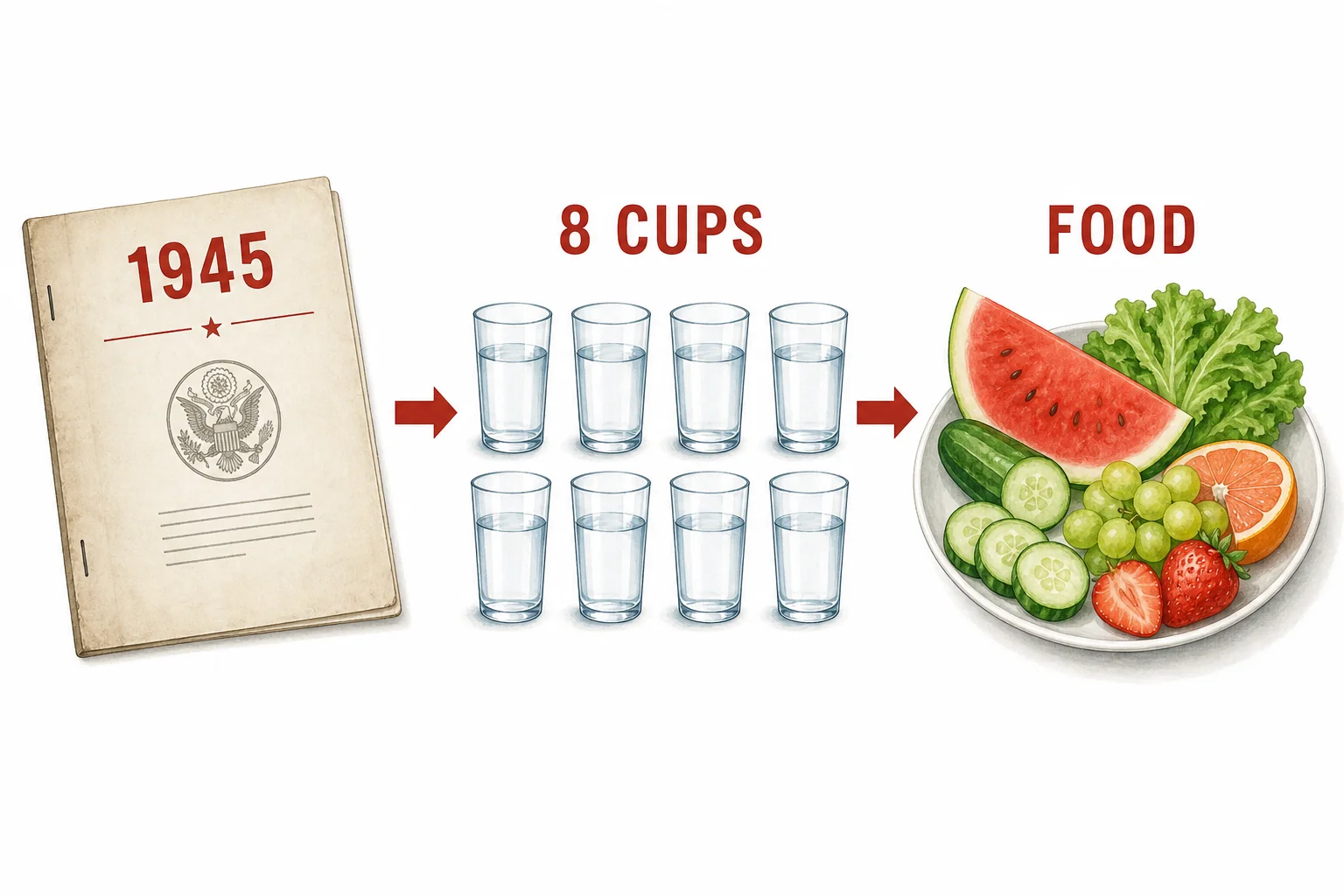
A timeline shows how older nutrition advice about total water became simplified into the 8 glasses rule.
A simple rule left out part of the original advice
The 8 glasses idea probably grew from older nutrition advice that was shortened over time. In 1945, a U.S. food and nutrition board said adults need about 2.5 liters of water each day. The same advice also said much of that water comes from food. That second part often got left out. Later, the simple phrase 8 glasses a day spread through magazines, schools, and health tips. It was easy to remember, so it stuck. A cup is about 8 fluid ounces, so 8 cups is about 1.9 liters. That amount may be close for some people on some days. It can be too much, too little, or just right for others. Science groups now use ranges and averages instead of one rule. They count total water from drinks and foods. That gives a more realistic picture of hydration.

The old advice counted water in food too.

Your Needs Change
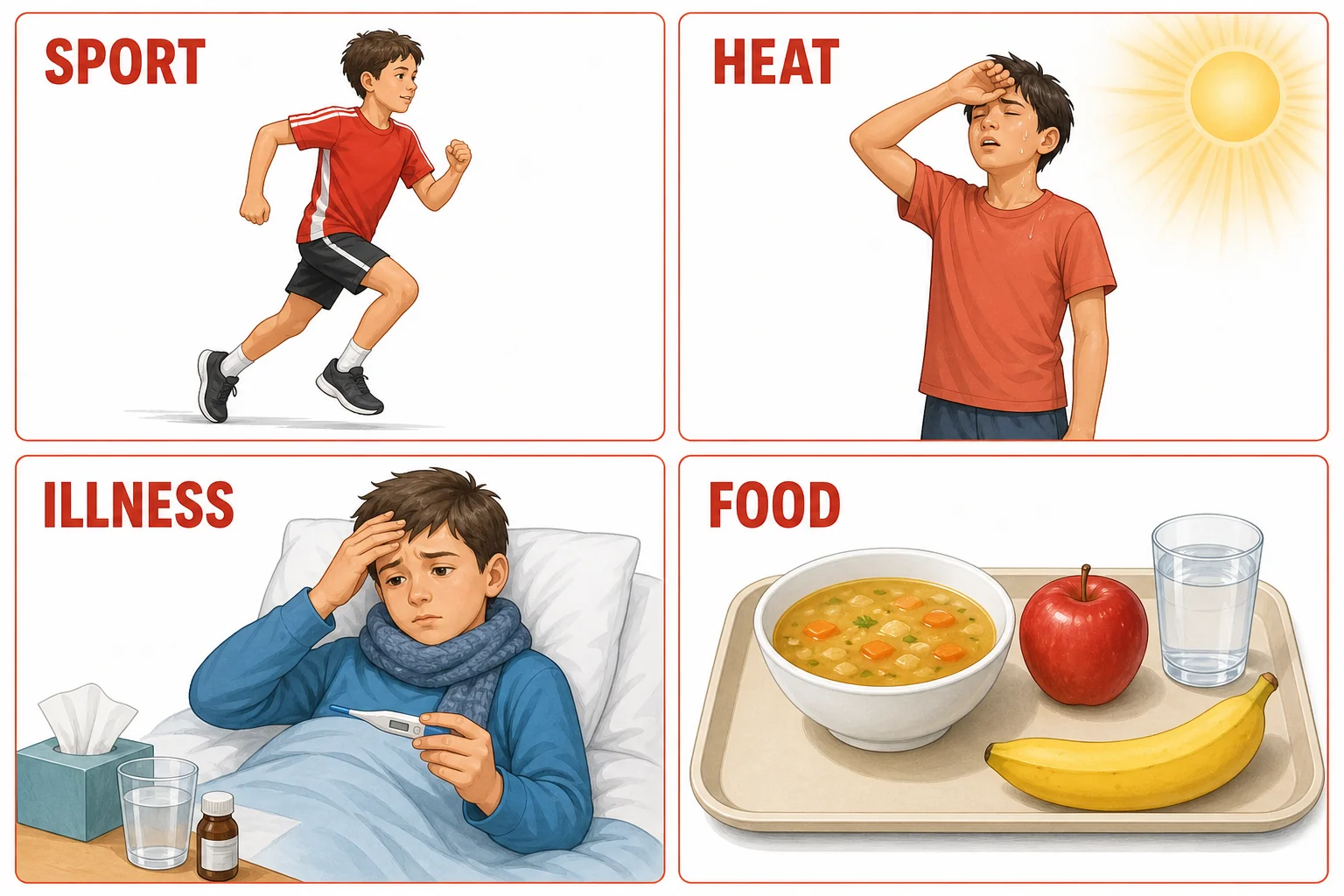
Four students in different situations show that water needs vary with exercise, temperature, illness, and food choices.
Hydration needs change with the day
Water needs are different from person to person. Body size matters because larger bodies usually contain more water. Activity matters because muscles make heat, and sweating helps remove that heat. Weather matters because hot air, dry air, and high altitude can increase water loss. Illness matters too. Fever, vomiting, and diarrhea can remove fluid quickly. Some medicines and medical conditions also change water balance, so families should follow advice from a health professional when needed. The food you eat changes the amount you need to drink. Watermelon, strawberries, lettuce, cucumbers, soup, milk, and yogurt all add fluid. Salty foods can make you feel thirsty because your body needs water to balance dissolved particles in the blood. There is no perfect daily number for every student. A better question is whether your intake matches your losses that day.

The right amount of water depends on conditions, not a fixed rule.

Food Counts Too
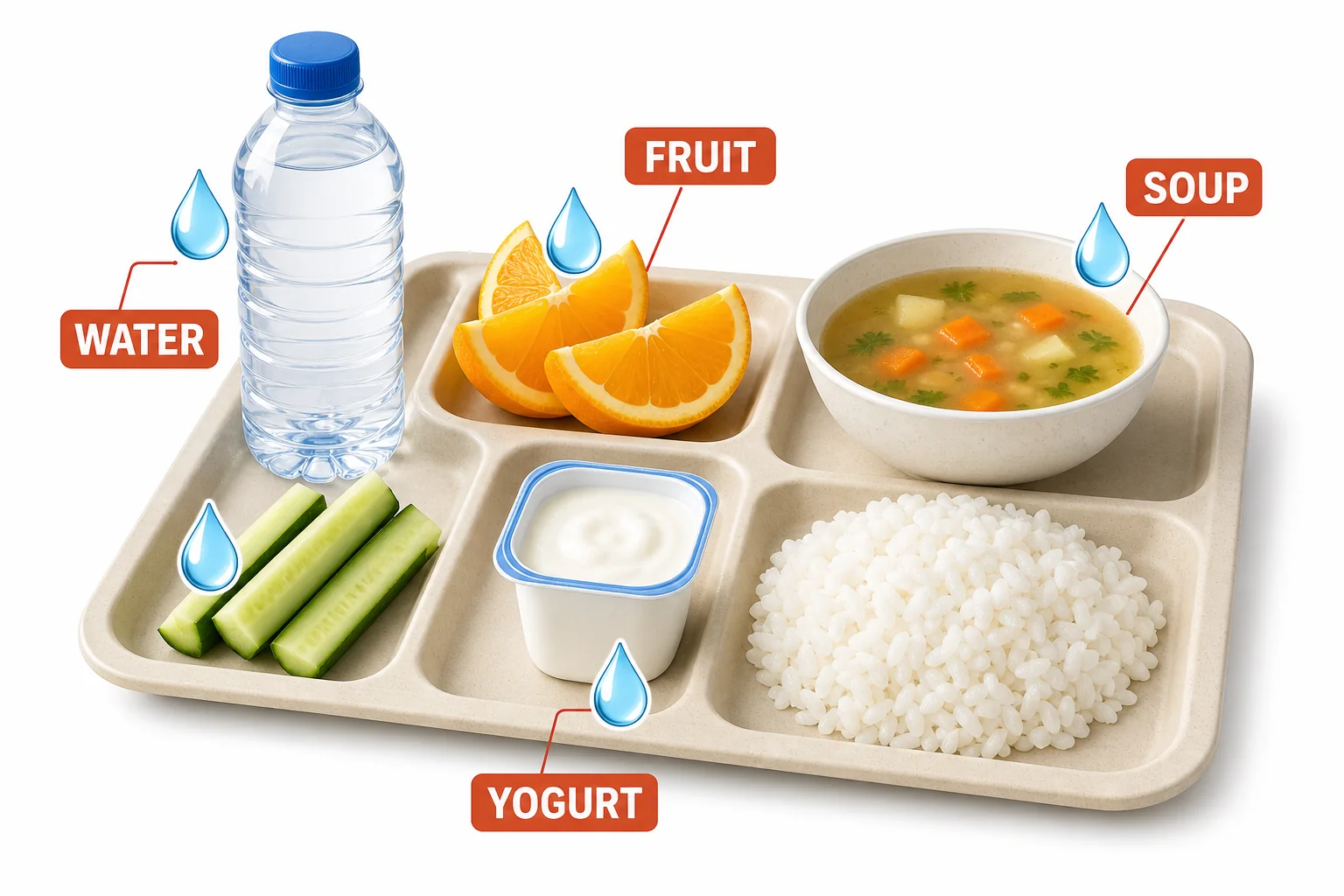
A lunch tray shows several foods and drinks that contribute water to the body.
Water can come from meals and snacks
Drinking water is not the only way to hydrate. Many foods contain a lot of water. Fruits and vegetables often have high water content because plant cells are filled with fluid. Soups, smoothies, milk, and yogurt also add water. Even cooked grains and pasta hold water after cooking. This is why two students can drink different amounts but still be well hydrated. One student may drink more plain water. Another may get more fluid from meals. Sugary drinks can add water, but they can also add a lot of sugar. Health classes often focus on water as the main drink because it hydrates without extra sugar. Caffeinated drinks can still count toward fluid intake for many people, but they are not the best choice for every student. Water-rich foods also bring vitamins, minerals, fiber, and energy. Hydration is part of a whole eating pattern.

Foods can supply a meaningful share of daily water.

How Your Body Controls Water
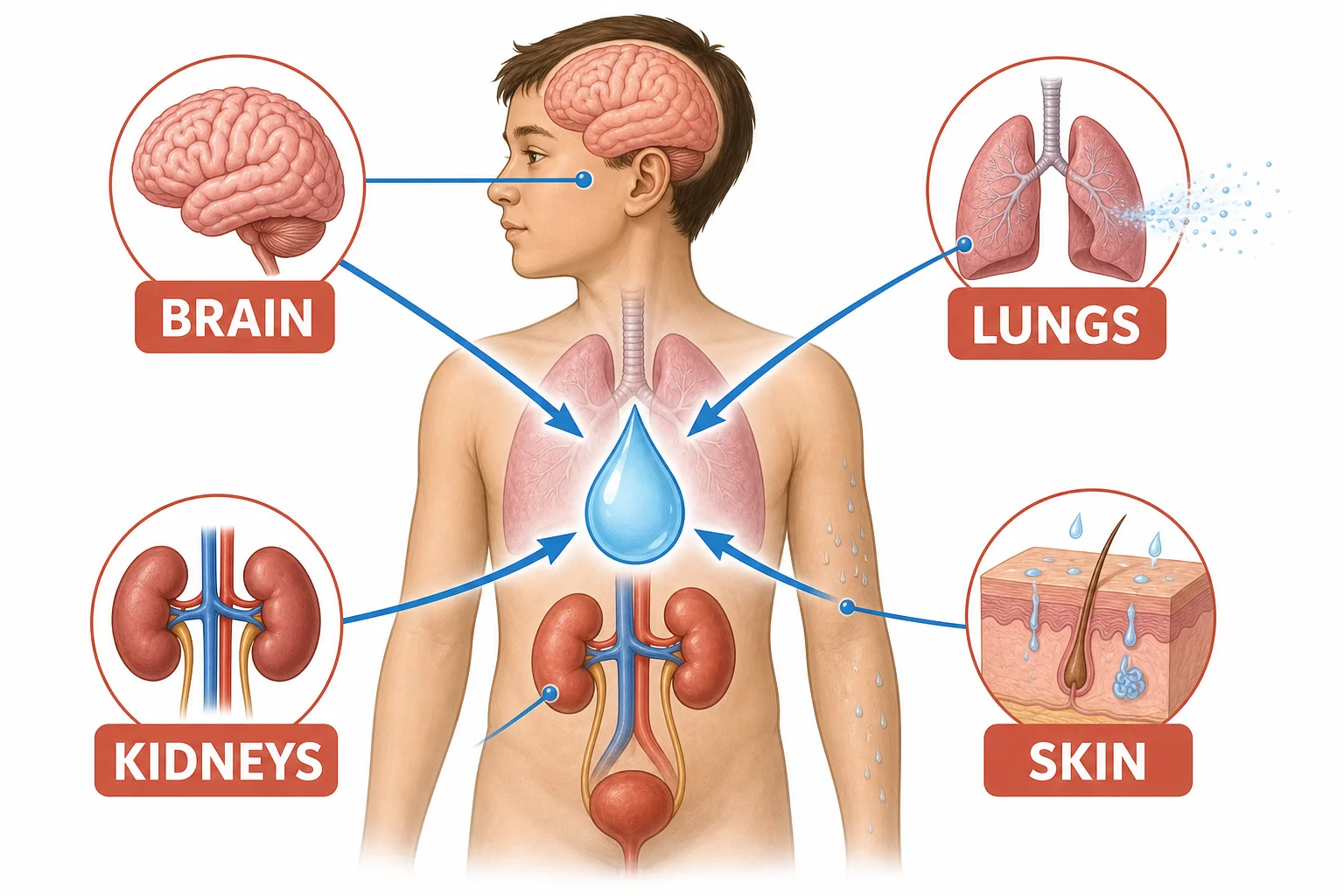
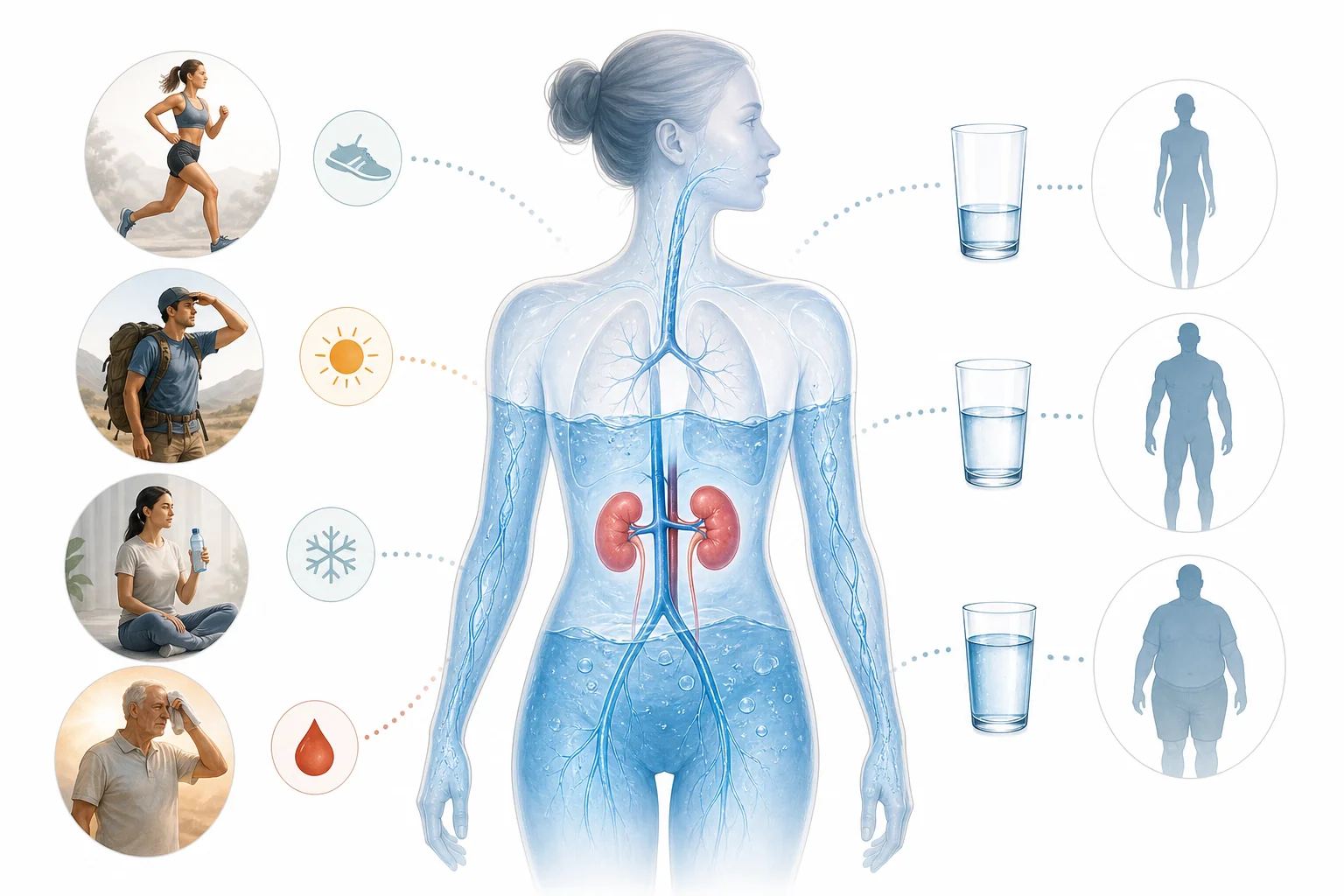
A body diagram shows the brain, kidneys, skin, and lungs working together to regulate water balance.
Several body systems manage water balance
Your body works to keep water and dissolved particles in a safe range. The brain checks the concentration of the blood. If the blood becomes more concentrated, the brain can make you feel thirsty. It can also signal the body to save water. The kidneys then make less urine, and the urine becomes darker. This is why thirst is not the first thing that happens. Your body may already be conserving water before you notice a strong urge to drink. Sweat is another part of the system. When you are hot, sweat evaporates from skin and helps cool the body. That cooling uses water. Breathing also releases a small amount of water vapor. These systems work together all day. Hydration is not just about the stomach. It is about the brain, blood, kidneys, skin, muscles, and lungs.

Thirst is a useful signal, but it may appear after your body has started saving water.

Signs to Watch
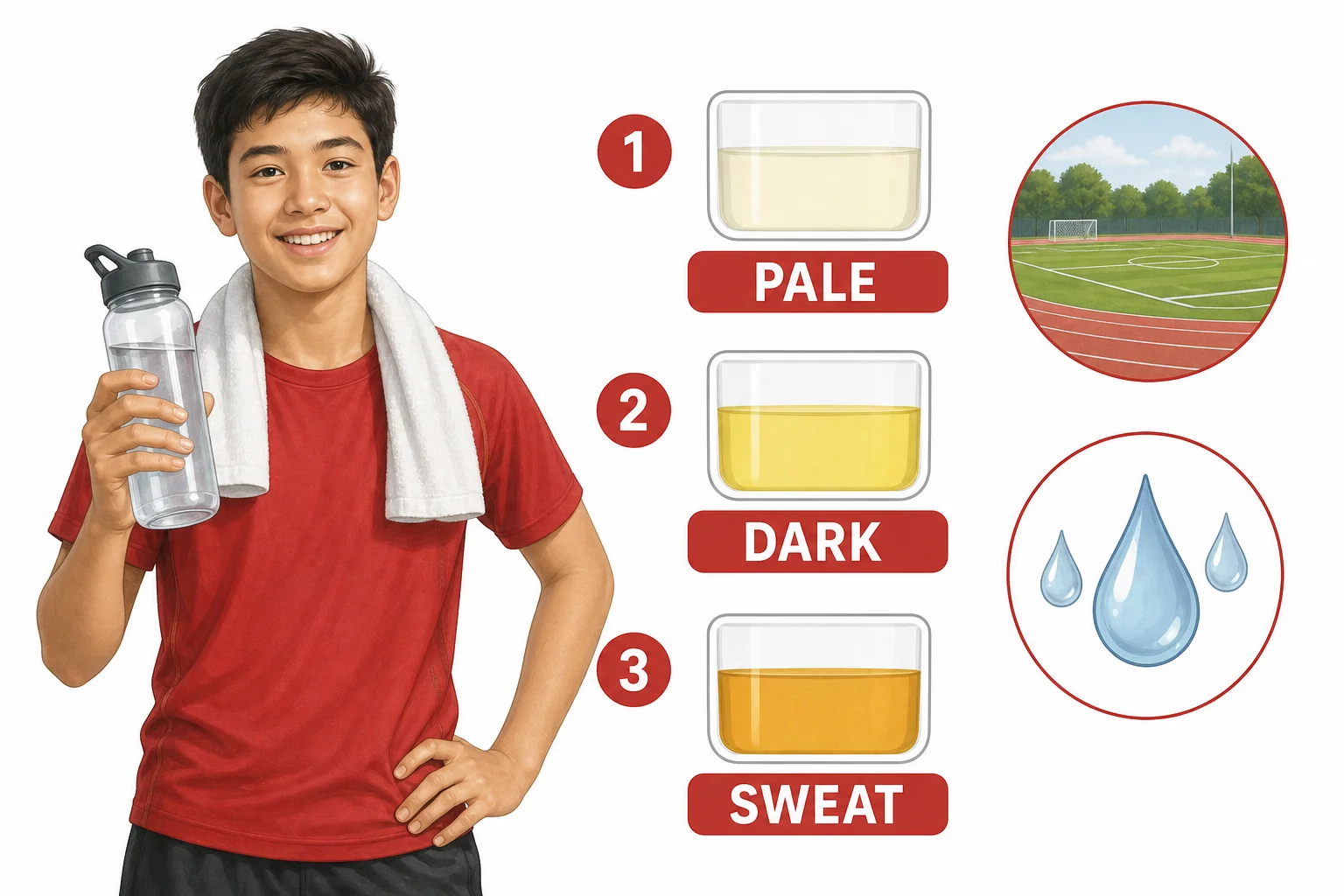
A student checks a water bottle, a sports field, and a simple urine color strip to notice hydration clues.
Use several clues, not just one
Mild dehydration can affect how you feel and perform. Common signs include thirst, dry mouth, headache, tiredness, dizziness, and fewer bathroom trips. Urine color can help, but it is not perfect. Pale yellow often suggests good hydration. Dark yellow or amber can mean you may need more fluid. Vitamins, foods, and medicines can change urine color, so color is only one clue. During sports or hot weather, students should drink before, during, and after activity. Small regular sips often work better than waiting until the end. Severe dehydration is serious. Warning signs can include confusion, fainting, very fast heartbeat, no urination for many hours, or very dry skin and mouth. Those signs need adult help right away. For most school days, the best plan is simple. Drink when thirsty, drink more when sweating, and include water-rich foods.

Dark urine, dizziness, and very little urination are signs to take seriously.

Vocabulary

Hydration
Having enough water in the body for cells, blood, organs, and temperature control to work well.
Dehydration
A condition that happens when the body loses more water than it takes in.
Fluid balance
The balance between water entering the body and water leaving through urine, sweat, breath, and waste.
Electrolytes
Dissolved minerals, such as sodium and potassium, that help nerves, muscles, and water balance work properly.
Urine concentration
How much waste and dissolved material is packed into urine. Darker urine is often more concentrated.

In the Classroom

Hydration Clue Sort

20 minutes | Grades 6-8

Students sort cards into signs of good hydration, possible dehydration, and signs that need adult help. Then they discuss why no single clue gives the whole answer.

Water From Food Estimate

30 minutes | Grades 6-8

Students compare common foods and rank them from low to high water content. They build a sample lunch and explain how the meal could add to daily fluid intake.

One Number Is Not Enough

25 minutes | Grades 6-8

Students read short profiles of people with different activity levels, weather, and meals. They decide who may need more fluid and defend their reasoning with evidence.

Key Takeaways

  • The 8 glasses rule is a simple habit, not a fixed science requirement.
  • Total water includes water from drinks and from foods.
  • Water needs change with activity, weather, body size, diet, and health.
  • Thirst helps, but the body may start conserving water before thirst feels strong.
  • Urine color, energy level, sweating, and bathroom trips can all give hydration clues.