Sign in to save

Bookmark this page so you can find it later.

Sign in to save

Bookmark this page so you can find it later.

Health middle-school May 24, 2026

How Does Your Body Heal a Broken Bone?

A repair job built by living cells
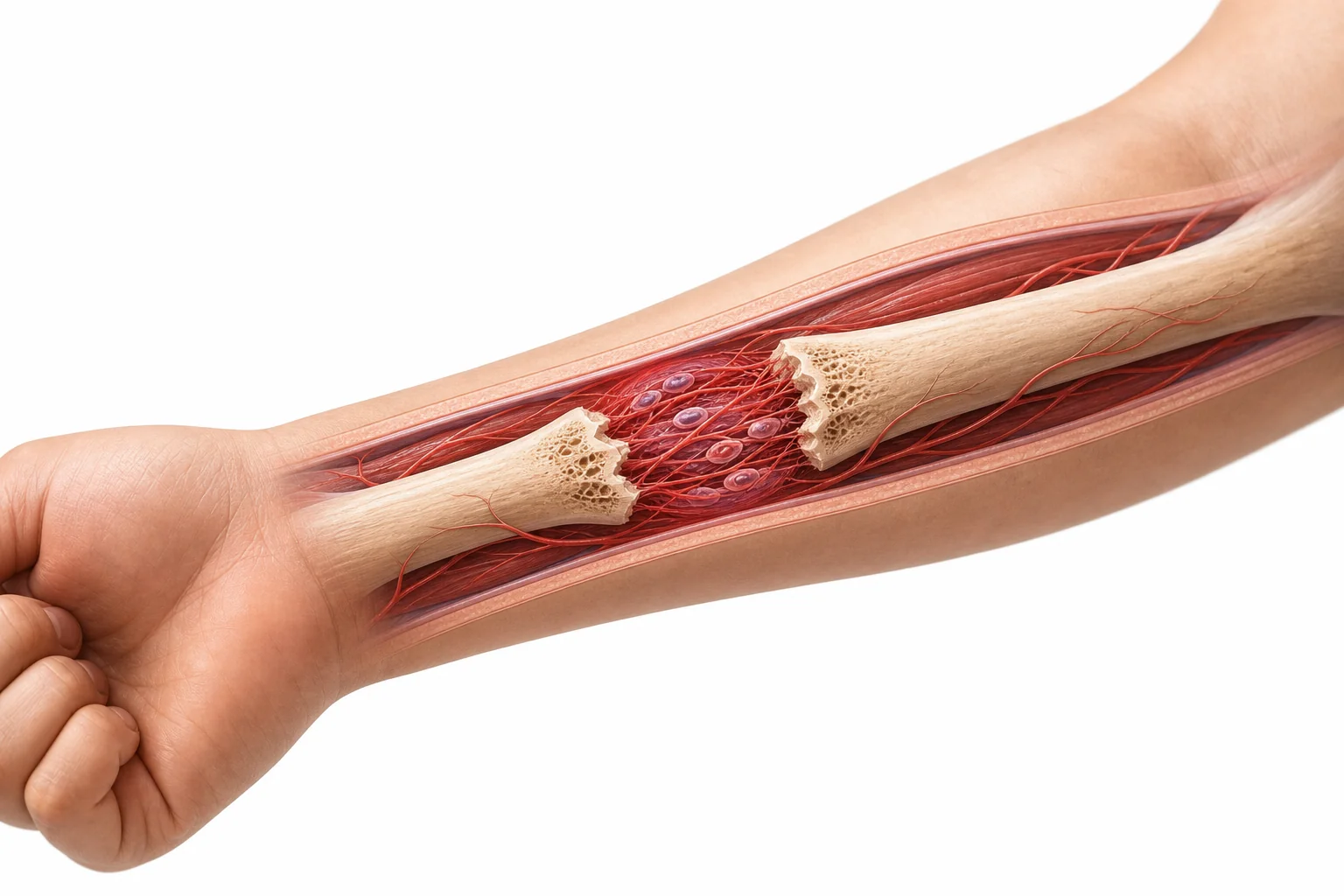
Cross section of a broken arm bone showing early repair tissue forming around the break

Your body heals a broken bone by stopping bleeding, building a soft bridge, and then turning that bridge into hard bone. Bone-making cells fill the gap while other cells clean and reshape the area. Most kids need about 6 to 8 weeks because the new bone must become strong enough to handle normal forces again.

Big Idea. NGSS MS-LS1-3 connects bone healing to body systems that work together to protect, repair, and support the body.

A broken bone is not fixed by glue or tape inside the body. It is repaired by living tissue. Blood, immune cells, cartilage cells, and bone cells all join the work in a set order. Doctors help by lining up the broken pieces and keeping them still with a cast, splint, or surgery. The body does the rebuilding. The first stage starts within minutes, when bleeding forms a clot around the break. Over days, that clot becomes a busy repair site. Over weeks, a soft bridge forms, then hardens into new bone. Over months, the bone is reshaped so it can carry weight again. This process fits NGSS MS-LS1 because it shows how specialized cells and body systems interact. It also shows why rest matters. A healing bone needs time, blood flow, minerals, and steady protection from too much force.

Step 1: A clot seals the break
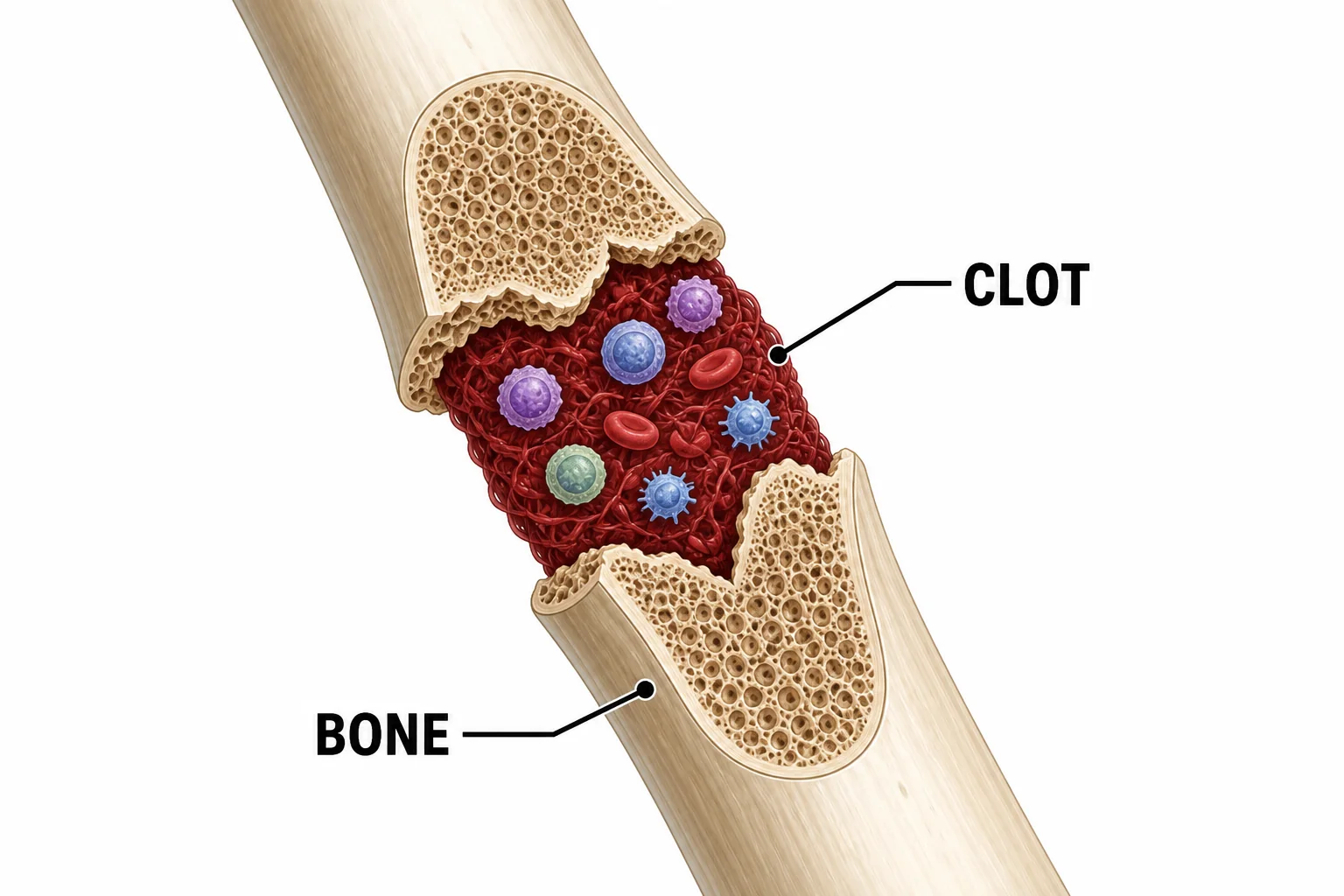
Broken bone ends with a dark blood clot filling the gap and immune cells nearby
A hematoma forms soon after the break.
When a bone breaks, small blood vessels inside and around the bone tear too. Blood leaks into the space around the break and forms a thick clot called a hematoma. This is the body’s first patch. It helps stop bleeding and creates a temporary place where repair cells can gather. The area may swell, hurt, and feel warm because the immune system is active. Some immune cells clear away damaged tissue and germs. Other chemical signals call in cells that help build new support. This stage is messy, but it is important. Without the clot, the next stages would not have a good starting point. A cast or splint helps here because movement can disturb the clot. Keeping the pieces lined up gives the repair team a better chance to build a strong bridge.

The clot is the first scaffold for repair.

Step 2: A soft callus bridges the gap
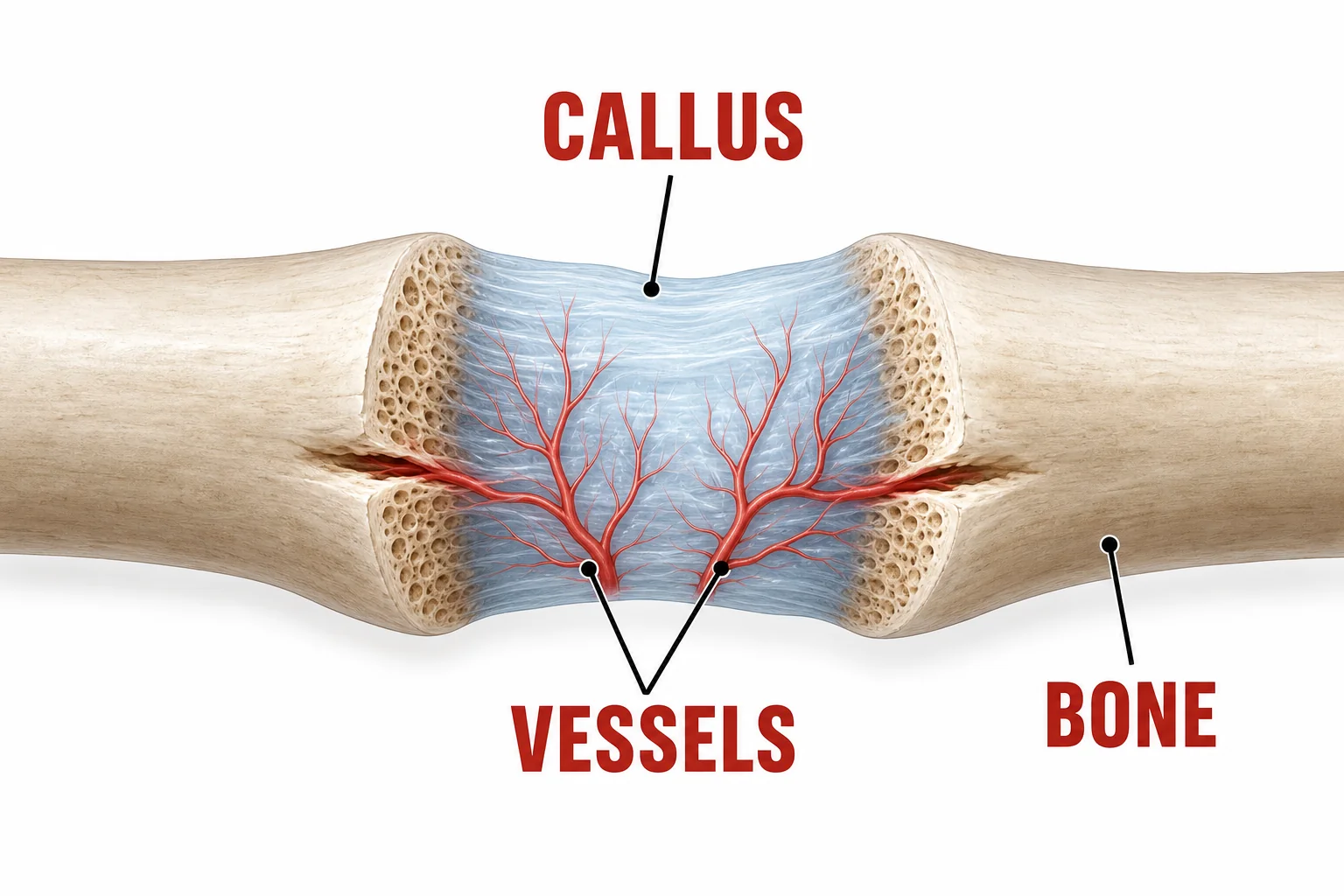
Flexible soft callus tissue spanning the space between broken bone ends with small new blood vessels
A soft callus makes a flexible bridge.
After several days, the clot starts to change. Cells called fibroblasts and cartilage-forming cells move into the area. They make a flexible patch called a soft callus. This callus is not as strong as bone. It works more like a rubbery bridge that holds the broken pieces together while the body prepares for harder repair. New blood vessels also grow into the area. Blood vessels bring oxygen, nutrients, and minerals. They also carry away waste. This is one reason smoking, poor nutrition, or certain illnesses can slow bone healing. In kids, this stage often happens quickly because their bones have a rich blood supply and active growth tissue. The soft callus still needs protection. Too much bending or twisting can damage it before it becomes strong.

The soft callus connects the broken pieces, but it is not strong yet.

Step 3: Osteoblasts build hard bone

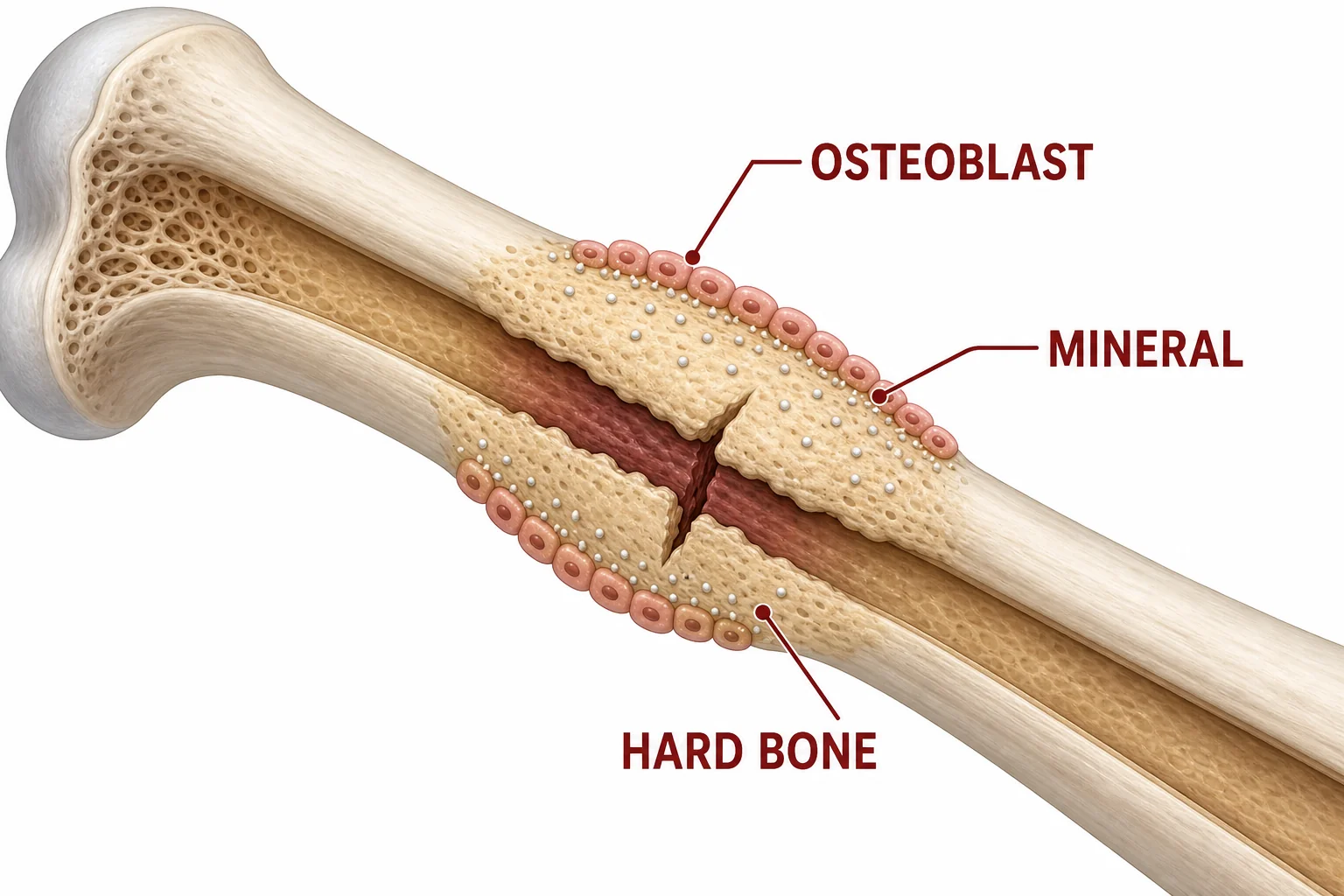
Osteoblast cells placing mineral material into a callus around a broken bone
Osteoblasts turn the bridge into hard bone.
Next, bone-building cells called osteoblasts take over more of the job. They add minerals, mostly calcium and phosphate, into the repair tissue. This turns the soft callus into a hard callus. The hard callus is made of woven bone, which forms fast but is not perfectly organized. Think of it like a quick patch on a wall. It closes the gap before the final smoothing happens. This stage is why many broken bones feel much better before they are fully healed. Less pain does not always mean full strength has returned. X-rays can help doctors see whether enough hard callus has formed. The cast may stay on until the hard callus can handle normal daily forces without shifting. In most children, that takes several weeks.

Osteoblasts make the mineral-rich tissue that hardens the repair.

Step 4: Remodeling reshapes the repair

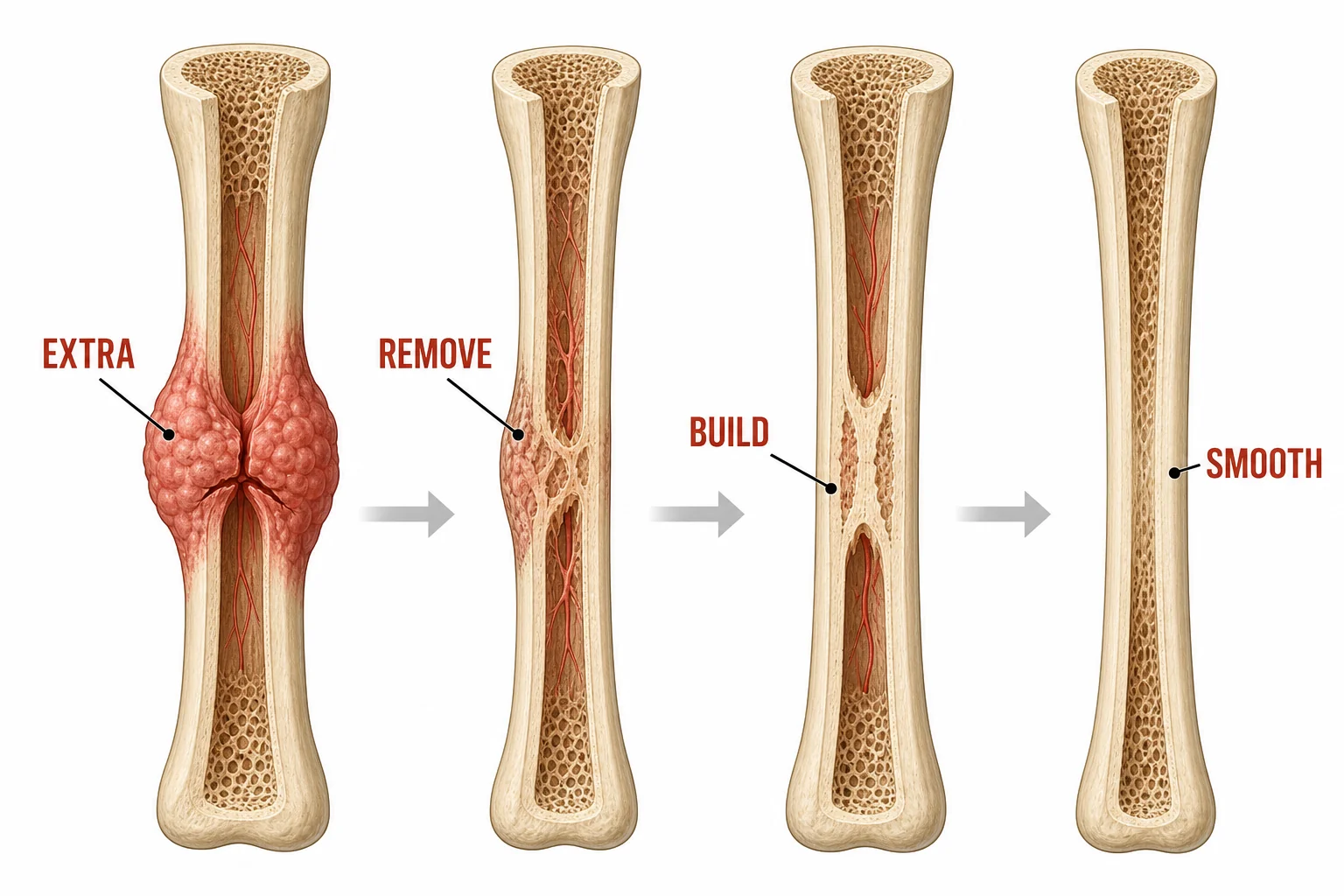
Bone remodeling with osteoclasts removing extra callus and osteoblasts rebuilding smooth bone
Remodeling trims and strengthens the repair.
The hard callus is strong enough to protect the break, but it is often bulky. The body slowly remodels it. Two cell types work together. Osteoclasts remove extra bone, and osteoblasts build new bone where strength is needed. Over time, the bone becomes closer to its original shape. The inside marrow space can reopen, and the outer surface can become smoother. Remodeling follows the forces placed on the bone. Areas that carry more stress can become thicker and stronger. Areas that are not needed can be trimmed away. This is why doctors give careful instructions about returning to sports. A bone may look healed enough for school activities before it is ready for a hard fall or tackle. Remodeling can continue for months or longer after the cast comes off.

Healing continues after the bone stops hurting.

Why 6 to 8 weeks is common for kids
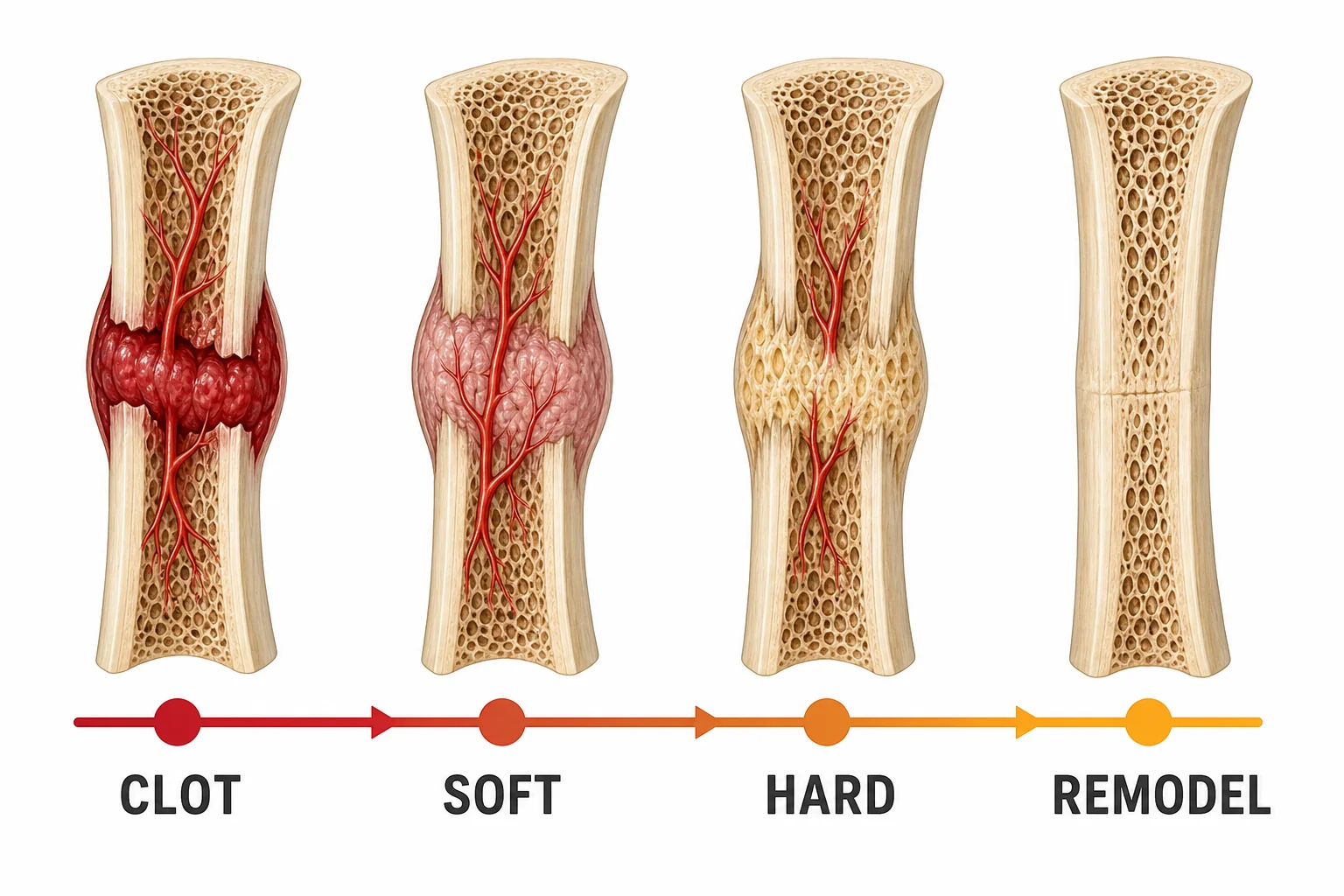
Timeline showing bone healing stages from clot to soft callus, hard callus, and remodeling across weeks
Most simple childhood fractures need weeks of protected healing.
Many simple fractures in children heal enough for normal use in about 6 to 8 weeks. That time is not a magic number. It depends on the bone, the child’s age, the type of break, blood supply, nutrition, and whether the pieces stay lined up. Younger children often heal faster than teens and adults because their bones are still growing. Growth plates and the outer bone covering, called the periosteum, are active and well supplied with blood. Small bones may heal faster than large weight-bearing bones. A clean break may heal faster than a crushed or open break. Doctors also think about strength, not just time. The repair must be strong enough for walking, writing, climbing stairs, or returning to sports. The safest plan comes from follow-up exams and sometimes X-rays.

Healing speed depends on biology, bone size, and how well the break is protected.

Vocabulary

Hematoma
A blood clot that forms around a broken bone soon after injury.
Soft callus
A flexible bridge of repair tissue that connects the broken bone pieces.
Osteoblast
A bone-building cell that adds minerals to make new bone tissue.
Hard callus
A stronger patch of new bone that forms after the soft callus hardens.
Remodeling
The slow reshaping of new bone so it becomes smoother and stronger.
Periosteum
A thin living covering around bone that contains blood vessels and repair cells.

In the Classroom

Build a bone-healing timeline

20 minutes | Grades 6-8

Students place stage cards in order from hematoma to remodeling. They add one sentence explaining what cells or tissues do at each stage.

Model a callus bridge

30 minutes | Grades 6-8

Use two craft sticks as broken bone ends and different materials as the clot, soft callus, and hard callus. Students compare which model resists bending best and connect the result to healing time.

Systems in a cast plan

25 minutes | Grades 6-8

Students write a short care plan for a fictional student with a simple fracture. The plan must include the skeletal, circulatory, immune, and muscular systems.

Key Takeaways

  • Bone healing starts with a blood clot that seals the break and attracts repair cells.
  • A soft callus forms a flexible bridge before hard bone is added.
  • Osteoblasts build the hard callus by adding mineral-rich bone tissue.
  • Remodeling can continue for months as the body reshapes and strengthens the repair.
  • Many simple fractures in kids need about 6 to 8 weeks because new bone must become strong enough for daily use.