Practice basic first aid decision-making, emergency communication, and safe responses to common injuries and emergencies.
Read each problem carefully. Answer in complete sentences. For any real emergency, get help from a trusted adult and call emergency services right away.
Staying safe, getting help, and giving basic care
Health - Grade 6-8
- 1
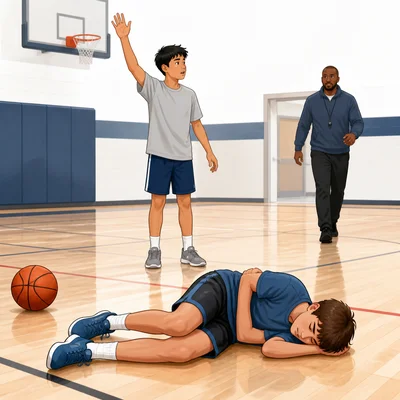
You see a student fall during gym class and they are not getting up. What are the first three actions you should take before trying to help?
- 2
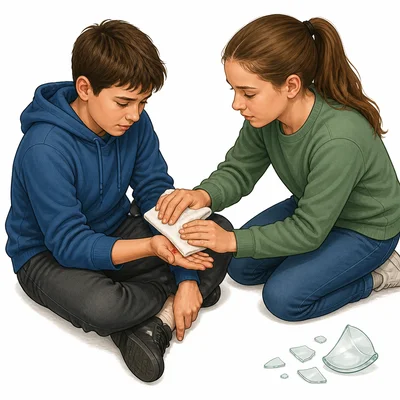
A friend cuts their hand on a broken glass. The cut is bleeding steadily. Describe how you should help while waiting for an adult.
- 3
Explain why it is important to call emergency services for serious injuries instead of trying to handle the situation alone.
- 4
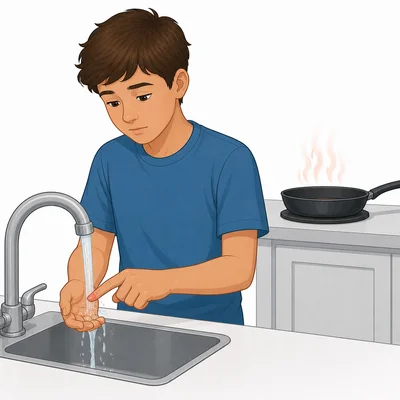
A classmate burns their finger on a hot pan during a cooking activity. What should be done for a minor burn?
- 5
List four pieces of information you should give when calling emergency services.
- 6
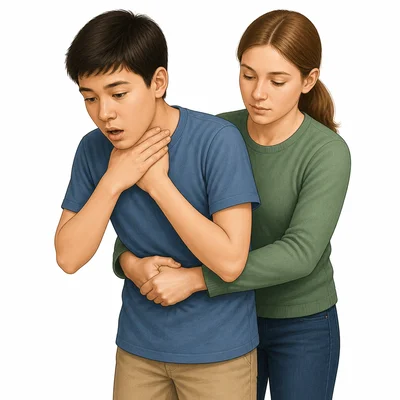
During lunch, someone appears to be choking. They cannot speak, cough, or breathe. What should you do?
- 7
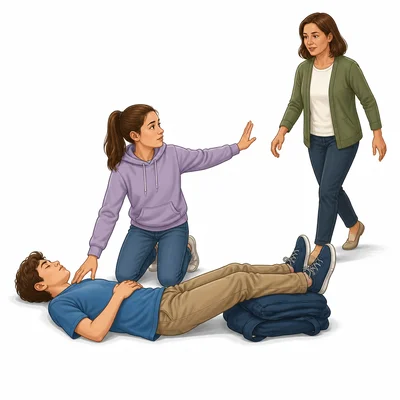
A student says they feel dizzy and then faints. Describe a safe response.
- 8
Explain the difference between a minor injury and an emergency. Give one example of each.
- 9
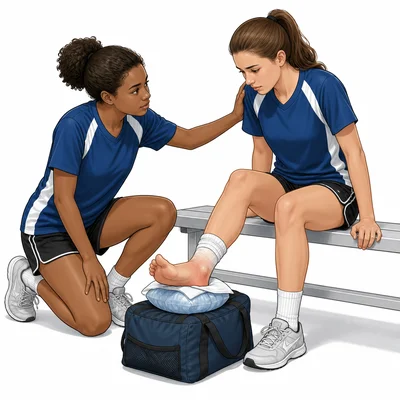
A teammate twists their ankle during practice. The ankle hurts and starts to swell. What should you do first?
- 10
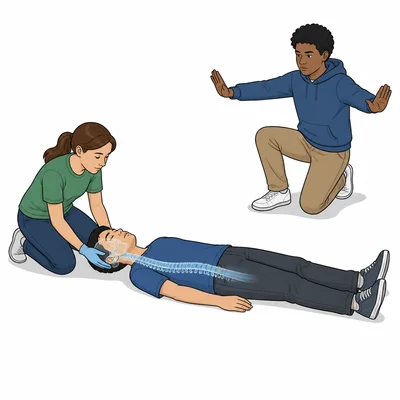
Why should you not move a person who may have a head, neck, or back injury unless they are in immediate danger?
- 11
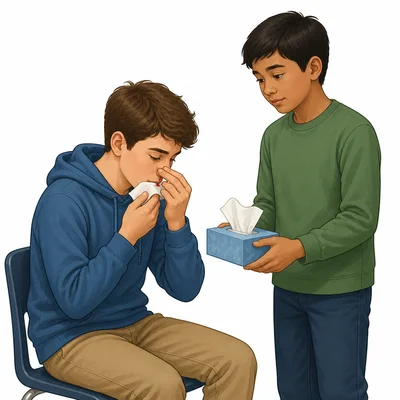
A student has a nosebleed. Describe the correct first aid steps for a typical nosebleed.
- 12
Create a short emergency action plan for your classroom. Include at least three steps students should follow during a medical emergency.