Why Do You Catch a Cold When Someone Else Has One?
How tiny viruses move from person to person
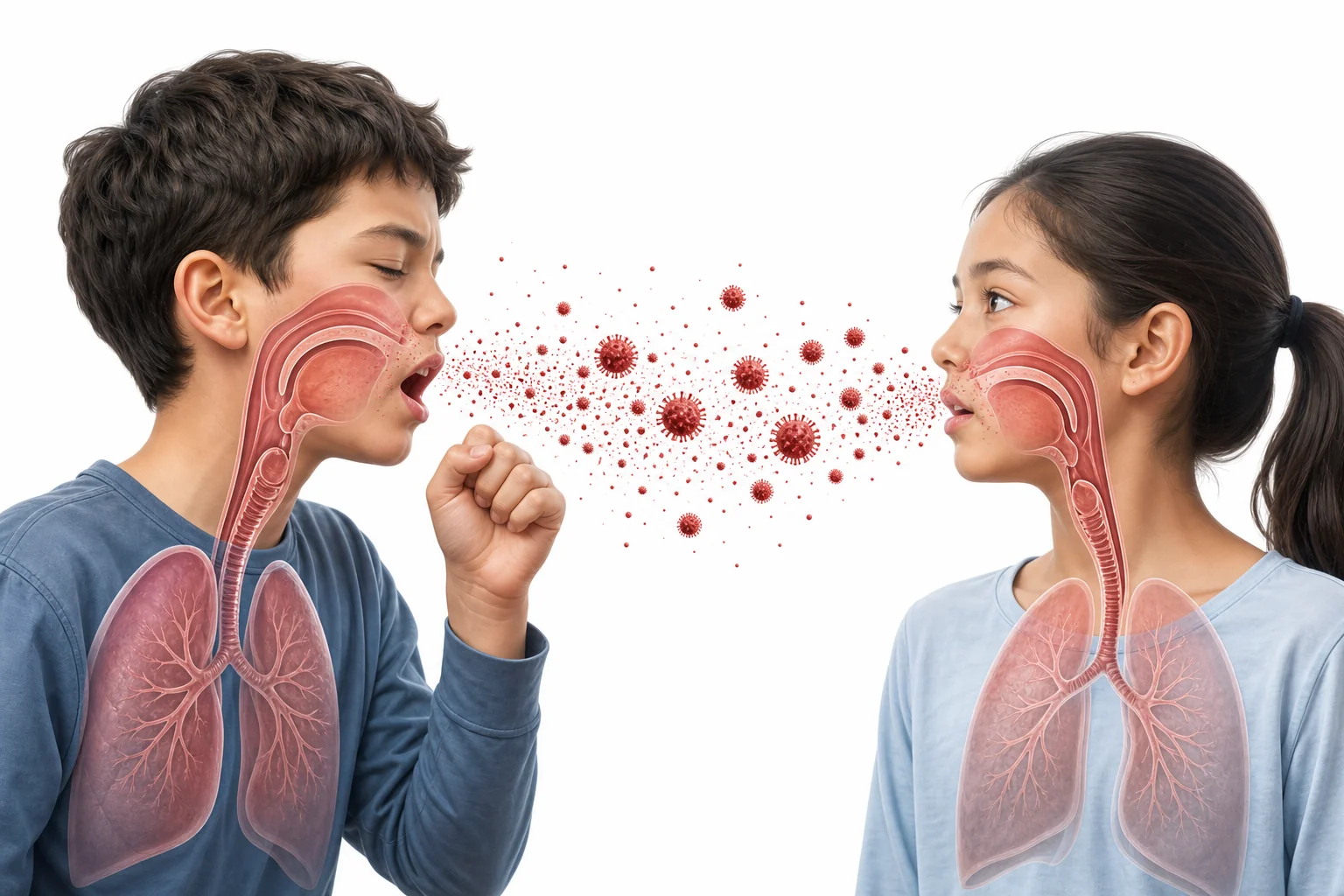
You catch a cold when cold viruses get into your nose, mouth, or eyes. They can travel in tiny wet drops from a cough or sneeze, or they can sit on hands and surfaces. Washing hands, covering coughs, and keeping space from sick people help block the virus.
A cold often seems to move through a classroom, a family, or a bus. One person starts sneezing. A few days later, someone nearby has a runny nose too. That pattern happens because colds are caused by viruses. A virus is a tiny germ that can make copies of itself inside living cells. Cold viruses usually enter through the nose, mouth, or eyes. They can ride in small wet drops when someone coughs, sneezes, talks, or wipes a nose. They can also land on a desk, toy, pencil, or doorknob. Then a hand can pick them up and carry them to the face. Your body is not helpless. Your immune system notices the invader and fights back. The stuffy nose, mucus, cough, and tired feeling are signs that your body is working. A cold is common, but it is also a real example of how living things interact.
A cold starts with a virus
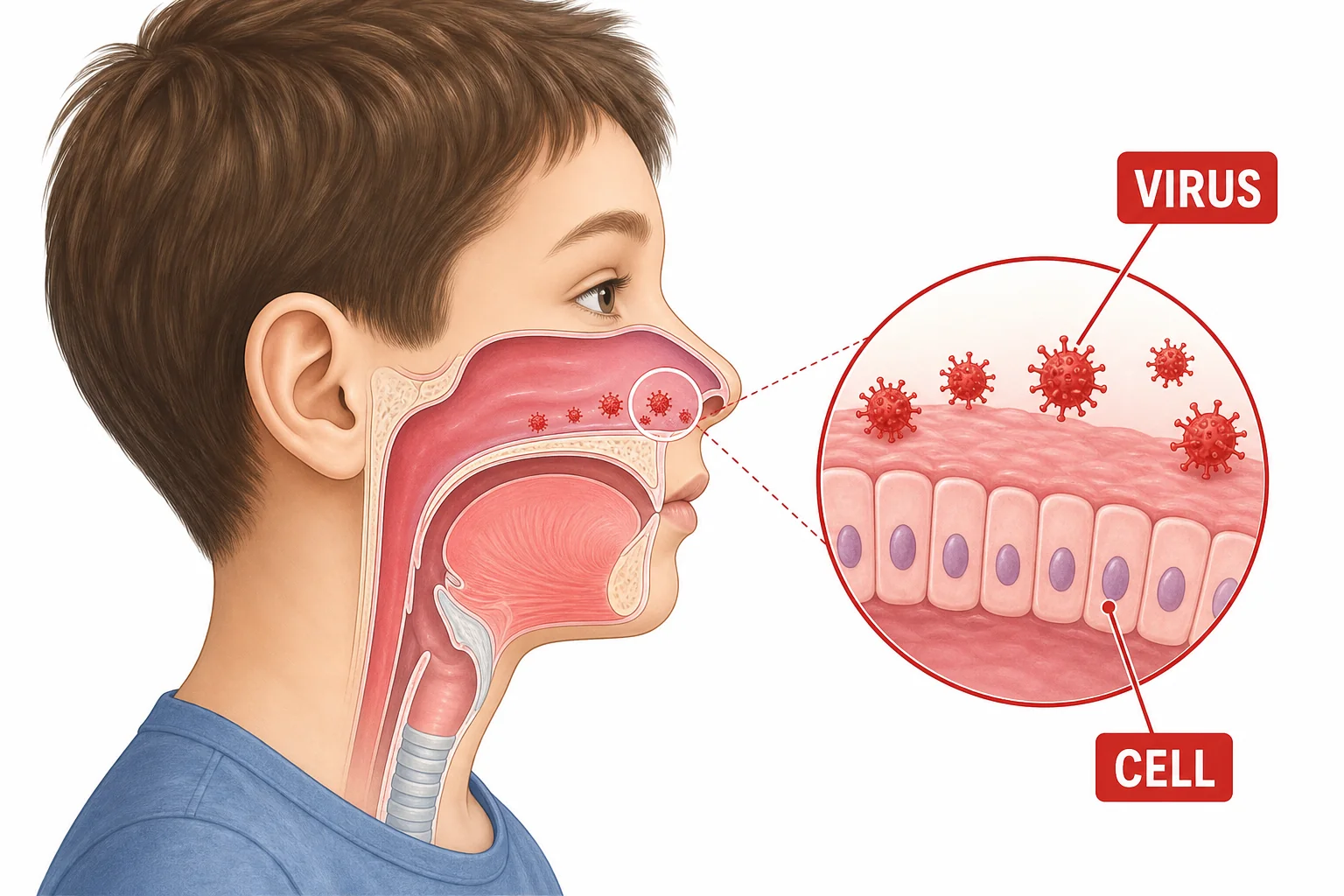
Cold air does not cause a cold, but a cold virus can.
Droplets carry germs
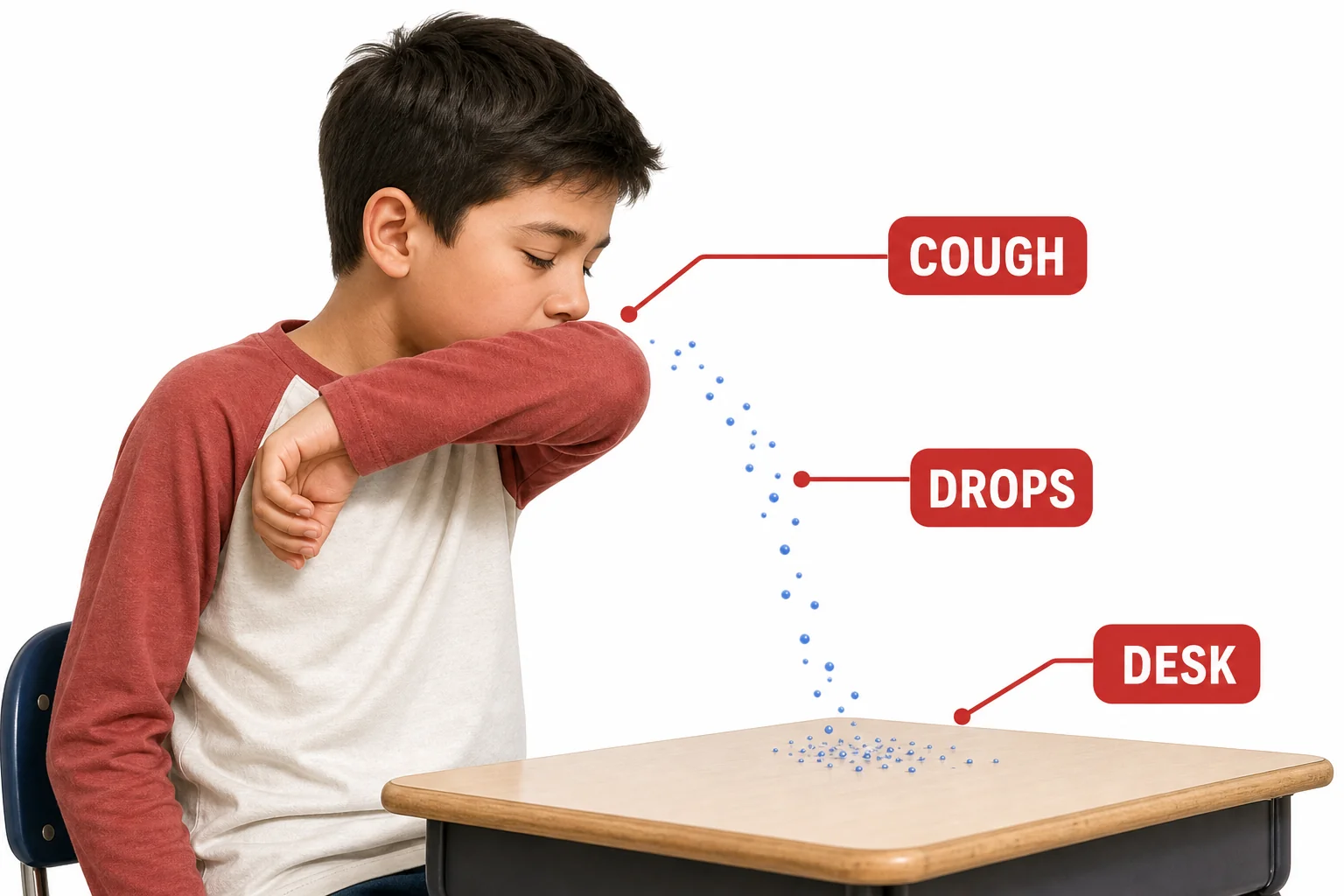
Covering coughs and sneezes helps trap virus-carrying droplets.
Hands and surfaces help spread colds
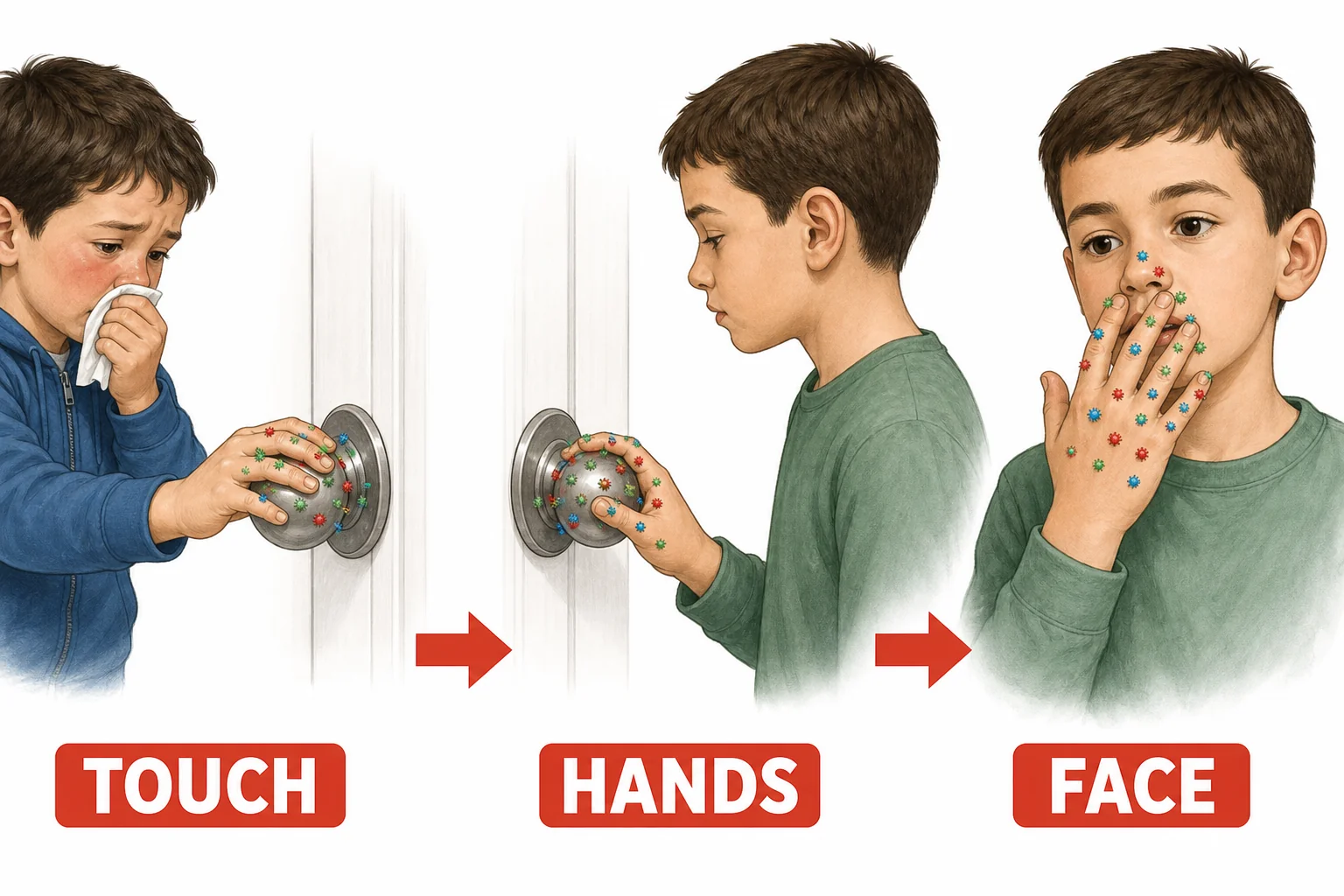
A virus on a surface is only a problem if it reaches your nose, mouth, or eyes.
Soap breaks the chain
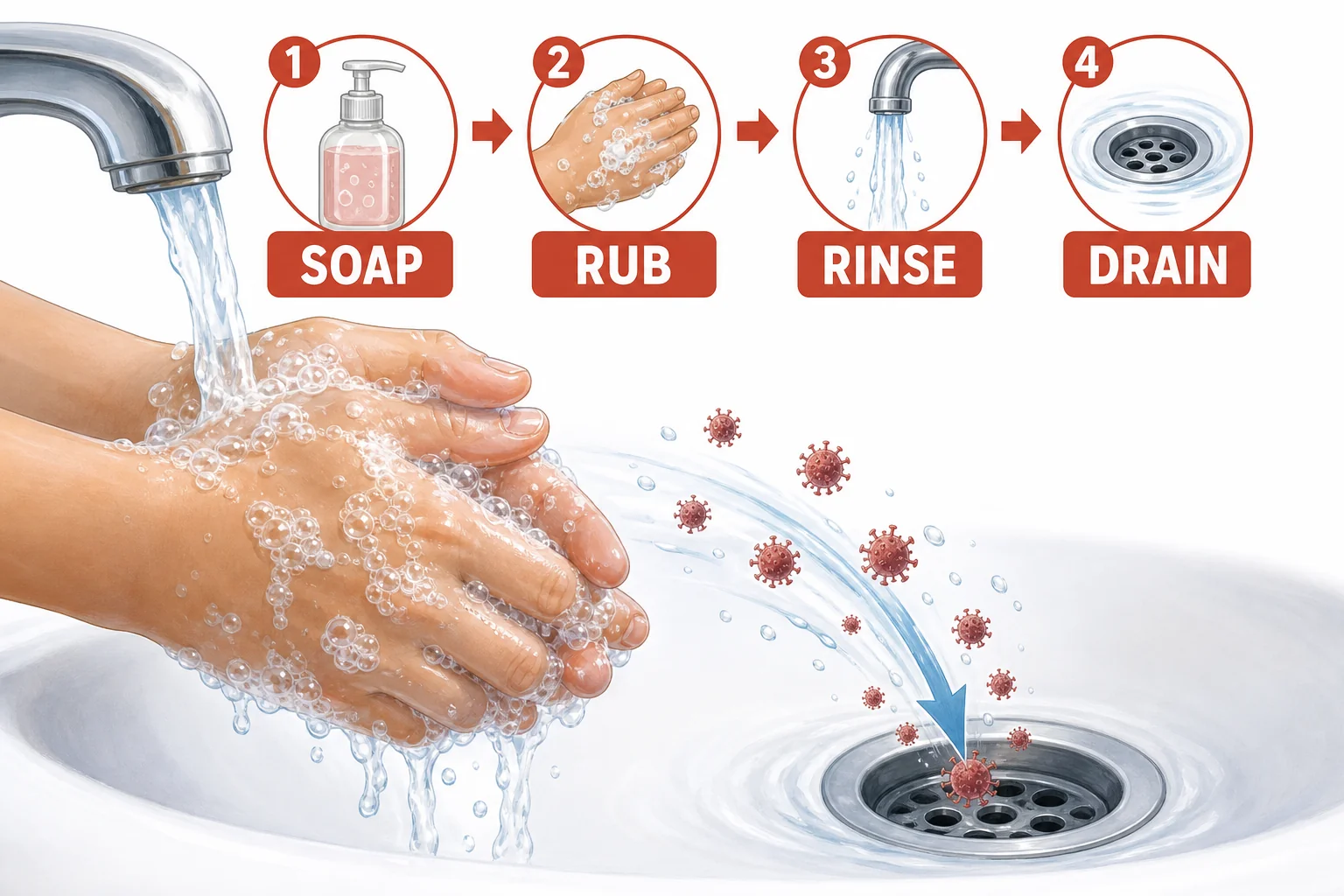
Soap does not need to be fancy. Rubbing and rinsing do the work.
Your immune system fights back
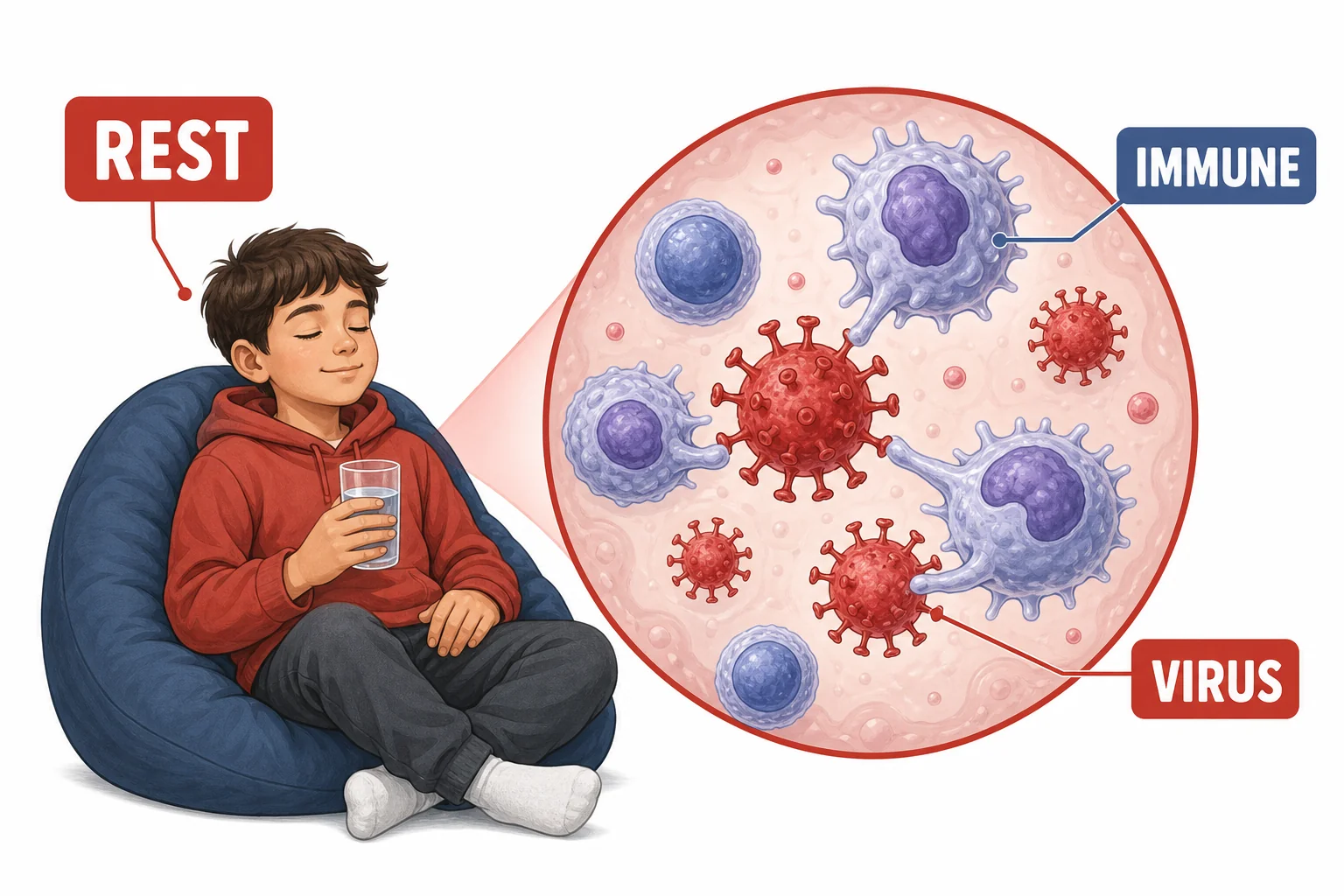
Antibiotics treat bacteria, so they do not cure a common cold.
Vocabulary
- virus
- A tiny germ that can make copies of itself inside living cells.
- droplet
- A small wet particle that can leave the mouth or nose during coughing, sneezing, talking, or breathing.
- surface
- The outside of an object, such as a desk, toy, pencil, or doorknob, where germs can land.
- immune system
- The body system that finds and fights germs.
- antibiotic
- A medicine used to treat some infections caused by bacteria, not colds caused by viruses.
In the Classroom
Glitter Germs
20 minutes | Grades K-5
Put a tiny amount of washable glitter on one student's hand and have the student shake hands or touch classroom objects. Students map where the glitter traveled, then test how soap and water remove it better than a quick rinse.
Droplet Distance Model
25 minutes | Grades 2-5
Use a spray bottle filled with water to model droplets from a cough or sneeze. Spray toward dark paper from different distances, then compare how many drops land on the paper.
Immune System Story Cards
30 minutes | Grades 3-5
Give students cards for virus, nose cell, mucus, cough, immune cell, rest, and water. Students arrange the cards into a simple story that explains how a cold starts and how the body fights back.
Key Takeaways
- • Colds are caused by viruses, not by cold weather.
- • Cold viruses can travel in droplets from coughs, sneezes, and talking.
- • Hands can move viruses from surfaces to the nose, mouth, or eyes.
- • Soap, rubbing, and rinsing remove many germs from hands.
- • Antibiotics do not cure colds because colds are caused by viruses.