Why Do Fractions Feel Hard?
Because fractions ask numbers to do a new job
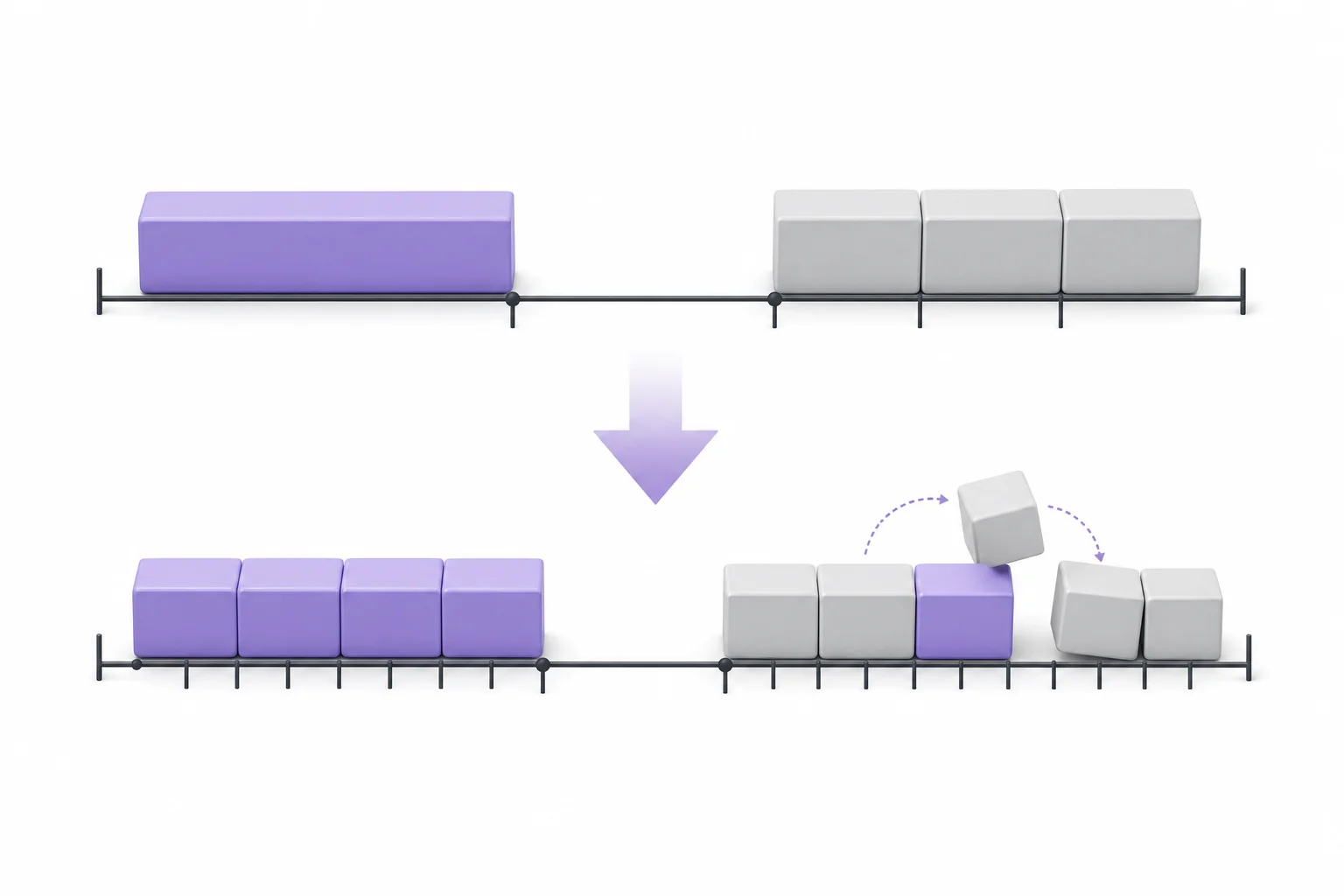
Fractions feel hard because they do not behave like whole numbers. The same amount can have many names, like $\frac{1}{2}$ and $\frac{2}{4}$. Fractions get easier when students connect pictures, number lines, and words to the same amount.
Whole numbers are friendly at first. Three blocks look like three blocks. Six crayons are more than four crayons. Fractions change the rules. A bigger bottom number can mean smaller pieces, so $\frac{1}{8}$ is less than $\frac{1}{4}$. Two fractions can look different but name the same amount, like $\frac{3}{6}$ and $\frac{1}{2}$. Students also have to think about the whole. One half of a small cookie is not the same amount as one half of a large pizza. That is a lot for the brain to track at once. In grade 3, students begin using part-whole models and number lines to make these ideas visible. A model helps turn a symbol into something students can point to, split, compare, and explain. That is why fraction pictures are not baby steps. They are the math.
Fractions need a whole
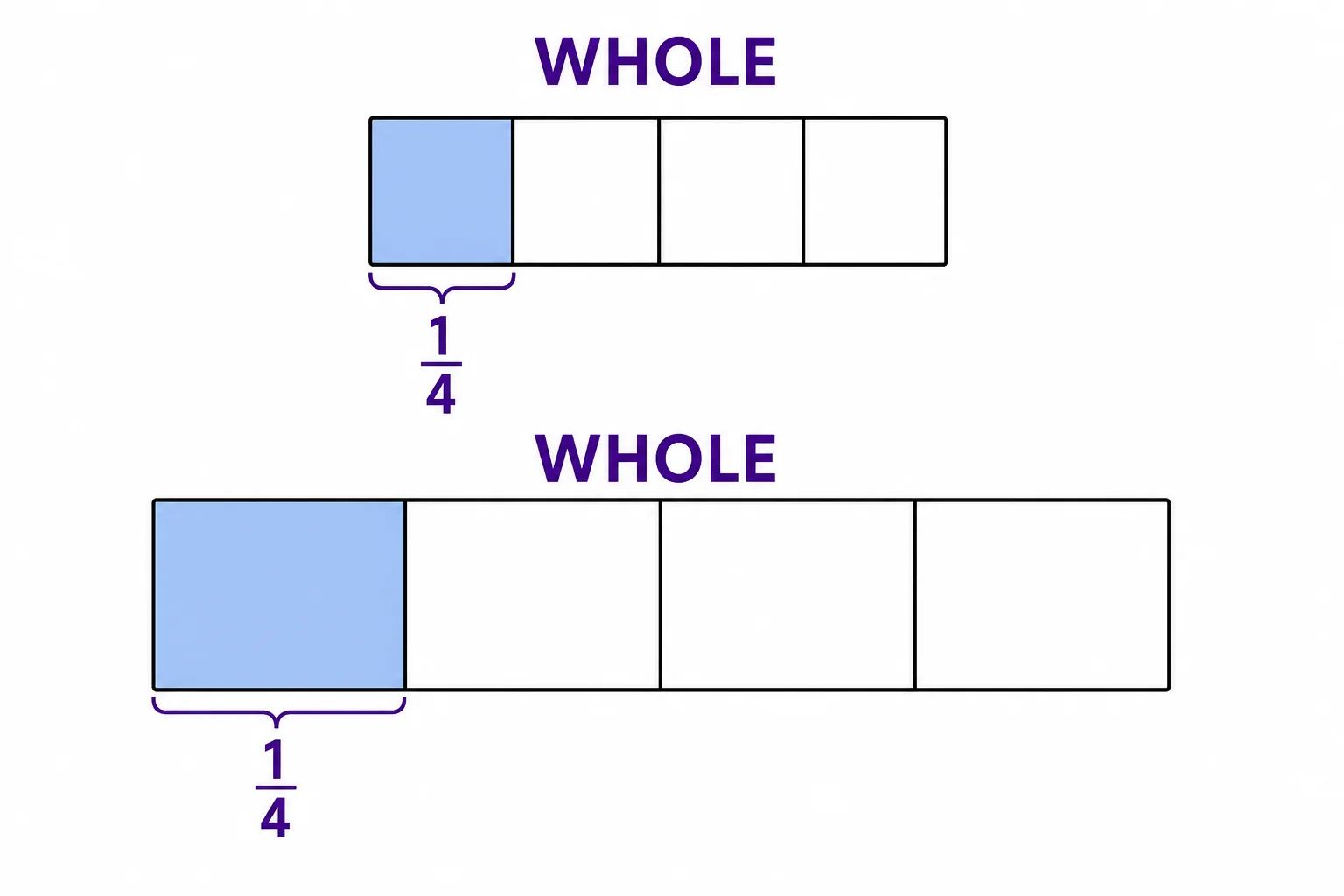
Always ask what counts as one whole.
Equal parts matter
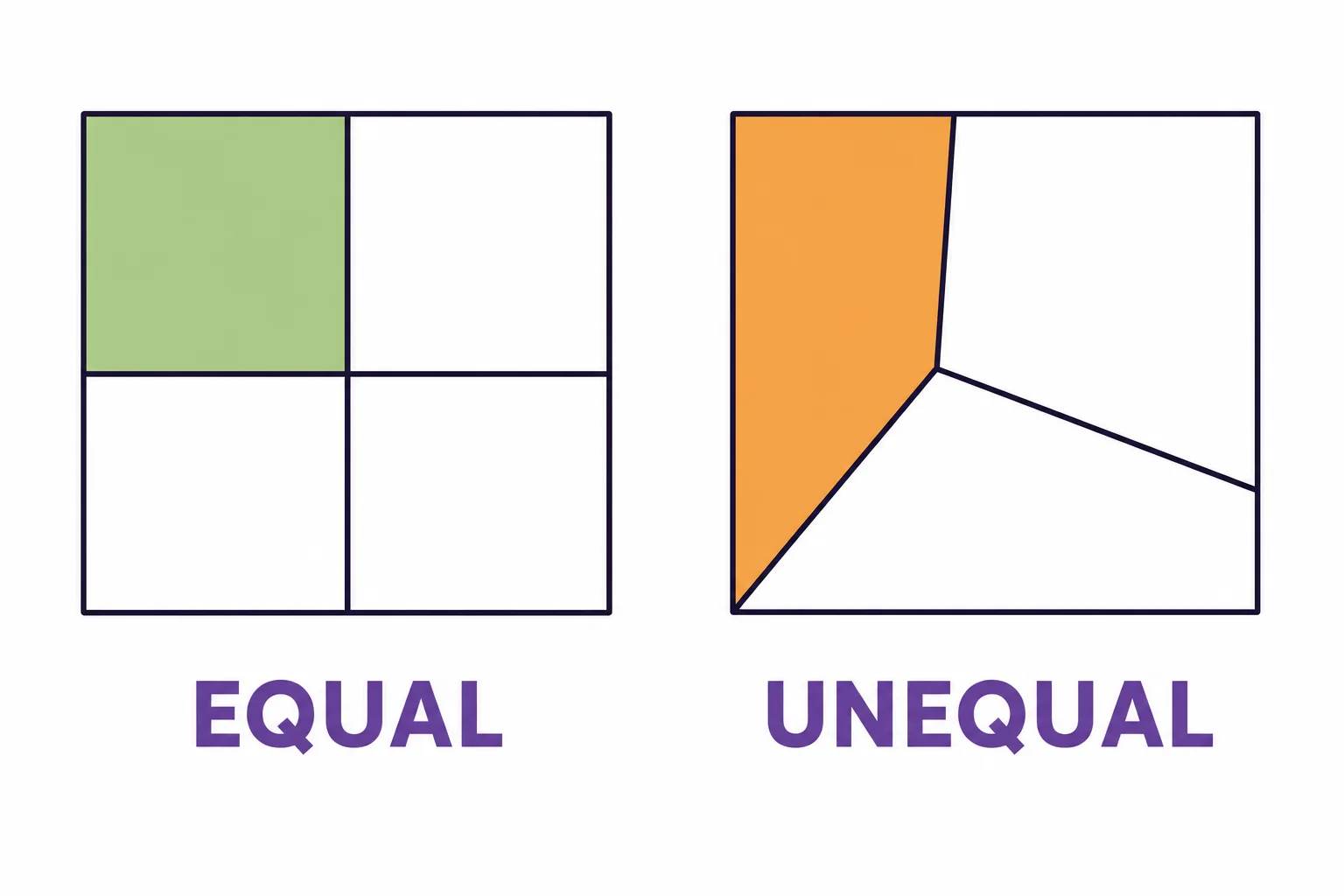
A denominator counts equal parts, not random pieces.
Bigger denominators can mean smaller pieces
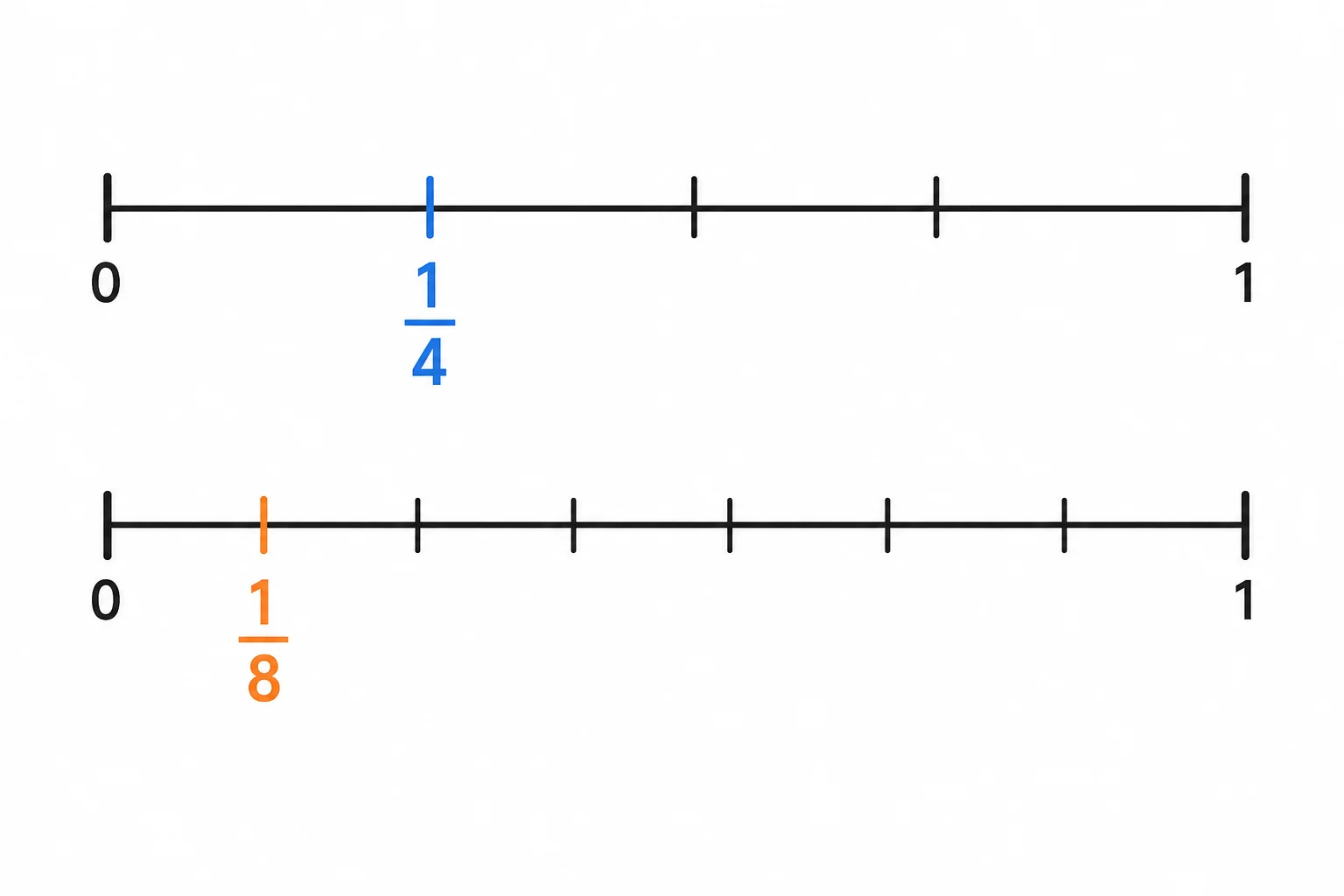
The denominator tells how finely the whole is split.
Different names can match
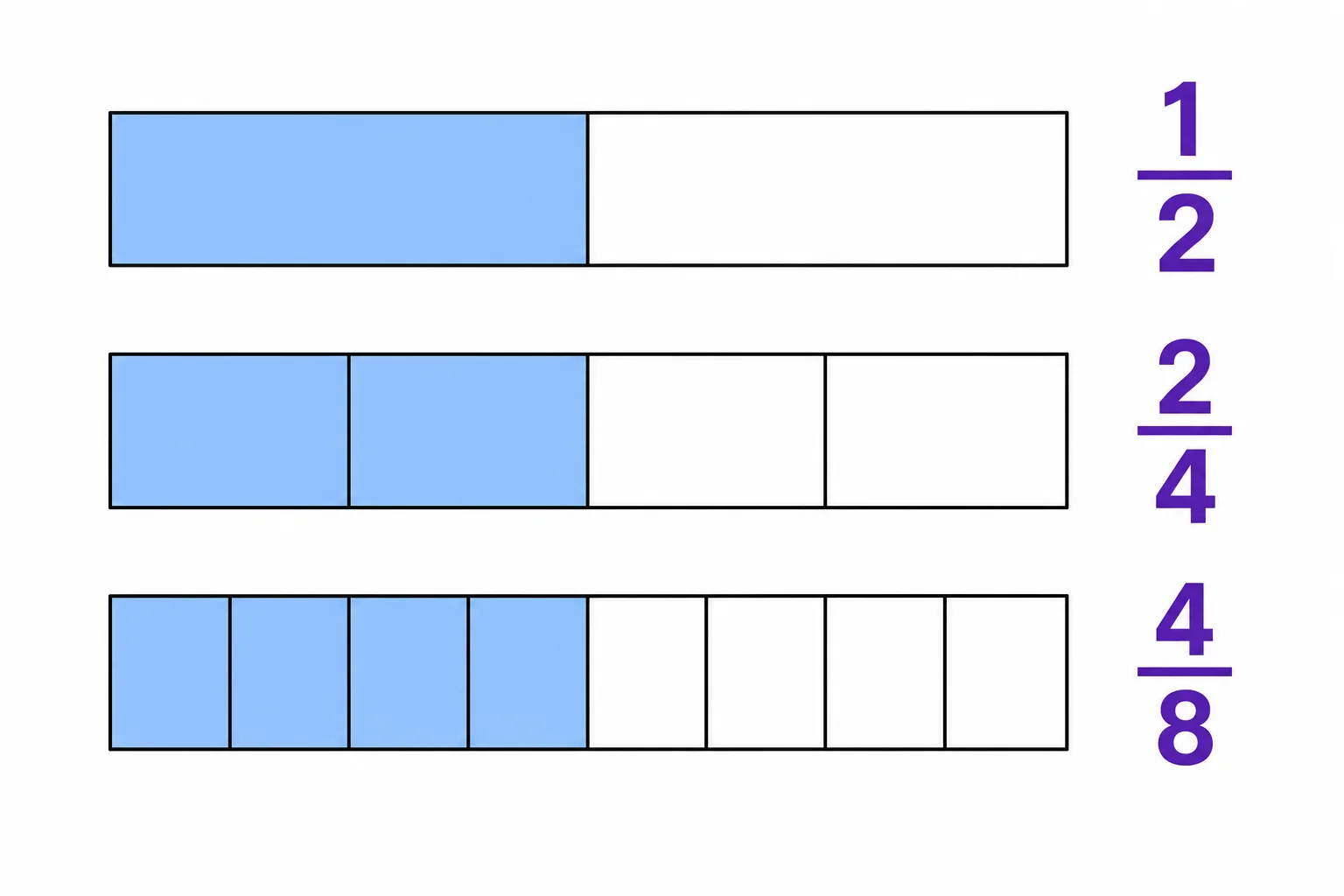
Equivalent fractions look different but land on the same amount.
Common denominators make comparison fair
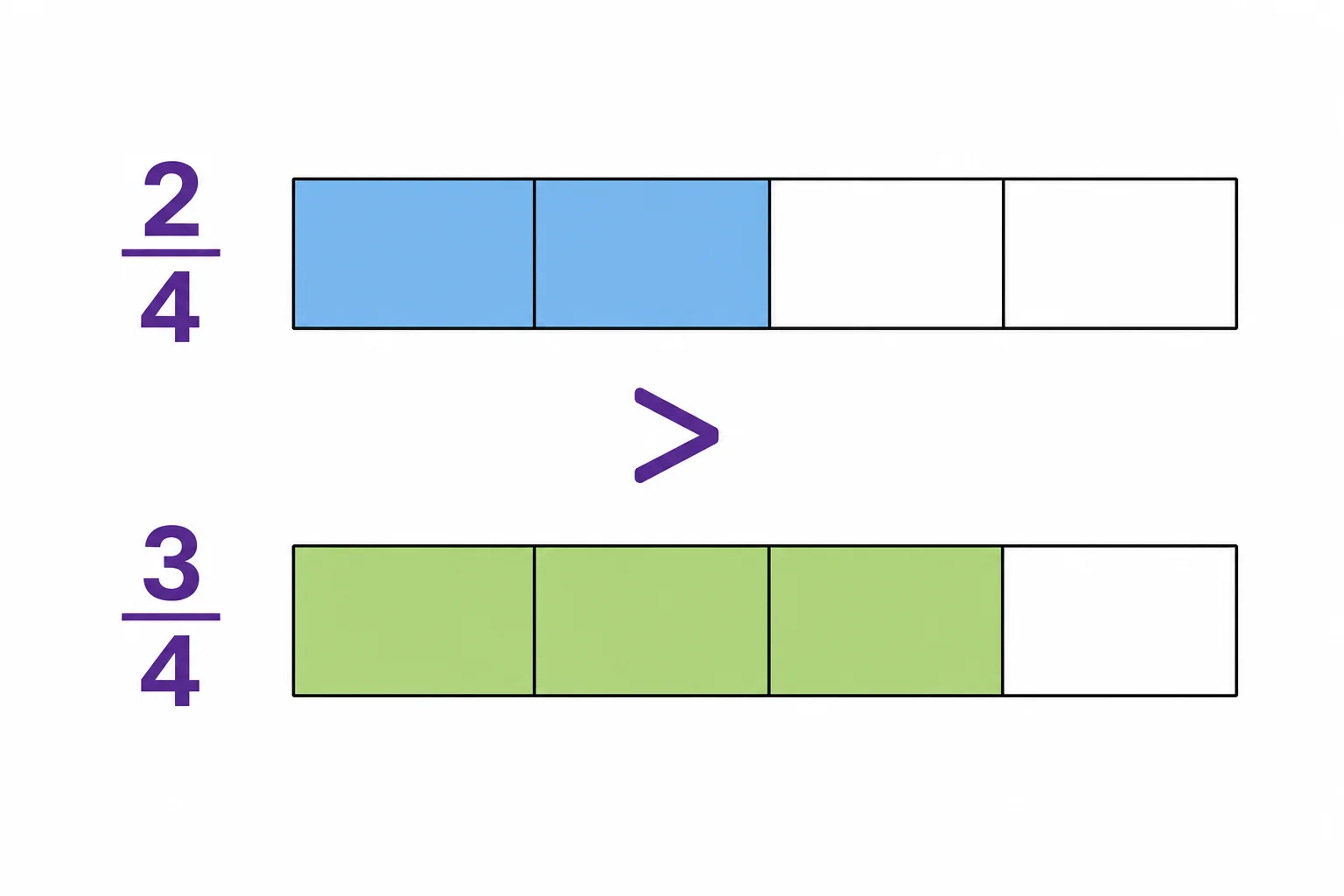
Common denominators make fraction pieces comparable.
Vocabulary
- Fraction
- A number that names part of a whole or a point on a number line.
- Numerator
- The top number in a fraction. It tells how many equal parts are being counted.
- Denominator
- The bottom number in a fraction. It tells how many equal parts make one whole.
- Equivalent fractions
- Fractions that have different names but represent the same amount.
- Common denominator
- A shared denominator used to compare or combine fractions with equal-size pieces.
In the Classroom
Build the same whole
20 minutes | Grades 3-4
Give pairs of students paper strips of the same length. Ask them to fold one strip into halves, one into fourths, and one into eighths, then mark fractions that land at the same place.
Sort equal and unequal models
15 minutes | Grades 3-5
Show students several shapes split into parts. Students sort the cards into fraction models and not fraction models, then explain how they know the parts are equal or unequal.
Compare on a number line
25 minutes | Grades 3-5
Draw a large 0 to 1 number line on the board or floor. Students place fraction cards such as $\frac{1}{2}$, $\frac{2}{4}$, $\frac{1}{3}$, and $\frac{3}{4}$, then discuss which cards share a location.
Key Takeaways
- • Fractions depend on the size of the whole.
- • Fraction parts must be equal parts.
- • A larger denominator can mean smaller pieces.
- • Equivalent fractions are different names for the same amount.
- • Common denominators help students compare fractions fairly.