Why Is Dividing by Zero Impossible?
A rule that protects number sense

Dividing asks how many equal groups fit into a number. Dividing by zero would ask how many groups of size zero fit, but zero-size groups never add up to a nonzero amount. For zero divided by zero, every number seems to work, so there is no single answer.
Division can feel like a button on a calculator, but it has a meaning. When we write $12 \div 3$, we are asking how many groups of 3 make 12. The answer is 4 because $3 \times 4 = 12$. That connection is the key to understanding why dividing by zero does not work. If $12 \div 0$ had an answer, then zero times that answer would have to equal 12. But zero times any number is zero, not 12. The problem is not that the answer is very large. The problem is that no number can do the job. This idea builds number sense for Common Core 6.NS work on division. Students can connect it to visual models, arrays, and number lines. A tool like the graphing calculator can also show how expressions behave near zero, even though division by zero itself stays undefined.
Division undoes multiplication
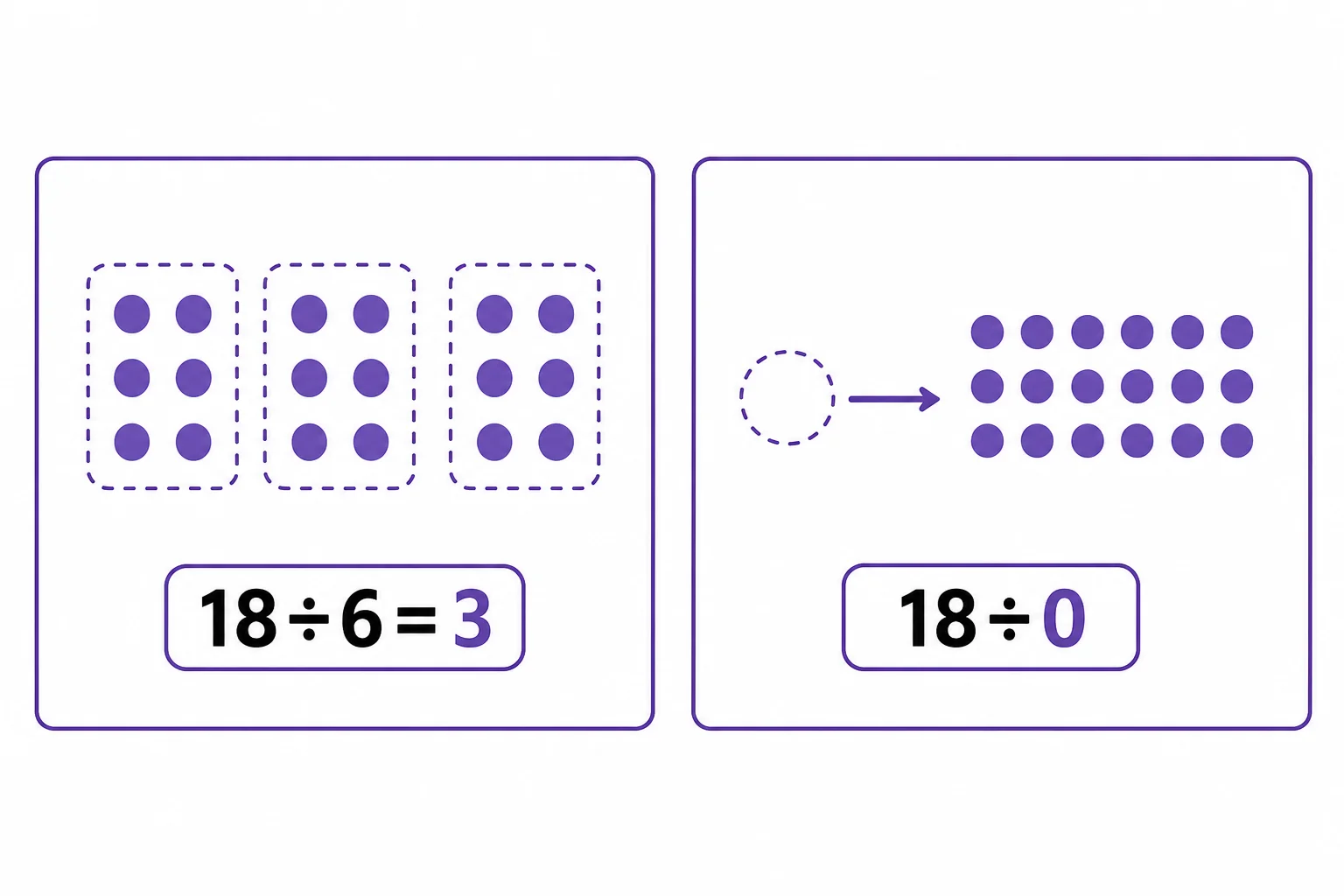
If the matching multiplication fact cannot be true, the division has no value.
Groups of zero cannot make 12
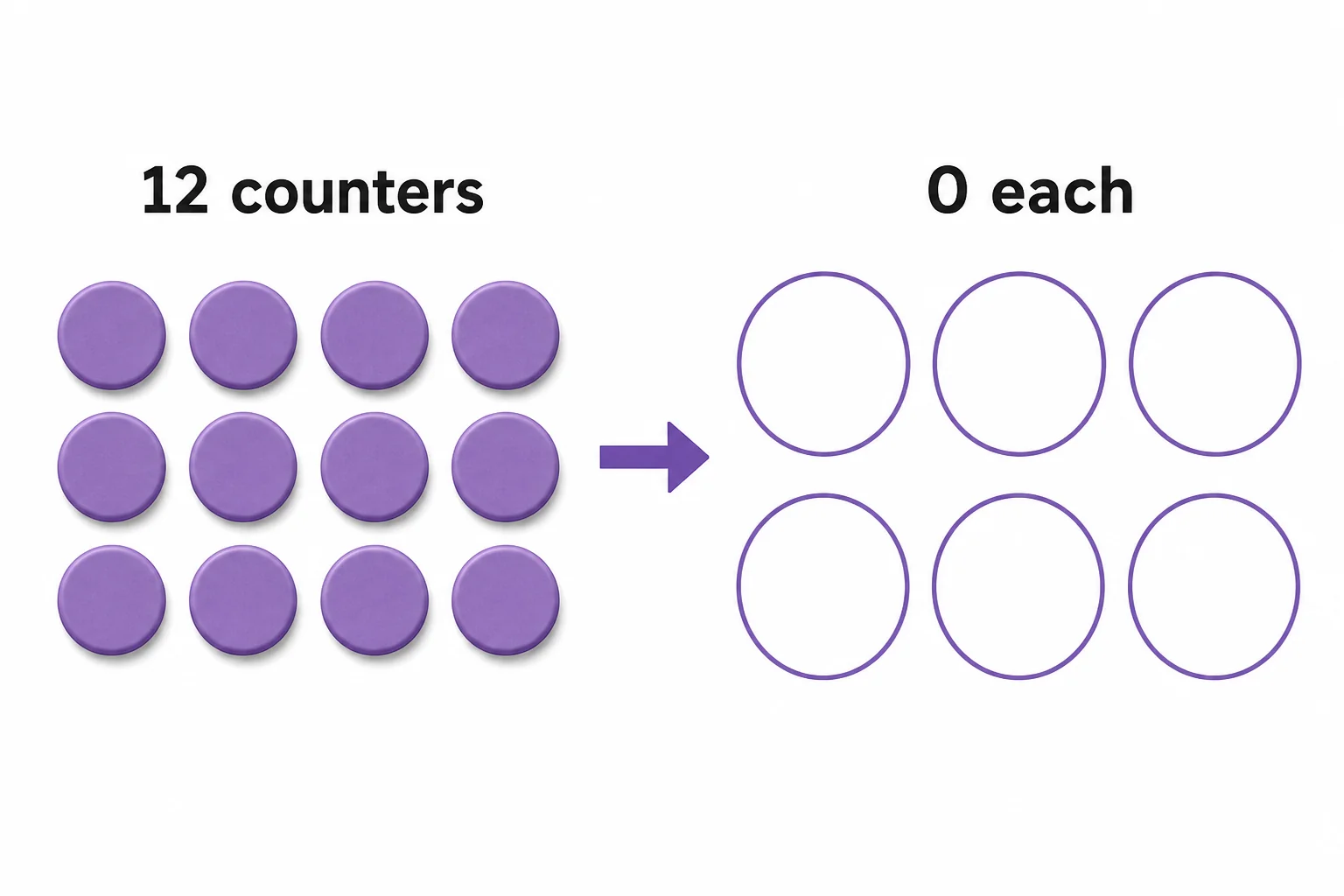
Counting more empty groups never creates a nonzero total.
Zero divided by zero is different
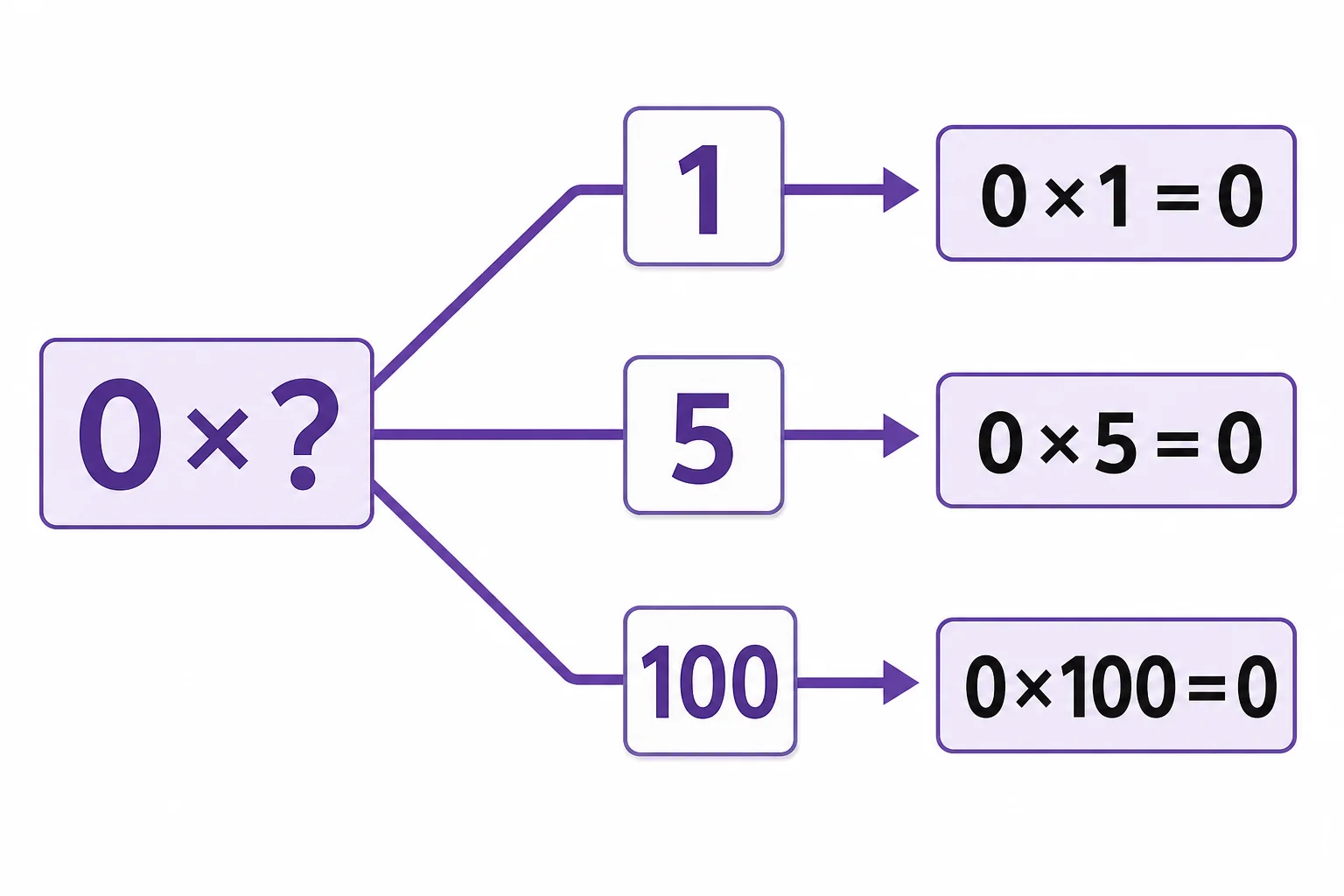
For zero divided by zero, the problem is too many possible answers.
Patterns near zero do not reach zero
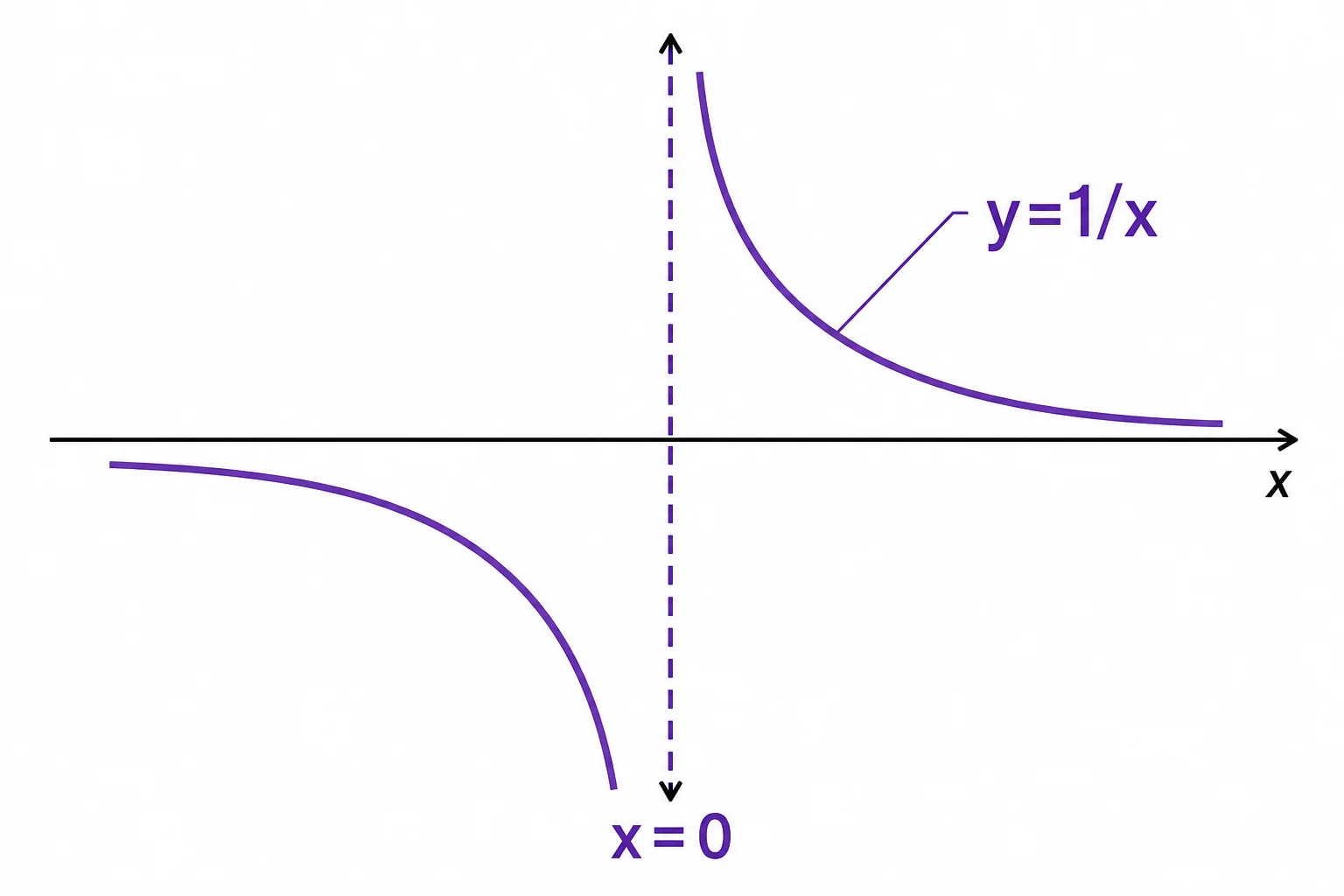
A pattern can approach a break without giving a value at the break.
Undefined keeps math consistent
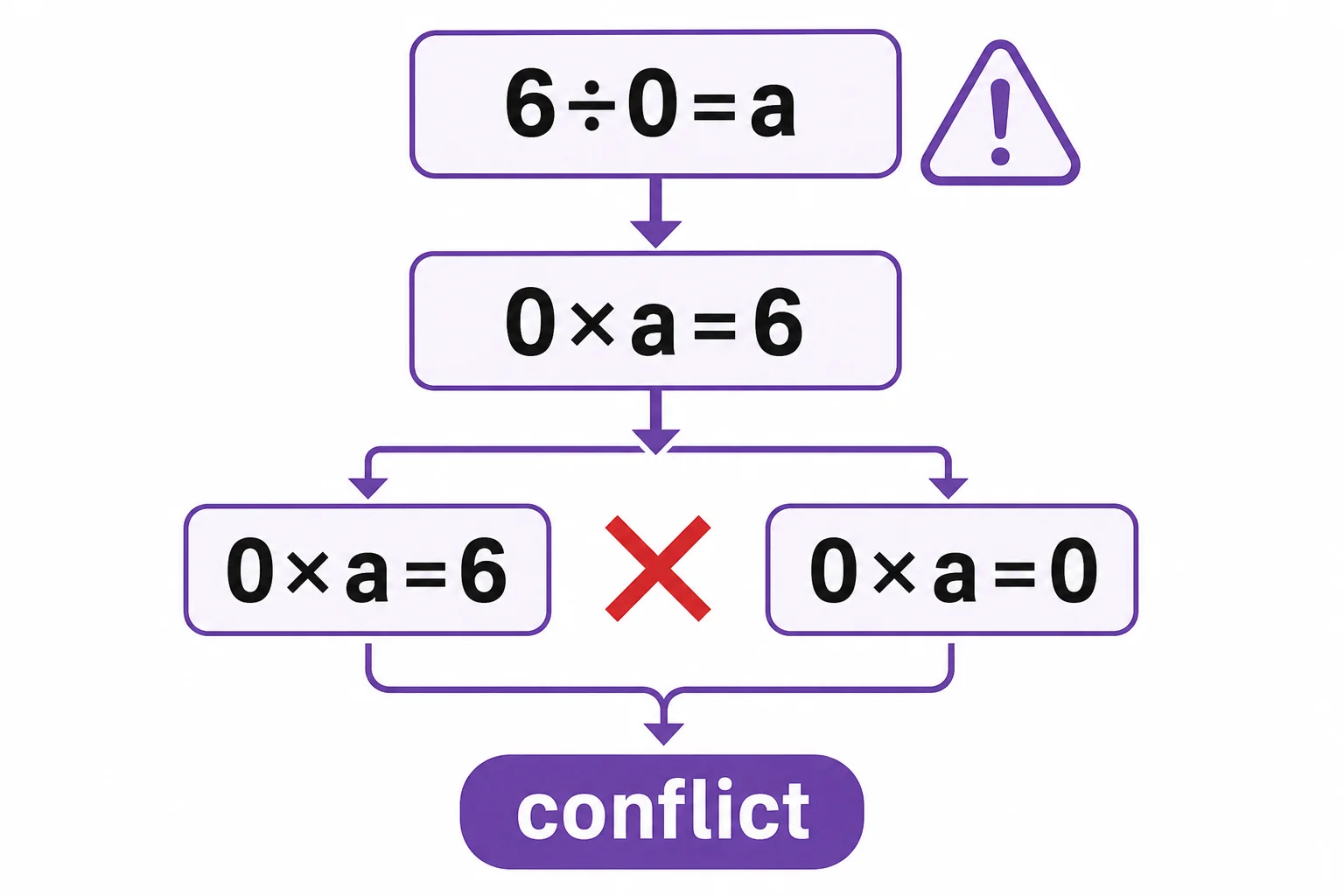
Undefined means the rule has no consistent number to return.
Vocabulary
- Division
- An operation that can ask how many equal groups fit into a number or how large each group is.
- Inverse operation
- An operation that undoes another operation, such as division undoing multiplication.
- Divisor
- The number you divide by in a division expression.
- Undefined
- A description for an expression that has no valid value under the rules being used.
- Zero property of multiplication
- The rule that any number multiplied by zero equals zero.
In the Classroom
Group-size model
20 minutes | Grades 6-8
Give students 12 counters and ask them to build groups of 3, 2, 1, and 0. They should record what happens as the group size changes and explain why groups of size zero cannot make 12.
Multiplication check cards
25 minutes | Grades 6-8
Students match division cards to multiplication check cards, such as $20 \div 5$ and $5 \times 4 = 20$. Include cards like $20 \div 0$ and $0 \div 0$ so students can sort them as no solution or too many solutions.
Near zero table
30 minutes | Grades 7-8
Students make a table for $1 \div x$ using values such as 1, 0.1, 0.01, -0.1, and -0.01. They compare approaching zero from both sides and write why the table does not define $1 \div 0$.
Key Takeaways
- • Division is connected to multiplication through an inverse relationship.
- • A nonzero number divided by zero is undefined because no number passes the multiplication check.
- • Zero divided by zero is undefined because many numbers pass the multiplication check.
- • Very large quotients near zero do not make division by zero equal infinity.
- • Calling division by zero undefined keeps arithmetic consistent.