Understanding Long Division Step-by-Step Solver
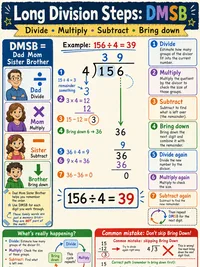
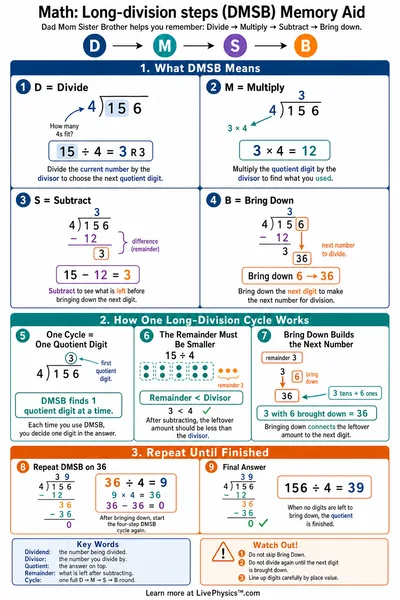
Long division is really a place value method. Each written step decides how many equal groups fit into the part of the number currently being considered, starting from the largest place.
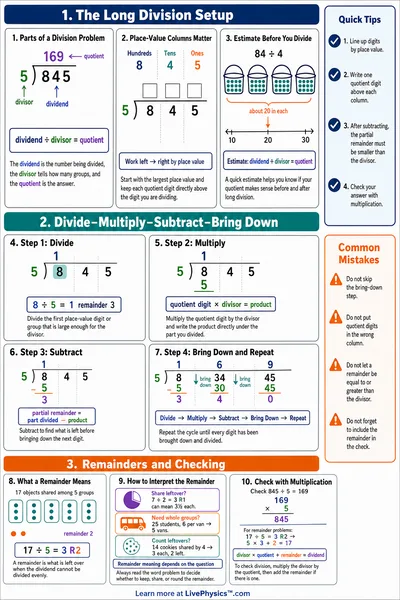
A digit written in the answer has a value based on its position, so a digit above the hundreds place means hundreds of groups, while the same digit above the ones place means only ones. This is why careful alignment matters more than fast calculation.
A common difficulty appears when the divisor does not fit into one digit or several digits in the dividend. In that case, the answer needs a zero in the correct place to show that no groups fit there yet.
Leaving out that zero changes every later place value in the answer. Students often make this mistake after bringing down a digit, especially when a partial amount is smaller than the divisor.
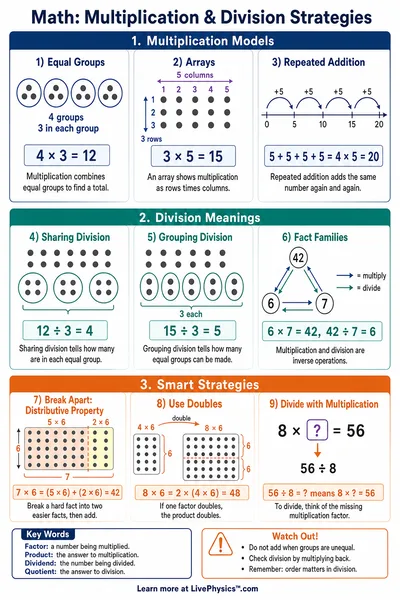
Remainders have a physical meaning. If twenty three objects are shared equally among five groups, each group gets four objects and three objects remain unshared.
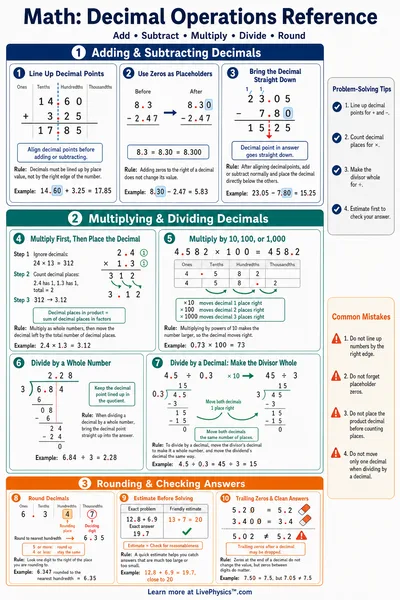
A decimal answer continues the same sharing process by treating the remainder as tenths, then hundredths, then smaller equal parts. Adding zeros after a decimal point does not change the amount being divided, but it gives more place values to work with.
Estimation is one of the best ways to notice an unreasonable answer before finishing the calculation. Round the dividend and divisor to friendly numbers, then decide about how large the quotient should be.
For example, a number close to eight hundred divided by a number close to twenty should produce an answer near forty, not four or four hundred. In real life, this kind of thinking helps when finding a price per item, an average score, a travel rate, or an equal share of money.
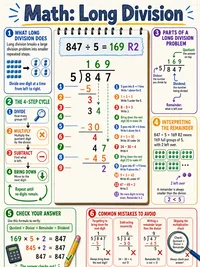
The most reliable final check connects division with multiplication. Multiply the quotient by the divisor, then include any remainder, and the result should match the original dividend.
If it does not match, look first at subtraction steps, since a small borrowing error can affect every digit below it. Keeping digits in straight columns, writing each partial product clearly, and pausing to estimate make the method easier to trust.