Learn how orbiters, landers, rovers, and sample missions help scientists investigate Mars, its history, and the possibility of past life.
Read each problem carefully. Use complete sentences when explaining your thinking. Show your work in the space provided when calculations are needed.
Exploring how spacecraft study the Red Planet
Astronomy - Grade 6-8
- 1
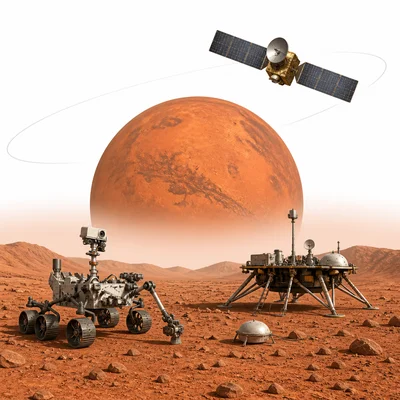
A rover, a lander, and an orbiter all study Mars in different ways. Describe one main job of each type of spacecraft.
- 2
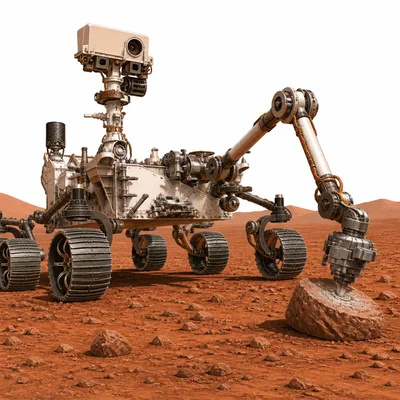
Why are wheels, cameras, and a robotic arm useful tools for a Mars rover?
- 3
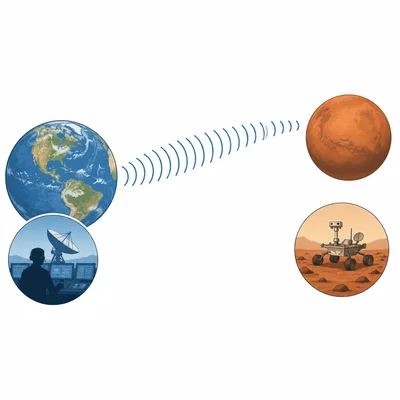
Mars is much farther away than the Moon. Explain why engineers cannot drive a Mars rover with a joystick in real time from Earth.
- 4
A rover travels 120 meters over 6 days. What is its average distance traveled per day?
- 5
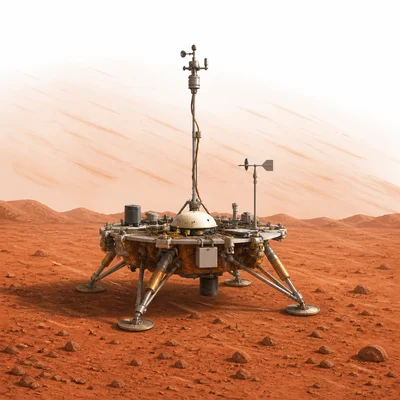
A lander measures temperature, wind, and air pressure on Mars. What branch of science is it helping scientists study, and why is that useful?
- 6
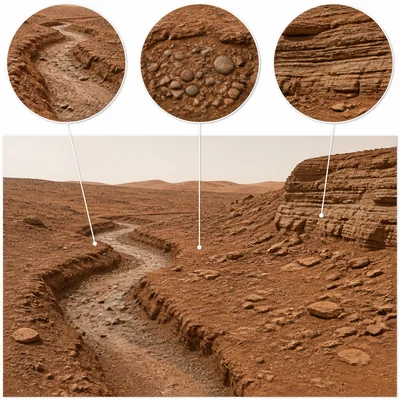
Some Mars rovers look for signs that liquid water existed in the past. Name two pieces of evidence a rover might look for in rocks or landforms.
- 7
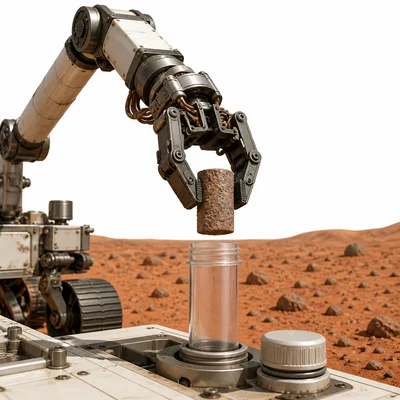
A rover collects a rock core and seals it inside a sample tube. Explain why sealing the sample is important.
- 8
A future Mars sample return mission would bring selected samples back to Earth. Give two reasons why scientists want to study Mars samples in Earth laboratories.
- 9
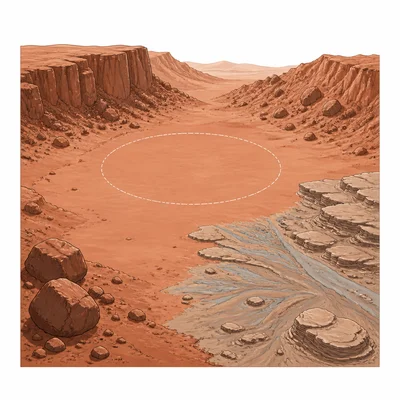
Mission planners must choose a landing site for a rover. List three features that would make a landing site scientifically interesting and reasonably safe.
- 10
A rover sends back 18 images each hour during a 5-hour science session. How many images does it send during the session?
- 11
Explain how a rover can help scientists decide whether Mars may once have had conditions suitable for life.
- 12
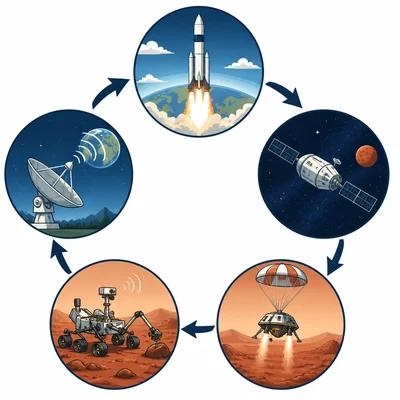
Put these mission steps in a logical order and explain your order: launch from Earth, land on Mars, collect data or samples, travel through space, send results back to Earth.