Practice reading a star map, using cardinal directions, recognizing star patterns, and finding common constellations in the night sky.
Read each problem carefully. Use the star map clues, directions, and constellation patterns to answer each question. Show your work or explain your reasoning when asked.
Use directions, star brightness, and patterns to locate constellations
Astronomy - Grade 6-8
- 1
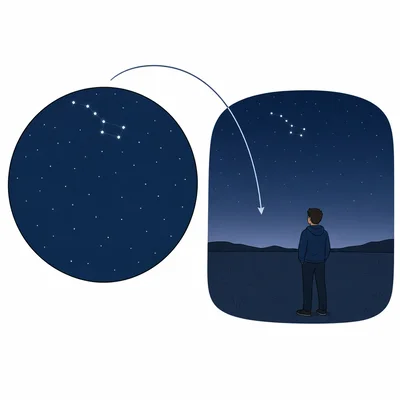
A star map has north at the top, south at the bottom, east on the left, and west on the right. If a constellation is shown near the top of the map, which direction should you face to look for it in the sky?
- 2
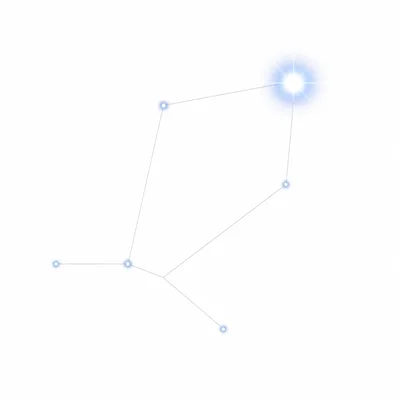
On many star maps, larger dots show brighter stars and smaller dots show dimmer stars. If a constellation has one very large dot and several small dots, what does that tell you about the stars in that constellation?
- 3
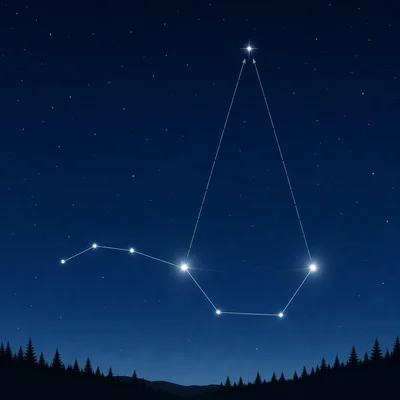
The Big Dipper is part of the constellation Ursa Major. Its two outer bowl stars are often called pointer stars because they point toward Polaris, the North Star. If you find the Big Dipper low in the northern sky, how can you use it to find Polaris?
- 4
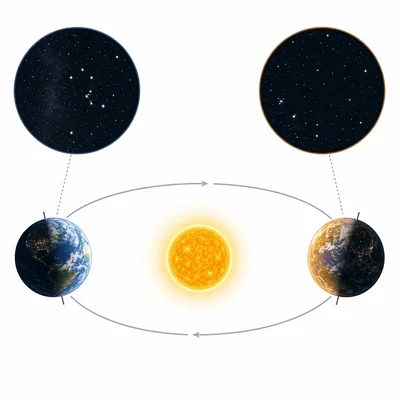
A star map is labeled for 9:00 p.m. on March 15. Why might the same map not match the sky perfectly at 9:00 p.m. on July 15?
- 5
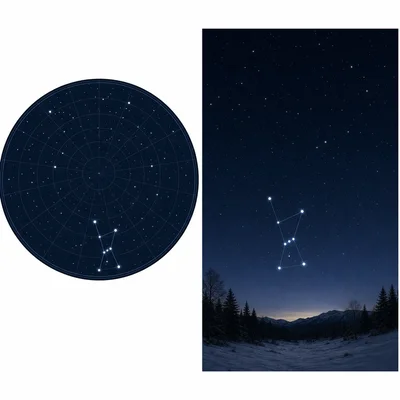
A student sees Orion near the southern horizon on a winter evening. On a star map, Orion is also shown near the southern edge. Explain why this is a good match between the map and the sky.
- 6
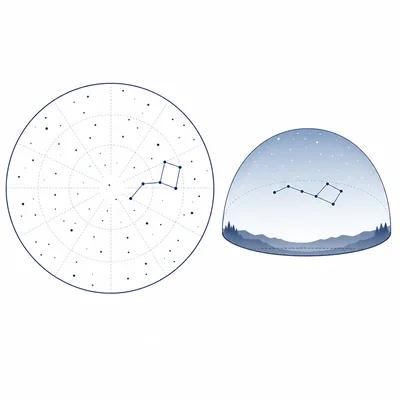
A constellation is shown halfway between the center of a circular star map and the outer edge. What does this suggest about the constellation's height in the sky?
- 7
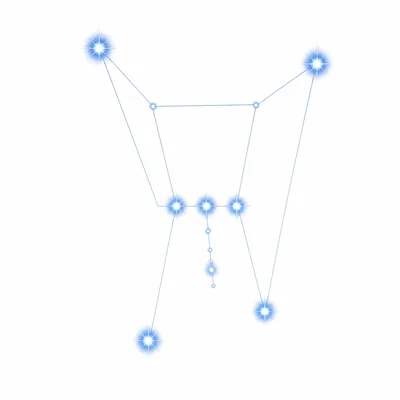
On a clear night, you identify three bright stars in a straight line. A star map shows that these three stars are Orion's Belt. What should you look for nearby to confirm that you have found Orion?
- 8
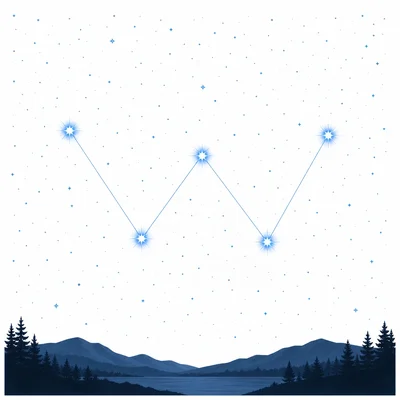
A star map shows Cassiopeia as a W-shaped pattern in the northern sky. If you see a W-shaped group of bright stars above the northern horizon, what is a reasonable conclusion?
- 9
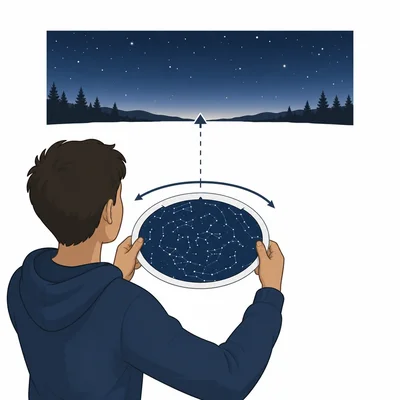
Why should you turn a printed star map so that the direction you are facing is at the bottom of the map?
- 10

A star map shows Vega high in the eastern sky and Deneb lower in the northeast. A student faces east and finds a very bright star high above the horizon. Which star is the student most likely seeing, and why?
- 11
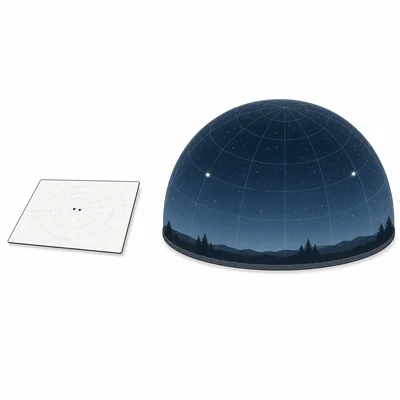
Two stars on a map are close together, but when you look at the sky, they seem farther apart than expected. Give one possible reason for this difference.
- 12
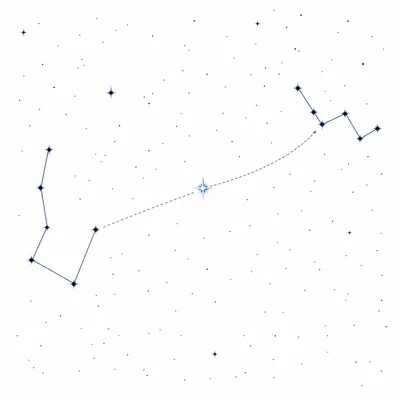
Use this observing plan: first face north, then find the Big Dipper, then use its pointer stars to locate Polaris, then look for Cassiopeia on the opposite side of Polaris from the Big Dipper. Explain why this plan is useful for finding constellations.