Practice identifying major eye structures, explaining their functions, and describing how the eye and brain work together to create sight.
Read each problem carefully. Use complete sentences when explaining your answers. Show your thinking in the space provided.
Explore the parts of the eye and how light becomes vision
Biology - Grade 6-8
- 1
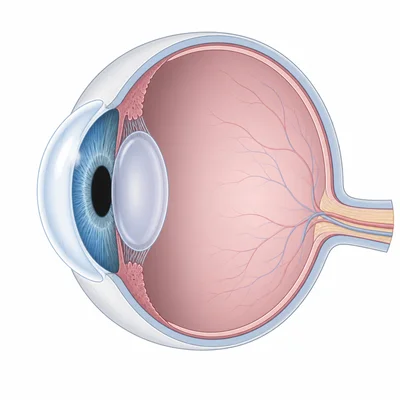
Label the following parts of the eye by matching each structure to its function: cornea, iris, pupil, lens, retina, optic nerve. Functions: controls how much light enters, opening where light enters, focuses light, carries signals to the brain, light-sensitive lining, clear front covering.
- 2
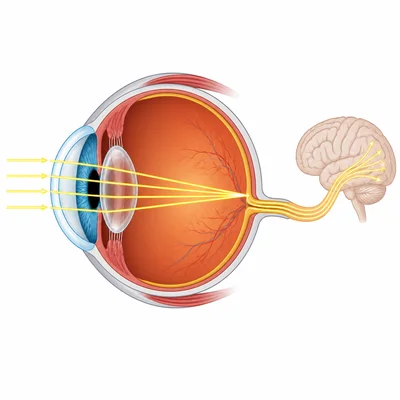
Explain the path light takes as it enters the eye and travels to the brain.
- 3
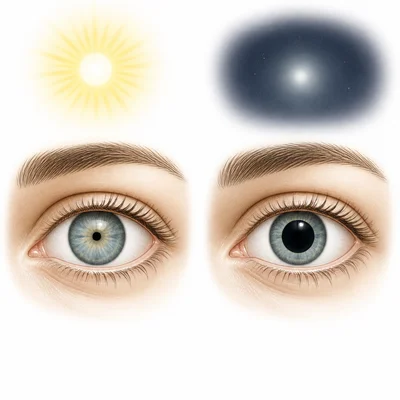
The iris is the colored part of the eye. Describe what happens to the pupil in bright light and in dim light.
- 4
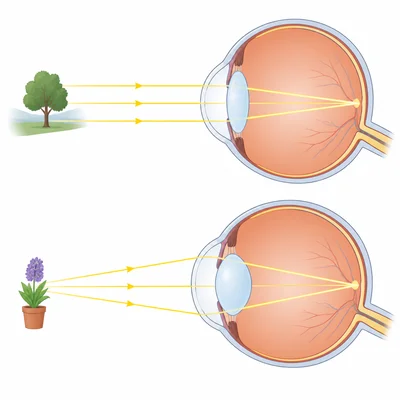
A student says, "The lens is only used for seeing things far away." Explain why this statement is incomplete.
- 5
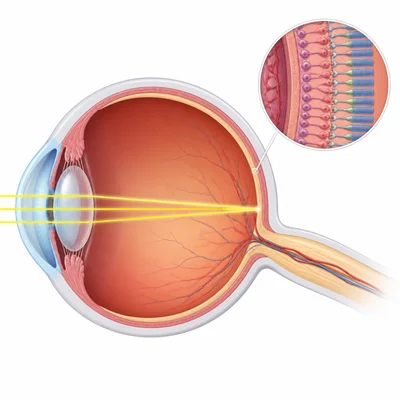
What is the retina, and why is it important for vision?
- 6
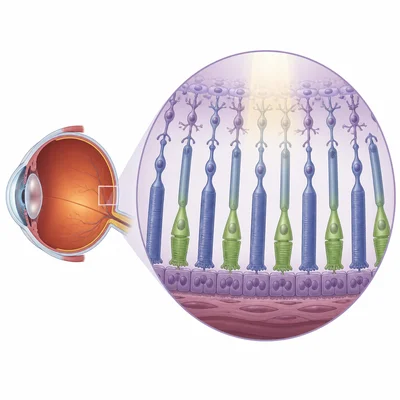
Compare rods and cones in the retina. Include what each type of photoreceptor helps us see.
- 7
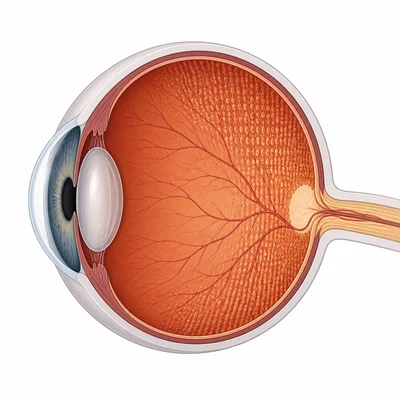
Why do we have a blind spot in each eye?
- 8
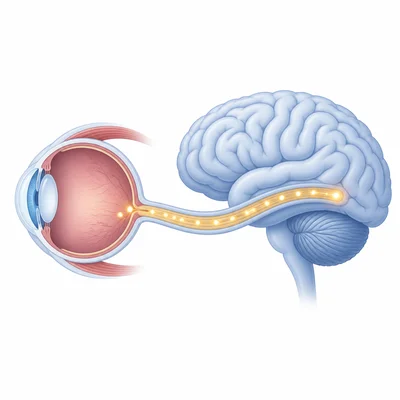
Explain how the optic nerve and brain work together in the process of seeing.
- 9
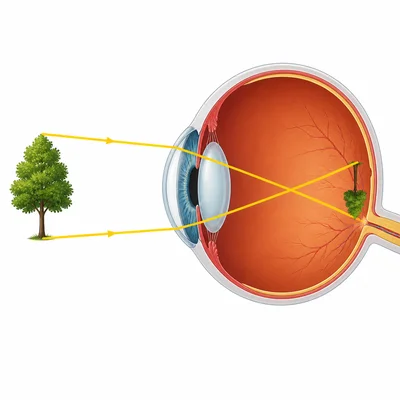
When light enters the eye, the image formed on the retina is upside down. Explain why we do not see the world upside down.
- 10
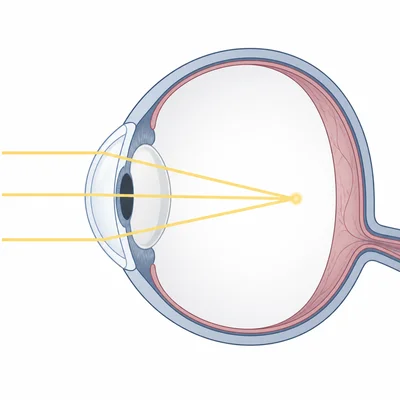
A person has trouble seeing objects that are far away clearly. This condition is called nearsightedness. What is happening to the focus of light in the eye?
- 11
List two ways people can protect their eyes and explain how each action helps.
- 12
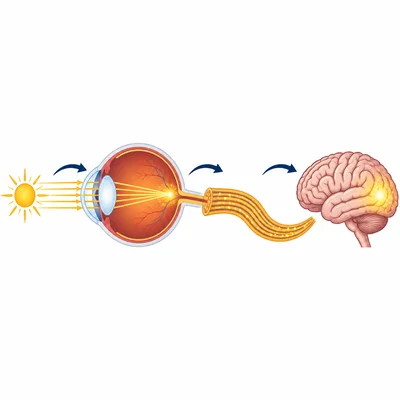
Put these steps of vision in the correct order: the brain interprets signals, light enters the eye, the retina detects light, the lens focuses light, the optic nerve carries signals.