Practice analyzing and designing technical theater elements, including lighting, sound, and stage design, to support mood, story, character, and audience focus.
Read each problem carefully. Use theater vocabulary when possible. Explain how each technical choice supports the scene, mood, or audience experience.
Planning technical choices that support a stage production
Drama - Grade 9-12
- 1
A scene takes place at midnight in an abandoned house. The director wants the audience to feel uneasy before any character speaks. Describe two lighting choices and one sound choice that would help create this mood.
- 2
Explain the difference between a lighting cue and a sound cue. Give one example of each in a school play.
- 3
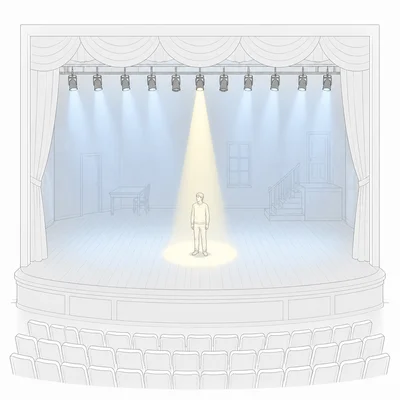
A director says, 'The lead actor needs to be the focus during this monologue, but the rest of the stage should still be visible.' What lighting design would meet this goal?
- 4
List three responsibilities of a stage manager during technical rehearsals. Explain why each responsibility matters.
- 5
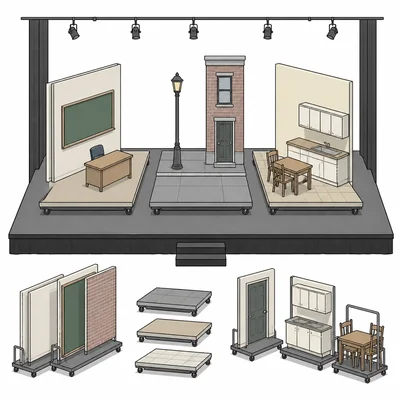
A play moves quickly between a classroom, a city street, and a family kitchen. The director wants scene changes to be fast and simple. Propose a stage design solution that supports this need.
- 6
Read this design note: 'During the argument, the lights slowly shift from warm amber to harsh white, and the background music fades out.' Explain how these technical choices might affect the audience's understanding of the scene.
- 7
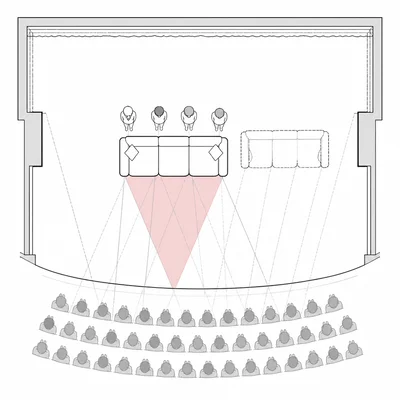
A student designer places a large couch downstage center, but it blocks several actors during an important scene. Identify the design problem and suggest a practical fix.
- 8
Choose one sound effect for each moment: a storm begins, a memory sequence starts, and a crowded train station appears. For each sound effect, explain what it communicates.
- 9
A lighting designer uses red light during a battle scene. Describe two possible meanings of this color choice. Then name one reason the designer should be careful when using strong red light.
- 10
Create a short technical design plan for the final moment of a play. The main character stands alone onstage after making a difficult choice. Include one lighting choice, one sound choice, and one stage design choice.