Practice explaining the Coriolis effect, identifying global wind belts, and connecting atmospheric circulation to Earth's rotation and uneven heating.
Read each problem carefully. Use complete sentences when explaining your reasoning. Show any sketches or labels in the space provided.
How Earth's rotation shapes winds and circulation cells
Earth Science - Grade 9-12
- 1
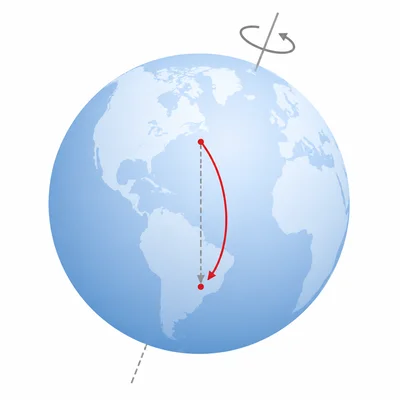
Explain why the Coriolis effect occurs on Earth. Include the role of Earth's rotation in your answer.
- 2
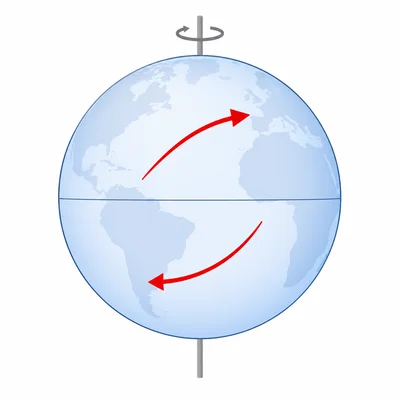
State the direction that moving air is deflected by the Coriolis effect in the Northern Hemisphere and in the Southern Hemisphere.
- 3
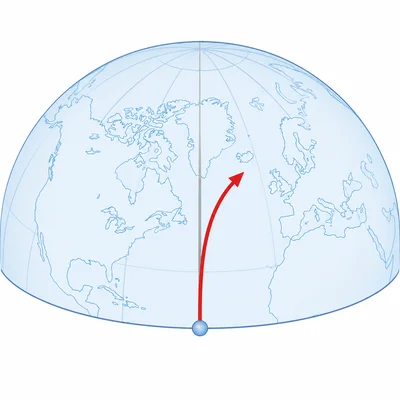
A wind begins moving directly north from the equator into the Northern Hemisphere. Describe how its path will appear to curve and explain why.
- 4
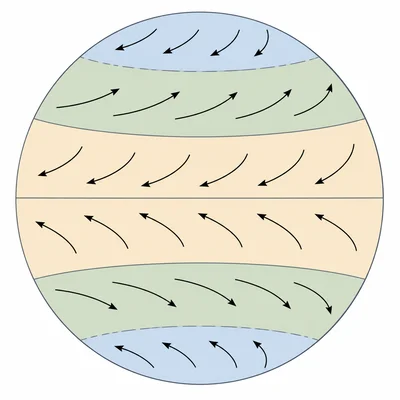
Name the three main global wind belts in each hemisphere and give the approximate latitude range for each one.
- 5
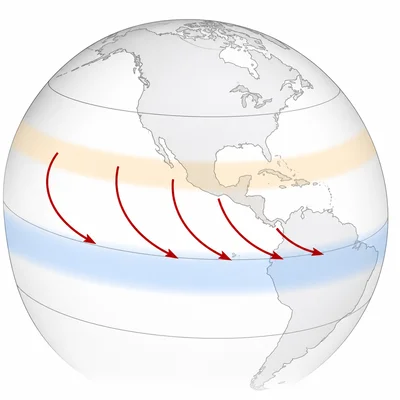
The trade winds in the Northern Hemisphere generally blow from the northeast toward the southwest. Explain how pressure belts and the Coriolis effect combine to create this wind direction.
- 6
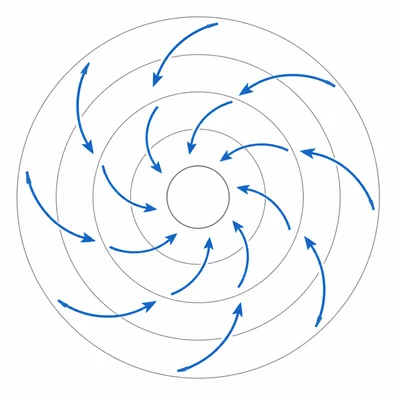
Complete this comparison: A low-pressure system in the Northern Hemisphere has surface winds that spiral in which direction, and why?
- 7
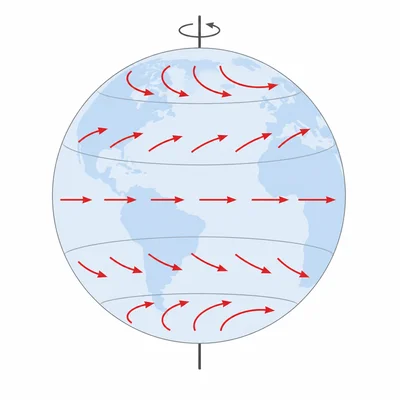
Why is the Coriolis effect weakest at the equator and strongest near the poles?
- 8
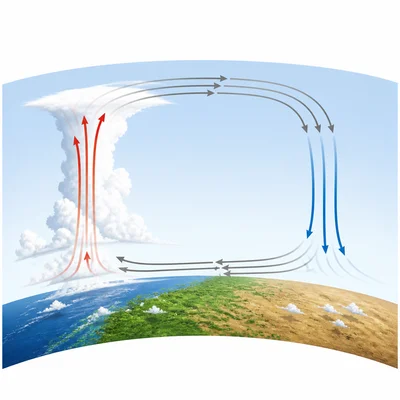
Describe the Hadley cell. Include where air rises, where it sinks, and how it helps form the trade winds.
- 9
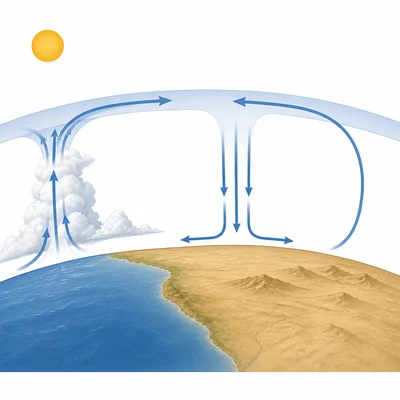
At about 30 degrees latitude, many deserts are found, such as the Sahara and Australian deserts. Explain how global circulation contributes to dry conditions there.
- 10
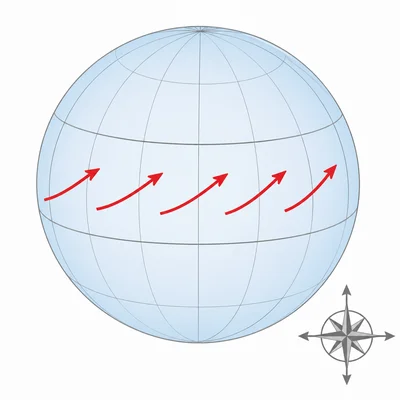
Explain the difference between a wind's direction of movement and the name of the wind. Use the prevailing westerlies as an example.
- 11
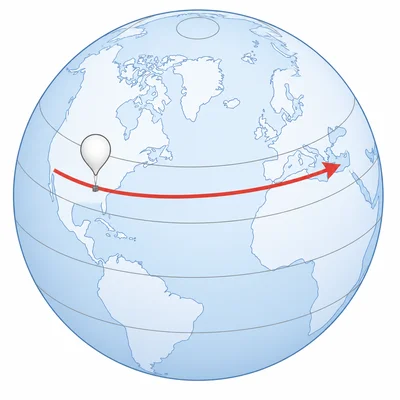
A weather balloon is released at 45 degrees north latitude and moves with the prevailing westerlies. In what general direction will it likely travel, and what global wind belt is affecting it?
- 12
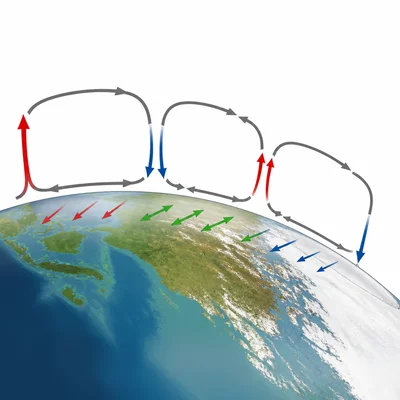
Draw or describe a labeled model of global atmospheric circulation from the equator to the North Pole. Include the Hadley, Ferrel, and Polar cells, plus the major surface wind belts.