Analyze how climate, soil, water use, vegetation loss, and human activities contribute to desertification and land degradation.
Read each problem carefully. Use evidence from Earth science concepts when explaining your answers. Show calculations where needed.
Causes, impacts, and solutions for dryland ecosystems
Earth Science - Grade 9-12
- 1
Define desertification in your own words. Include one natural factor and one human activity that can contribute to it.
- 2
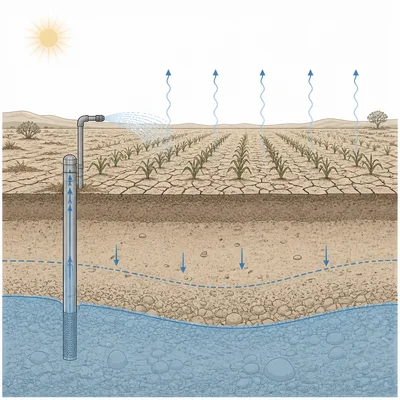
A semi-arid region receives below-average rainfall for five years in a row. Farmers continue planting the same water-demanding crop and pumping groundwater for irrigation. Explain how these conditions could lead to land degradation.
- 3
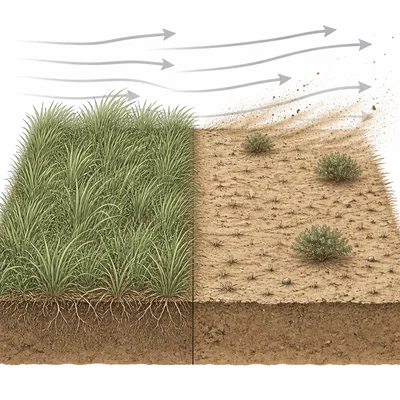
Study the described land surface: Area A has native grasses covering most of the soil, while Area B has bare soil with scattered shrubs after heavy grazing. Predict which area is more likely to experience wind erosion and explain why.
- 4
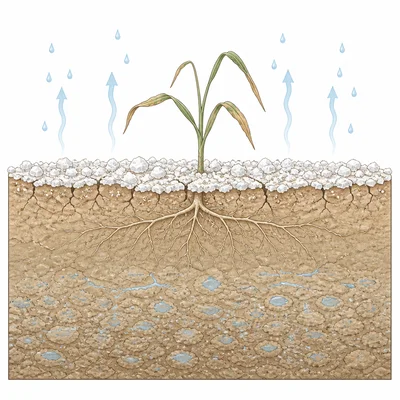
A soil sample from an irrigated field shows a white crust on the surface after water evaporates. Identify the likely soil problem and explain how it affects plant growth.
- 5
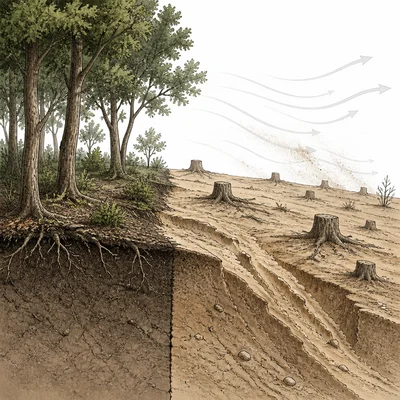
Explain how deforestation on the edge of a dryland region can increase the risk of desertification.
- 6
A ranch can sustainably support 200 cattle during a normal rainfall year. During a drought, plant growth drops by 40 percent. Estimate how many cattle the land can support during the drought if the rancher wants to keep grazing pressure sustainable. Show your work.
- 7
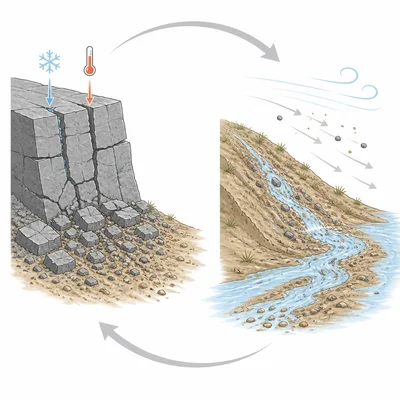
Compare physical weathering and erosion in the process of land degradation. How are they different, and how can both reduce soil quality?
- 8
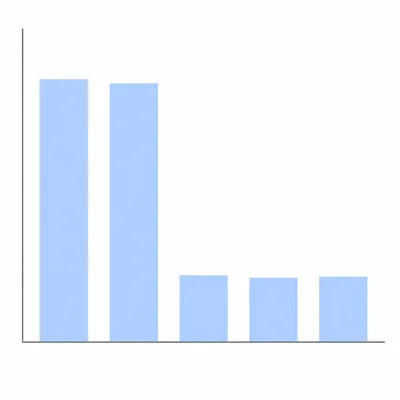
The table shows annual rainfall for a dryland area: Year 1: 410 mm, Year 2: 390 mm, Year 3: 250 mm, Year 4: 220 mm, Year 5: 260 mm. The long-term average is 400 mm. Describe the rainfall trend and explain one possible effect on the ecosystem.
- 9
Explain why land degradation is not only an environmental problem but also a social and economic problem.
- 10
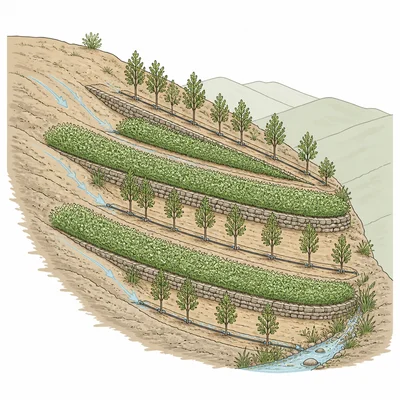
A community wants to restore degraded farmland on a slope. Choose two restoration practices from the list and explain how each one helps: terracing, cover crops, rotational grazing, drip irrigation, reforestation.
- 11
Some people describe desertification as the movement of existing deserts into nearby regions. Explain why this description is incomplete.
- 12
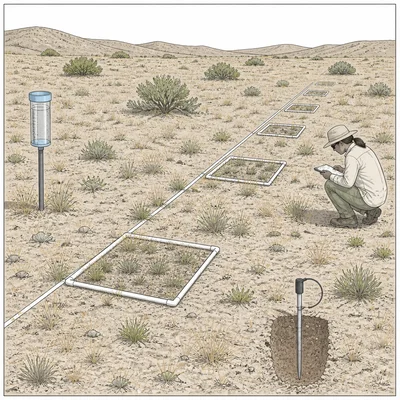
Design a simple monitoring plan for detecting early signs of desertification in a semi-arid region. Include at least three indicators scientists or land managers should measure.