Practice identifying convergent, divergent, and transform plate boundaries and explaining the geologic features and hazards they produce.
Read each problem carefully. Use complete sentences and evidence from plate motion, density, and geologic features to support your answers.
Identifying plate interactions and the landforms they create
Earth Science - Grade 9-12
- 1
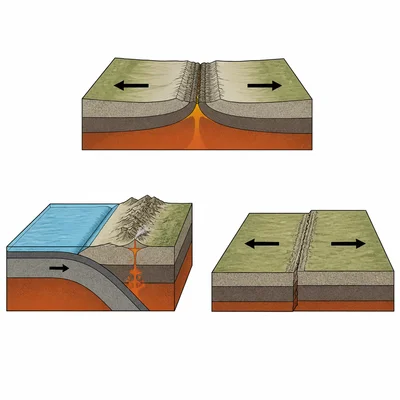
Define the three main types of plate boundaries: convergent, divergent, and transform. Include the direction of plate motion for each type.
- 2
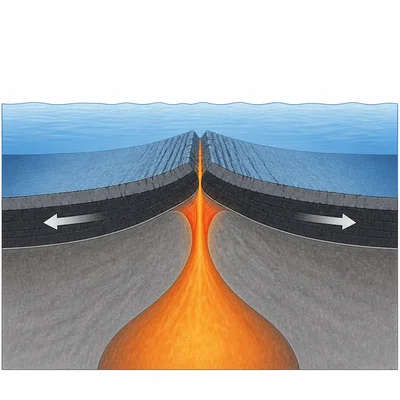
At a mid-ocean ridge, magma rises and cools to form new oceanic crust. What type of plate boundary is this, and why?
- 3
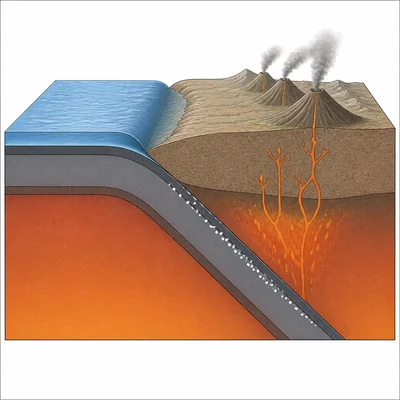
The Andes Mountains formed where the oceanic Nazca Plate moves beneath the continental South American Plate. Identify the type of boundary and explain why volcanoes form there.
- 4
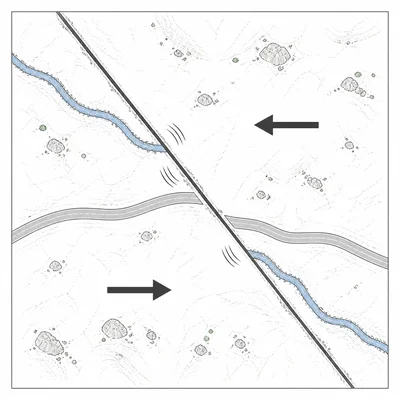
The San Andreas Fault in California is a place where the Pacific Plate and North American Plate slide past each other. What type of boundary is this, and what major hazard is most common there?
- 5
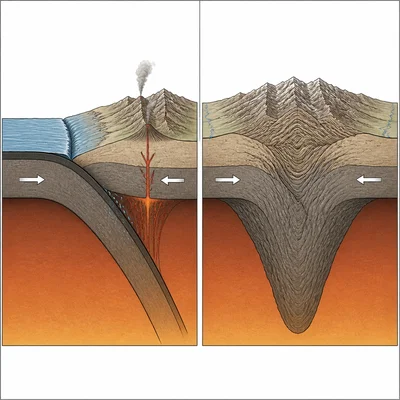
Compare oceanic-continental convergence with continental-continental convergence. Describe one major geologic feature produced by each.
- 6
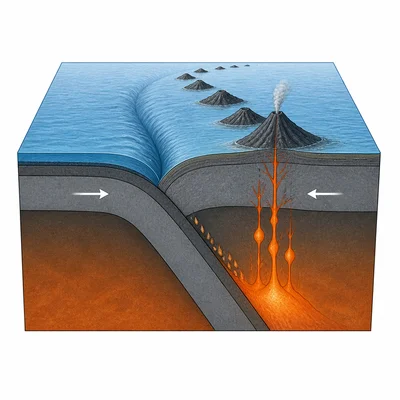
A geologist finds a deep ocean trench next to a chain of volcanic islands. Which type of plate boundary is most likely present? Explain your reasoning.
- 7
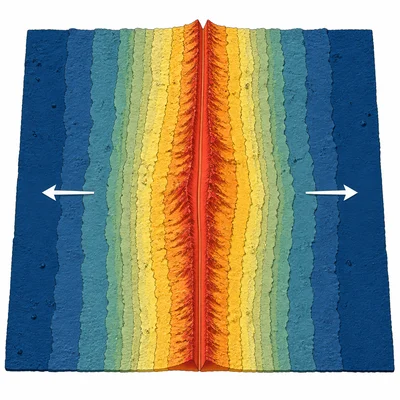
Explain why the youngest oceanic crust is usually found near mid-ocean ridges and older oceanic crust is found farther away.
- 8
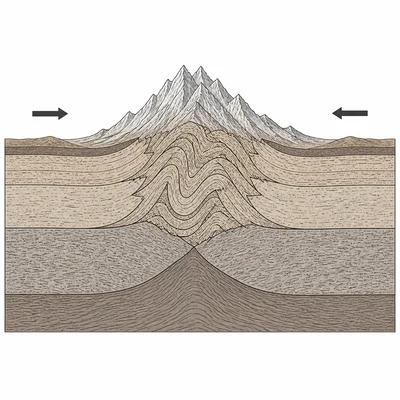
Two plates move toward each other, but neither plate subducts deeply because both are made of continental crust. What type of boundary is this, and what landform is likely to form?
- 9
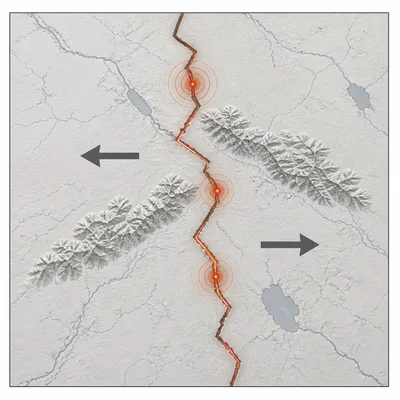
A student says, "Transform boundaries do not create or destroy crust, so they are not dangerous." Evaluate this statement using evidence from plate tectonics.
- 10
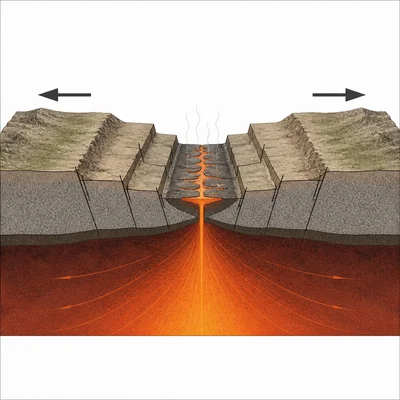
Use the following observations to identify the boundary type: shallow earthquakes, a central rift valley, high heat flow, and basaltic lava. Explain your answer.
- 11
Rank these boundaries from most likely to produce explosive volcanoes to least likely: transform boundary, oceanic-continental convergent boundary, divergent boundary. Explain your ranking.
- 12
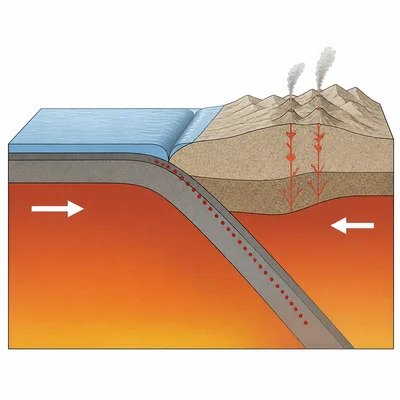
A plate boundary has frequent earthquakes at depths ranging from shallow to very deep, with the deepest earthquakes located farther inland from an ocean trench. What type of boundary is this, and what does the earthquake pattern show?