Practice identifying compostable materials, understanding decomposers, and explaining how compost helps the soil.
Read each problem carefully. Write your answers in complete sentences when you can.
Learning how nature recycles food scraps and plant matter
Environmental Science - Grade 2-3
- 1
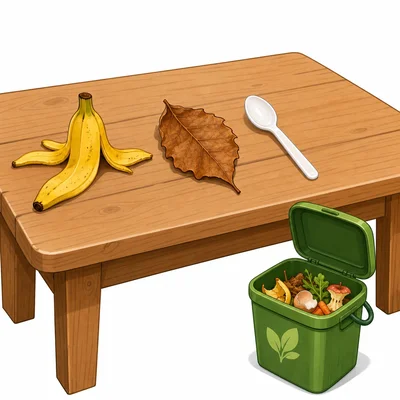
A banana peel, a dry leaf, and a plastic spoon are on a table. Which items can go in a compost bin?
- 2
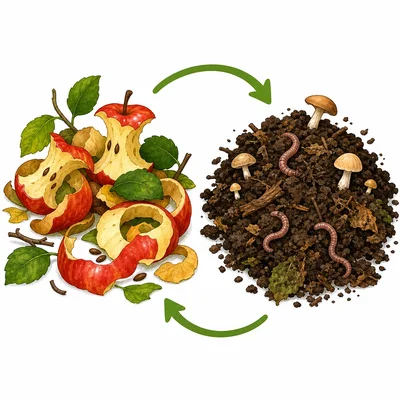
What does it mean when something decomposes?
- 3
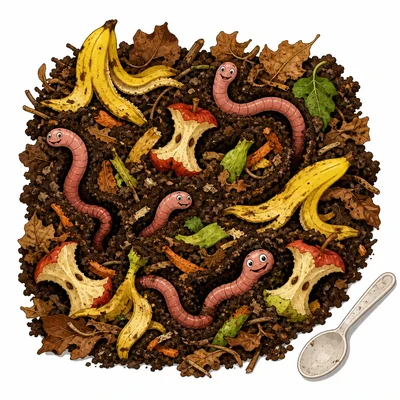
Circle the best choice: Earthworms help compost by eating and mixing old food scraps and leaves, or by turning plastic into food.
- 4
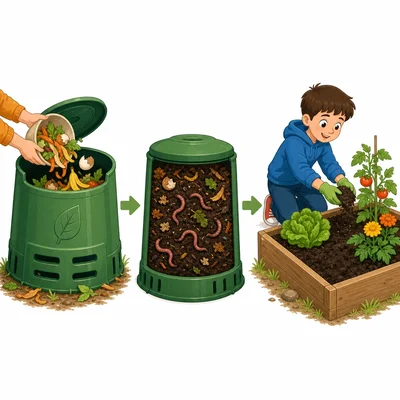
Put these steps in order by writing 1, 2, and 3: Food scraps go into the compost bin. Compost is added to a garden. Scraps break down into dark soil-like compost.
- 5
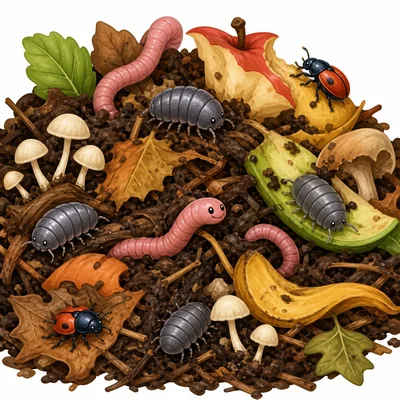
Name one living thing that helps break down materials in a compost pile.
- 6
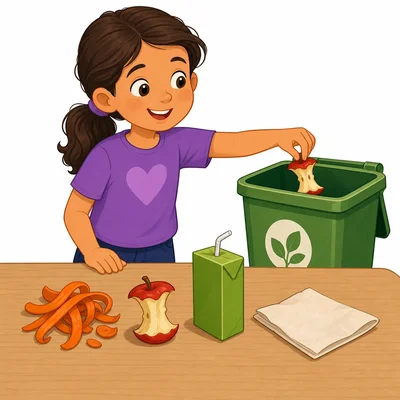
Mia wants to compost after lunch. She has apple cores, carrot peels, a juice box, and a paper napkin. Which two items are the best choices for composting?
- 7
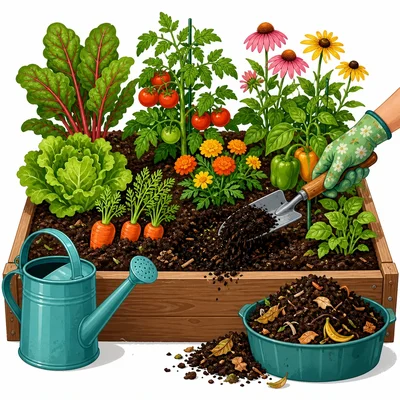
Why is compost good for a garden?
- 8
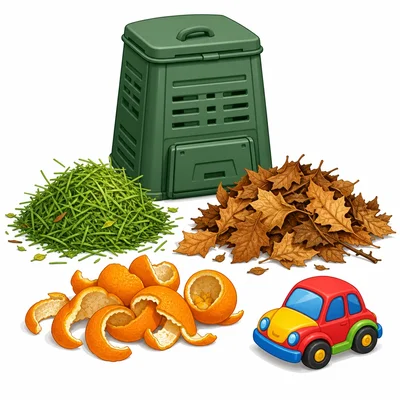
Look at this list: grass clippings, dry leaves, orange peels, toy car. Which item does not belong in compost? Explain why.
- 9
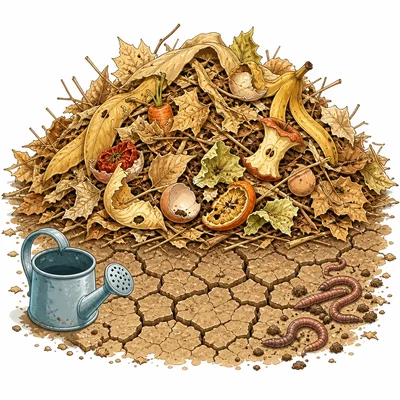
A compost pile needs some air and water. What might happen if a compost pile is very dry for a long time?
- 10
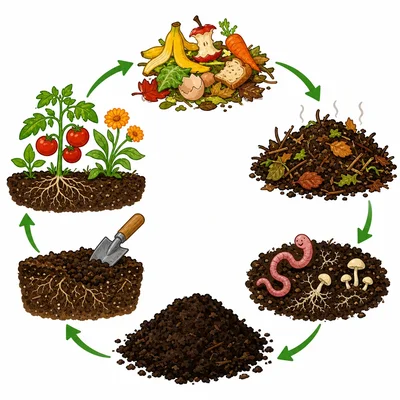
Draw or describe the decomposition cycle using these words: scraps, decomposers, compost, soil, plants.