Explore how carbon dioxide changes ocean chemistry, how acidification affects coral reefs, and how scientists and communities can respond.
Read each problem carefully. Use complete sentences, show calculations when needed, and explain your reasoning.
How changing ocean chemistry affects reef ecosystems
Environmental Science - Grade 9-12
- 1
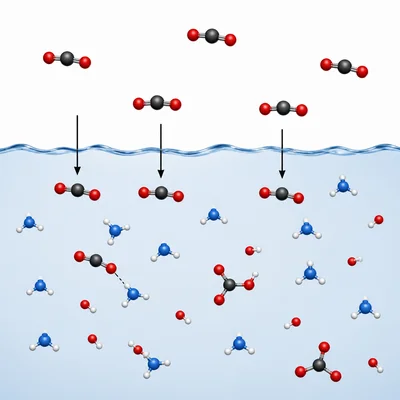
Explain how carbon dioxide from the atmosphere can lead to ocean acidification. Include the role of carbonic acid in your answer.
- 2
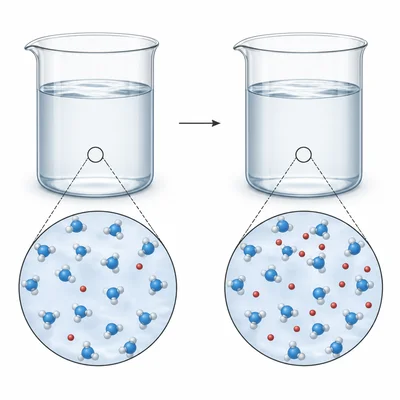
A seawater sample has a pH of 8.2. Another sample from the same reef 30 years later has a pH of 8.0. Explain why this is an important change even though the numbers look close.
- 3
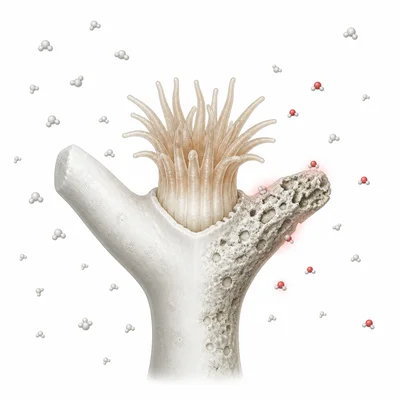
Corals build skeletons from calcium carbonate. Describe how ocean acidification can make it harder for corals to build and maintain their skeletons.
- 4
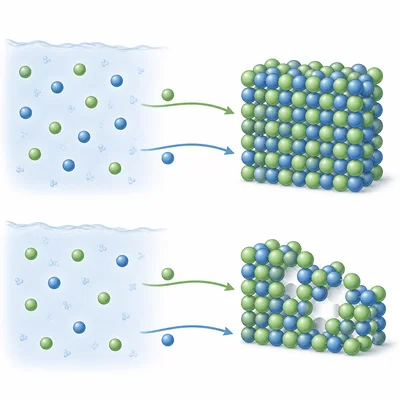
Write the simplified relationship between calcium ions, carbonate ions, and calcium carbonate. Then explain what happens when carbonate ions become less available.
- 5
A reef has 45 percent live coral cover in 2010 and 30 percent live coral cover in 2020. Calculate the percentage point change in live coral cover.
- 6
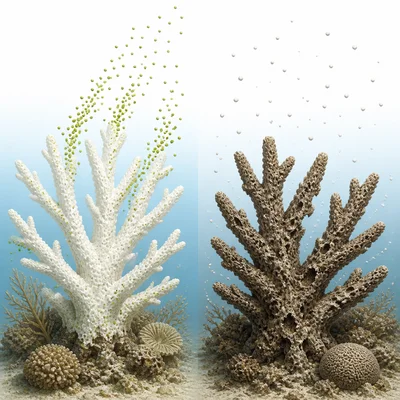
Describe one difference between coral bleaching and ocean acidification.
- 7
Scientists measure lower carbonate ion concentrations near a reef over several decades. Identify one likely cause and one likely effect on the reef ecosystem.
- 8
Explain why coral reefs are important to both marine life and people.
- 9
A student says, "Ocean acidification means the ocean is becoming acidic like lemon juice." Correct this statement using accurate scientific language.
- 10
List two local stressors that can make coral reefs less resilient to ocean acidification, and explain one way to reduce either stressor.
- 11
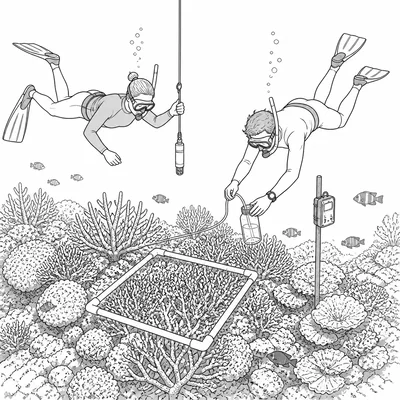
Design a simple field study to monitor possible ocean acidification effects on a coral reef. Name two variables you would measure and explain why.
- 12
Explain why reducing carbon dioxide emissions is considered a major long-term solution to ocean acidification.