Explore how plastic pollution forms, how microplastics move through ecosystems, and what people can do to reduce plastic waste.
Read each problem carefully. Use complete sentences and show your reasoning when needed.
Understanding sources, impacts, and solutions
Environmental Science - Grade 6-8
- 1
Define plastic pollution in your own words. Include one example of plastic pollution you might see in a neighborhood, park, river, or ocean.
- 2
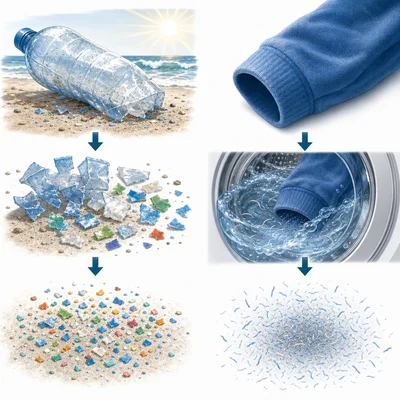
Microplastics are usually defined as plastic pieces smaller than 5 millimeters. Name two ways microplastics can form.
- 3
A student finds plastic pieces on a beach and sorts them into two groups: macroplastics larger than 5 millimeters and microplastics smaller than 5 millimeters. If the student finds 42 macroplastic pieces and 138 microplastic pieces, how many total plastic pieces were found?
- 4
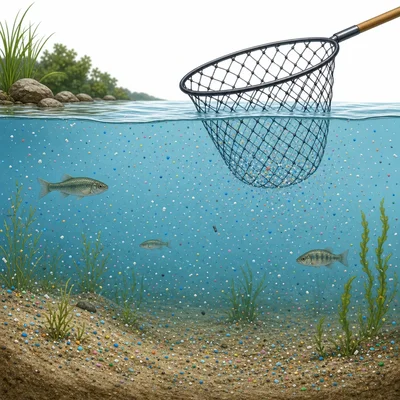
Explain why microplastics can be difficult to clean up once they enter lakes, rivers, or oceans.
- 5
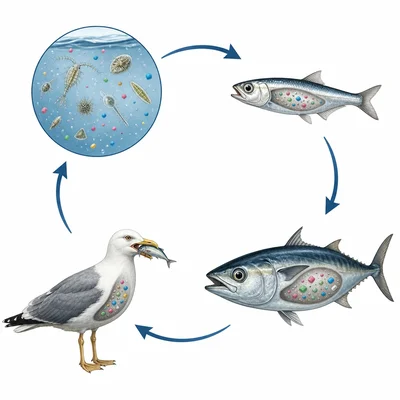
Look at a simple food chain: plankton are eaten by small fish, small fish are eaten by larger fish, and larger fish are eaten by seabirds. Describe how microplastics could move through this food chain.
- 6
A school cafeteria uses 250 single-use plastic forks each day. If the school switches to reusable forks for 5 school days, how many single-use plastic forks could be avoided?
- 7
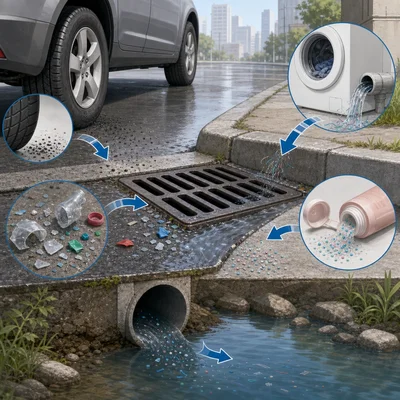
List three possible sources of microplastics in a city or town.
- 8
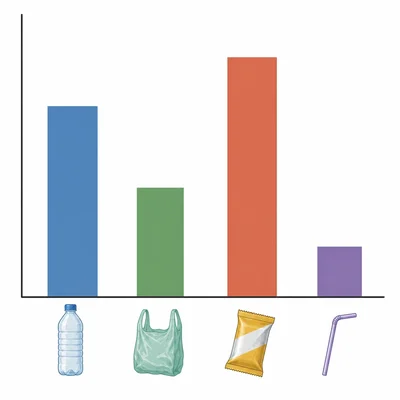
A bar graph shows the following plastic waste collected during a park cleanup: bottles, 35 items; bags, 22 items; food wrappers, 48 items; straws, 15 items. Which category was collected the most, and which was collected the least?
- 9
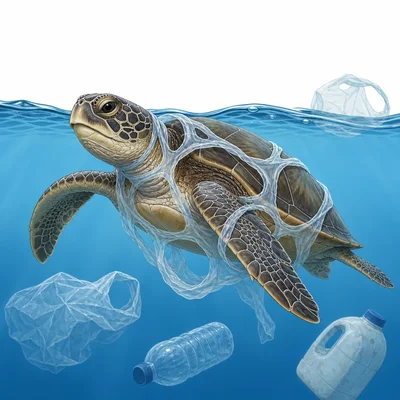
Explain one way plastic pollution can harm animals even before it breaks into microplastics.
- 10
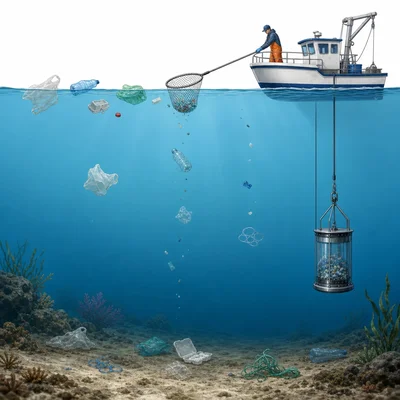
Some plastics float, while others sink. Explain why this matters when scientists study plastic pollution in the ocean.
- 11
Choose one action from the list and explain how it can reduce plastic pollution: using a refillable water bottle, bringing reusable bags, repairing items, buying products with less packaging, or joining a cleanup.
- 12
A company says its new plastic package is biodegradable. What is one scientific question you should ask before deciding whether this package is better for the environment?