Practice identifying watershed features, explaining runoff pollution, and choosing ways to reduce pollution before it reaches streams, rivers, lakes, and oceans.
Read each problem carefully. Use complete sentences when explaining your thinking. Show your work in the space provided.
Tracing how water and pollutants move through a landscape
Environmental Science - Grade 6-8
- 1
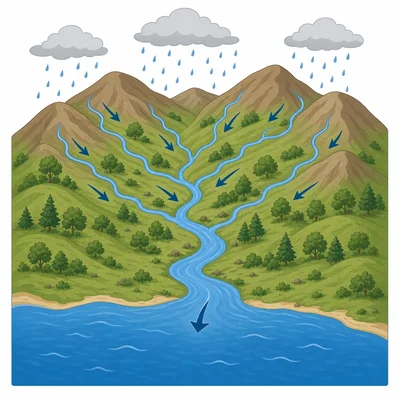
Define a watershed in your own words. Include where the water in a watershed eventually goes.
- 2
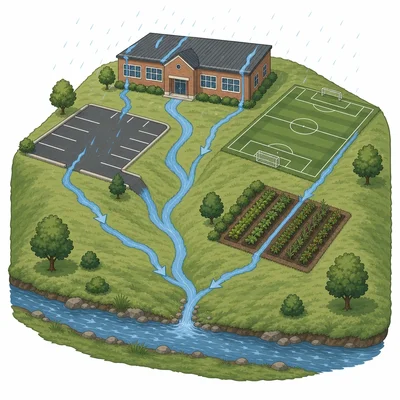
A school parking lot, soccer field, roof, and garden all drain toward the same creek. Are these areas part of the same watershed? Explain your answer.
- 3
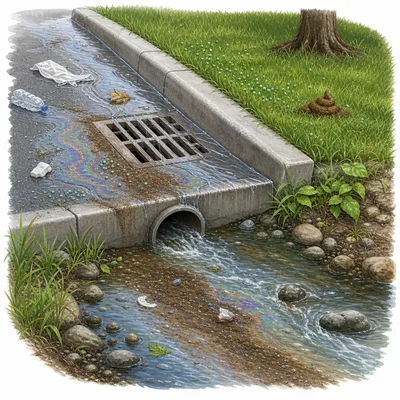
List three pollutants that stormwater runoff can carry from streets or yards into nearby streams.
- 4
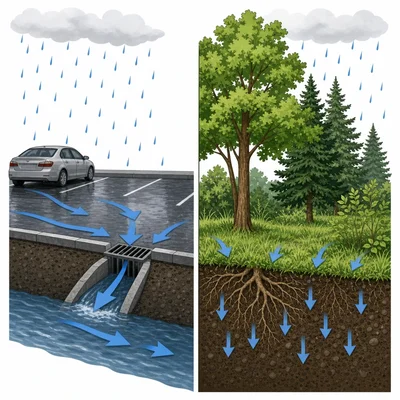
Explain why paved surfaces such as roads and parking lots can increase runoff compared with forests or grassy areas.
- 5
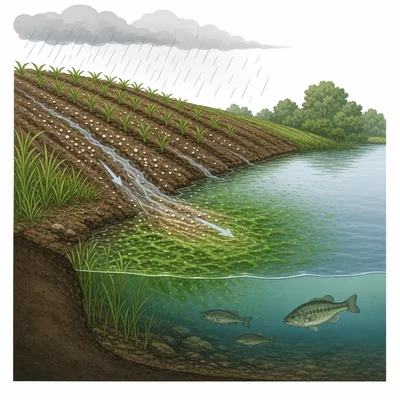
During a storm, rain falls on a farm field that has recently been fertilized. Describe how the fertilizer could affect a nearby pond if it is washed into the water.
- 6
A student says, "Only factories cause water pollution." Write a response that corrects this idea using runoff pollution as evidence.
- 7
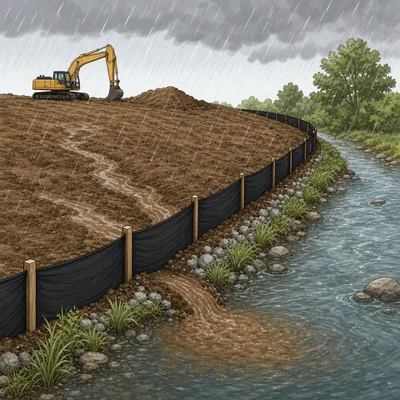
Look at this situation: A construction site has bare soil next to a stream. Heavy rain is expected tomorrow. What pollution problem could happen, and what is one way to prevent it?
- 8
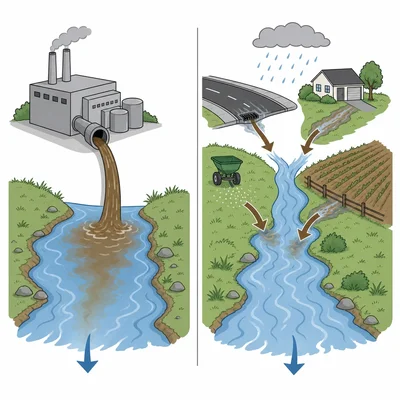
Describe the difference between point source pollution and nonpoint source pollution. Give one example of each.
- 9
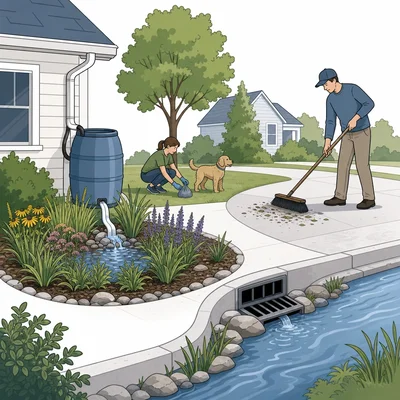
A neighborhood wants to reduce runoff pollution before it reaches a river. Choose two actions from this list and explain how each one helps: planting rain gardens, picking up pet waste, using less fertilizer, sweeping driveways instead of hosing them, installing rain barrels.
- 10
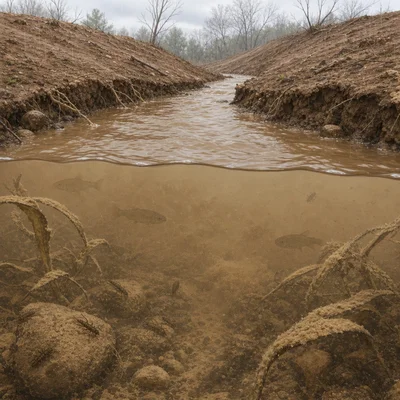
A stream becomes muddy after every rainstorm. What does the muddy water suggest about the watershed, and why can this be harmful to aquatic life?
- 11
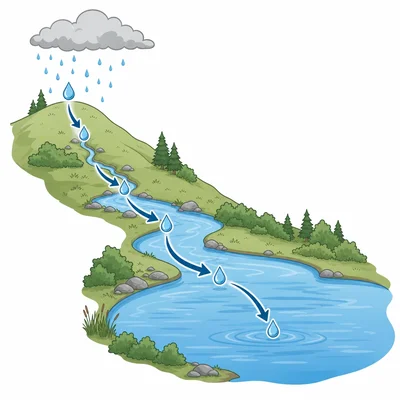
Use the diagram idea to trace the path of one drop of rain from a hilltop to a lake. Include at least three steps in the path.
- 12
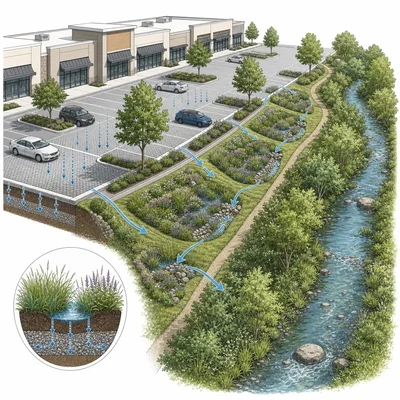
A town plans to build a new shopping center near a creek. Identify two design choices that could reduce runoff pollution from the site and explain why they would help.