Practice identifying biased survey questions, improving wording, and choosing sampling methods that better represent a population.
Read each problem carefully. Explain your thinking and show your work when needed.
Writing fair questions and choosing representative samples
Statistics - Grade 6-8
- 1
A school wants to know which lunch option students prefer. The survey question says, "Do you agree that the delicious new pasta should be served more often?" Explain why this question may be biased and rewrite it to be more fair.
- 2
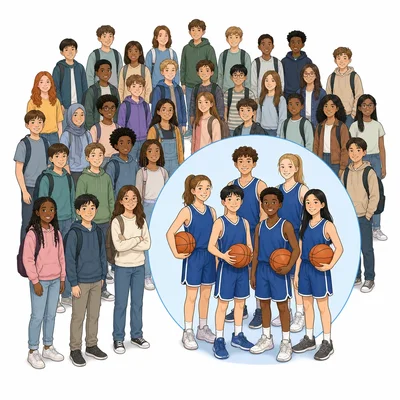
A student asks only members of the basketball team whether the school should buy new basketballs. What is the population of interest, what is the sample, and why might the sample be biased?
- 3
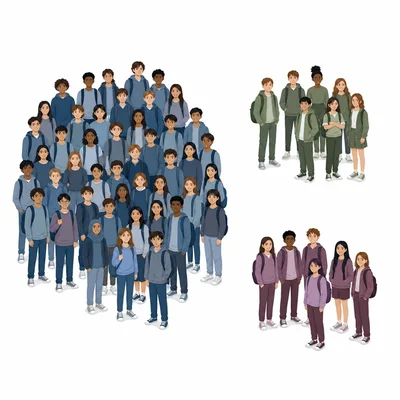
The table shows how 80 students were surveyed about a new homework policy. Identify whether the sample seems representative of the whole school and explain your reasoning. Grade 6: 60 students surveyed, Grade 7: 10 students surveyed, Grade 8: 10 students surveyed.
- 4
Rewrite this survey question so it is not biased: "Don't you think our school should stop wasting money on field trips?"
- 5
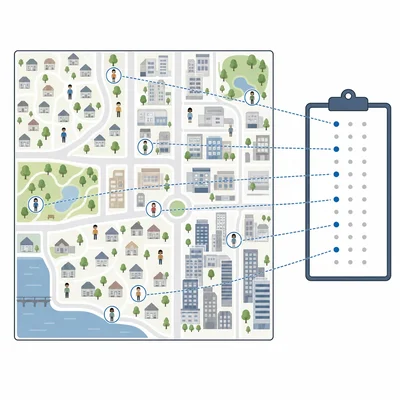
A city wants to know how residents feel about building a new park. Which sampling plan is likely to be least biased? A: Ask people entering a sporting goods store. B: Ask every 20th person from a list of all city residents. C: Ask only people who live next to the proposed park. D: Post an online poll and count anyone who chooses to answer.
- 6
A website poll asks, "Should the school finally make the obvious choice and start later in the morning?" It receives 500 responses. Name two problems with using this poll to decide the school schedule.
- 7
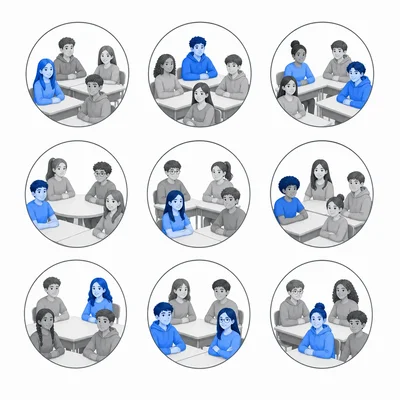
A teacher wants to estimate the average number of minutes students spend reading each night. The teacher randomly selects 5 students from each homeroom. What type of sampling method is this, and why might it be useful?
- 8
A survey asks, "How many hours of video games do you waste each week?" Explain the bias in the question and write a fair version.
- 9
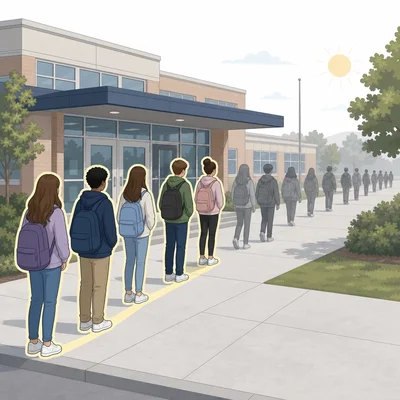
A principal surveys the first 40 students who arrive at school on Monday to learn whether students want more morning clubs. Explain why this sample could be biased.
- 10
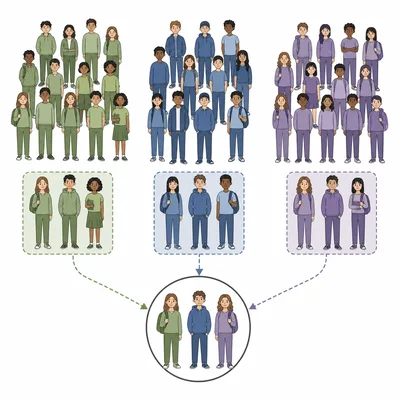
A school has 600 students: 200 in Grade 6, 200 in Grade 7, and 200 in Grade 8. You want a random sample of 60 students that is balanced by grade. How many students should be chosen from each grade? Explain your method.
- 11
Decide whether this is a good survey question and explain your answer: "Which school subject do you like best: math, science, language arts, or social studies?"
- 12
A student wants to find out what snacks middle school students prefer. Design a short survey plan that includes a fair question and a sampling method that is likely to reduce bias.