Practice describing simple probability using coins and dice. Students will identify possible outcomes, compare chances, and make predictions.
Read each problem carefully. Use words like impossible, unlikely, equally likely, likely, or certain when needed. Show your work in the space provided.
Exploring chance with heads, tails, and number cubes
Statistics - Grade 2-3
- 1

A fair coin has two sides: heads and tails. If you flip the coin one time, what are the possible outcomes?
- 2

A fair coin is flipped one time. Is getting heads certain, impossible, or equally likely as getting tails?
- 3
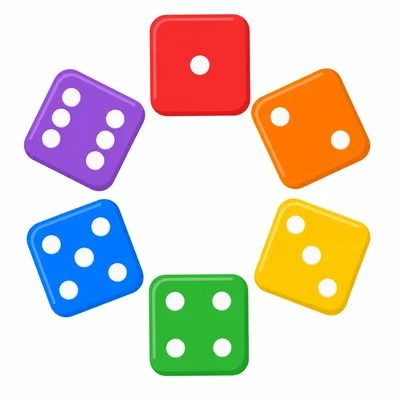
A number cube has the numbers 1, 2, 3, 4, 5, and 6. If you roll it one time, how many possible outcomes are there?
- 4
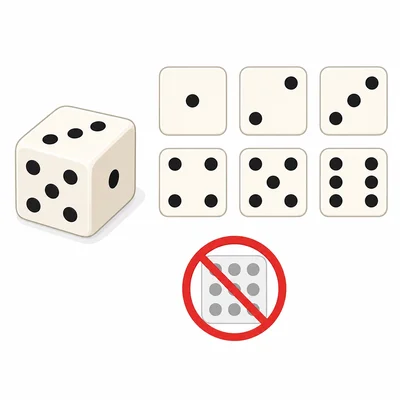
You roll a fair number cube one time. Is rolling a 7 possible or impossible? Explain.
- 5
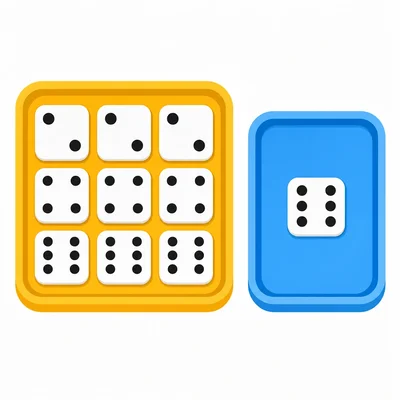
You roll a fair number cube one time. Which is more likely: rolling an even number or rolling a 6? Explain.
- 6

You flip a fair coin 10 times. Predict about how many times you might get tails. Explain your thinking.
- 7
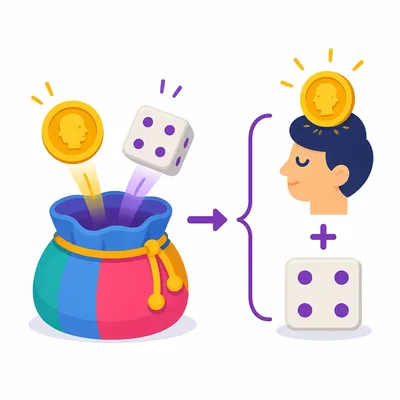
A bag has one coin and one number cube. You will flip the coin and roll the number cube. Which outcome uses both tools: heads and 4, tails only, or 3 only?
- 8
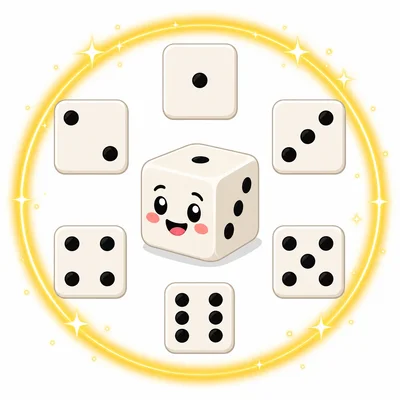
You roll a fair number cube one time. Is rolling a number less than 7 certain, likely, unlikely, or impossible? Explain.
- 9
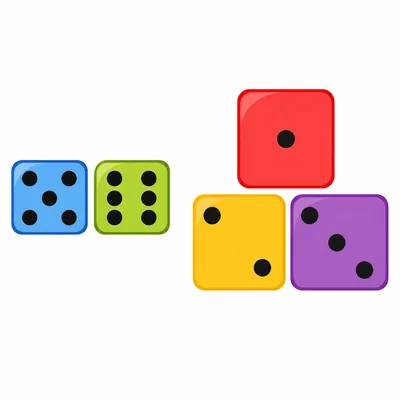
You roll a fair number cube one time. Which has a better chance: rolling a number greater than 4 or rolling a number less than 4? Explain.
- 10
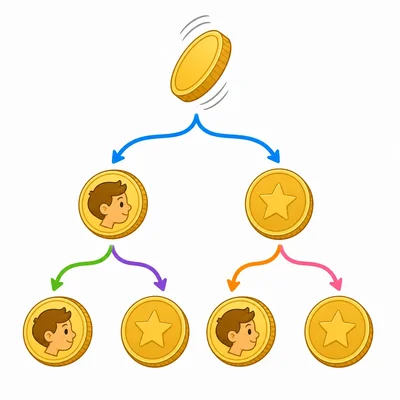
Maria says, 'If I flip a coin two times, I will definitely get one heads and one tails.' Is Maria correct? Explain.