When to use it
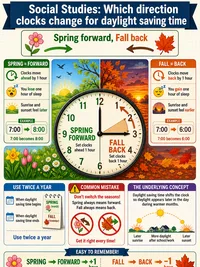
Use it twice a year when daylight saving time begins or ends to remember whether to set clocks ahead or behind by one hour.
Example
In spring, clocks move forward one hour (losing an hour of sleep). In fall, clocks move back one hour (gaining an hour of sleep).
Common mistake
Applying the rule in the wrong season. Spring always means forward (later sunrise, later sunset) and fall always means back.