Practice explaining heat, temperature, particle motion, and phase changes such as melting, freezing, evaporation, condensation, sublimation, and deposition.
Read each problem carefully. Use complete sentences when explaining your thinking. Show your work in the space provided.
Exploring how heat affects matter and changes of state
Chemistry - Grade 6-8
- 1
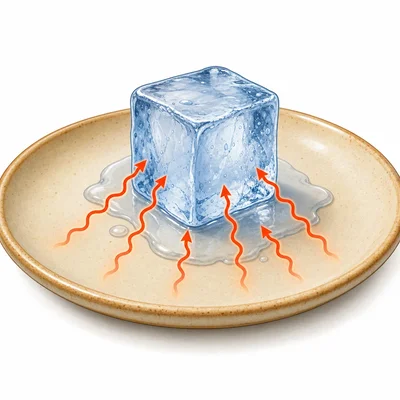
A student places an ice cube on a warm plate. Explain what happens to the ice cube and describe how energy moves during this change.
- 2
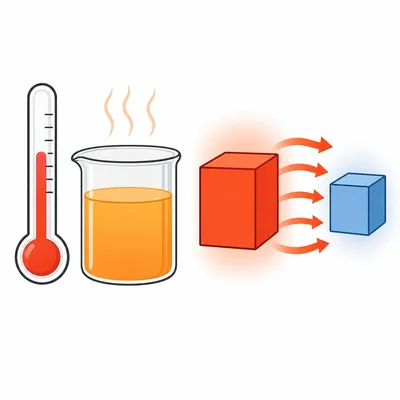
What is the difference between heat and temperature?
- 3
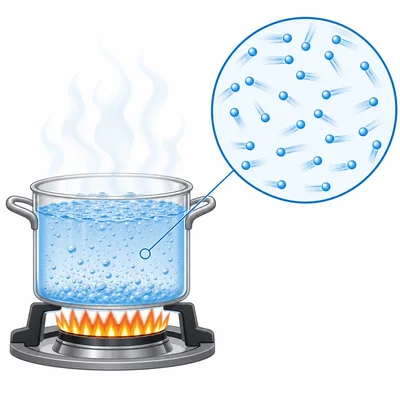
A pot of water is heated on a stove. The water temperature rises from 25 degrees Celsius to 100 degrees Celsius. What happens to the motion of the water particles as the temperature increases?
- 4
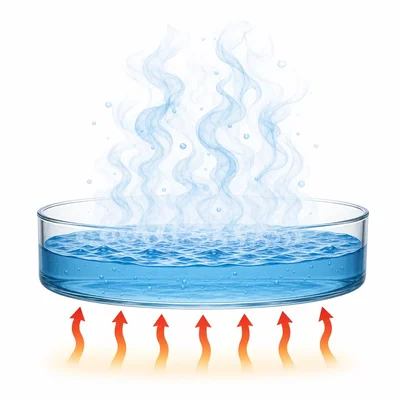
Name the phase change that occurs when liquid water becomes water vapor. Explain whether energy is absorbed or released.
- 5
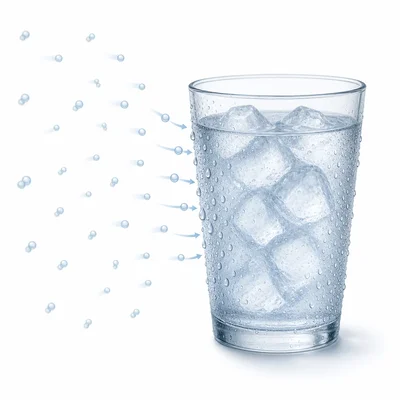
Name the phase change that occurs when water vapor turns into liquid water on the outside of a cold glass. Explain why this happens.
- 6
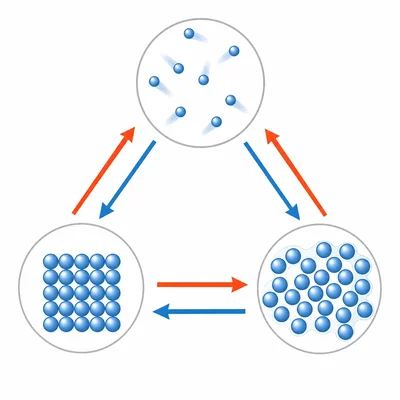
Sort these phase changes into two groups: melting, freezing, condensation, evaporation, sublimation, deposition. Which absorb energy, and which release energy?
- 7
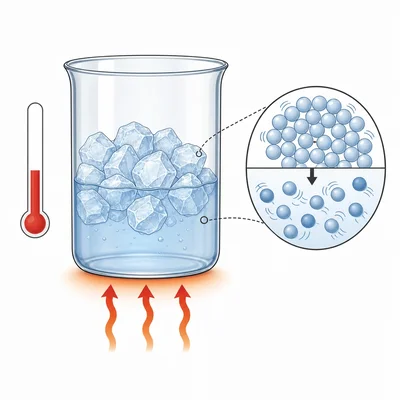
A solid substance is heated, but its temperature stays the same while it melts. Explain why the temperature does not increase during melting.
- 8
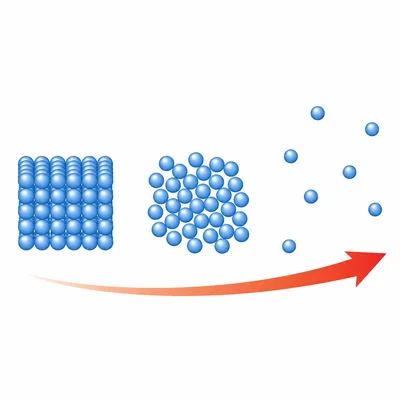
Use the terms solid, liquid, and gas to describe how particle arrangement changes as a substance gains energy.
- 9
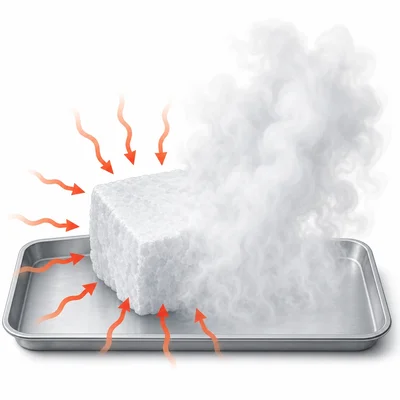
Dry ice is solid carbon dioxide. At room temperature, it changes directly from a solid into a gas. What is this phase change called, and does it absorb or release energy?
- 10
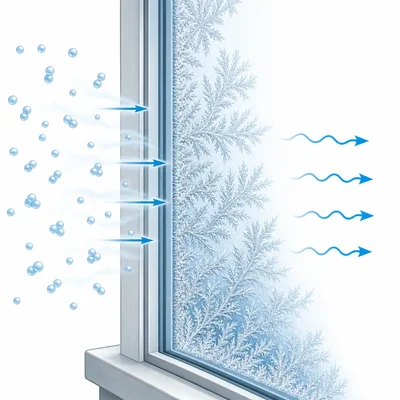
Frost forms on a cold window when water vapor in the air changes directly into ice. What is this phase change called, and does it absorb or release energy?
- 11
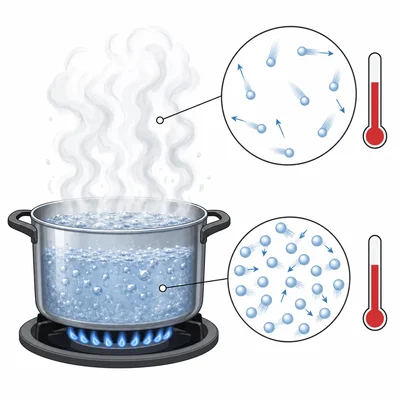
A student says, "Boiling water is hotter than steam because water is liquid and steam is gas." Explain why this statement can be incorrect.
- 12
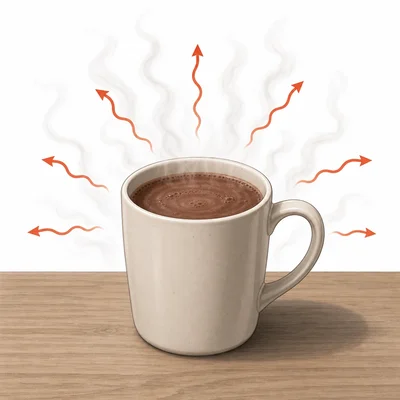
A cup of hot chocolate is left on a table. After 20 minutes, it is cooler. Explain what happened to the thermal energy of the hot chocolate.