Practice identifying mixtures and solutions, comparing concentrations, and explaining saturated, unsaturated, and supersaturated solutions.
Read each problem carefully. Show your work in the space provided and explain your reasoning when asked.
Exploring solutes, solvents, concentration, and saturation
Chemistry - Grade 6-8
- 1
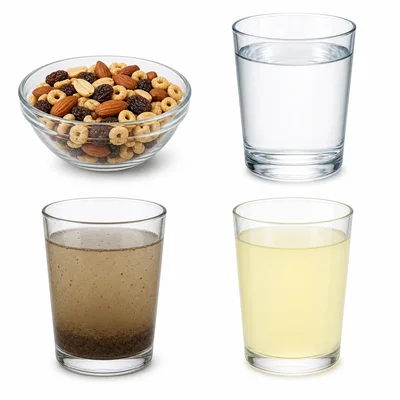
Classify each example as a mixture or a solution: trail mix, salt water, muddy water, and lemonade with all sugar dissolved.
- 2
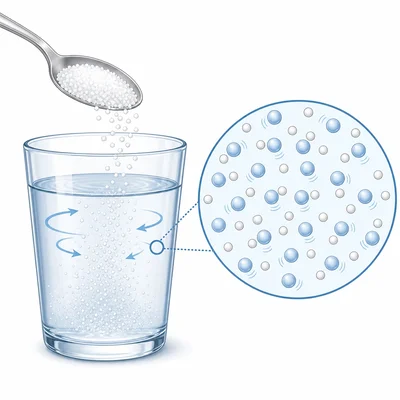
In a cup of sugar water, identify the solute and the solvent.
- 3
A student dissolves 10 grams of salt in 100 milliliters of water. What is the concentration in grams per milliliter?
- 4
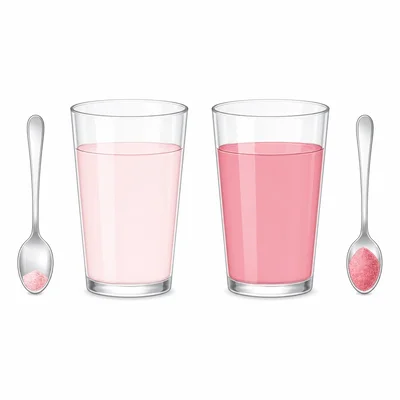
Two cups contain the same amount of water. Cup A has 1 teaspoon of drink mix dissolved in it. Cup B has 3 teaspoons of drink mix dissolved in it. Which cup has the higher concentration? Explain.
- 5
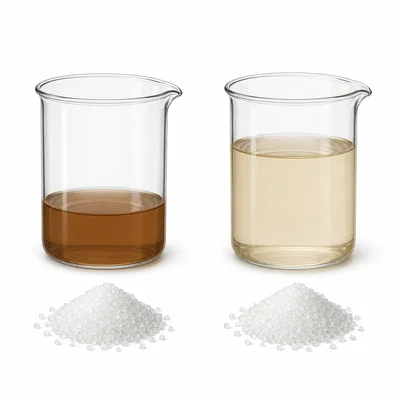
A solution contains 25 grams of sugar dissolved in 250 milliliters of water. A second solution contains 25 grams of sugar dissolved in 500 milliliters of water. Which solution is more dilute? Explain.
- 6
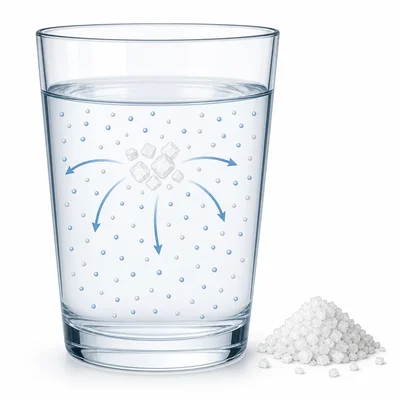
At room temperature, a glass of water can dissolve up to 36 grams of salt. If only 20 grams of salt are dissolved, is the solution saturated or unsaturated? Explain.
- 7
At room temperature, a glass of water can dissolve up to 36 grams of salt. If 36 grams are dissolved and no more salt can dissolve, what type of solution is it?
- 8
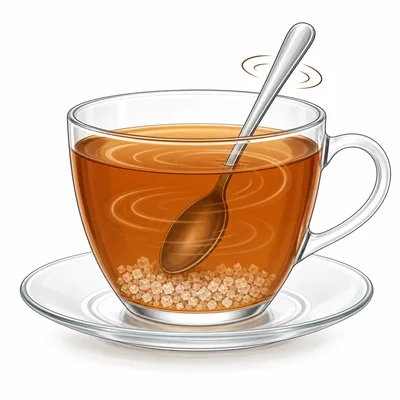
A student adds sugar to tea and sees sugar crystals sitting at the bottom after stirring for a long time. What does this show about the solution?
- 9
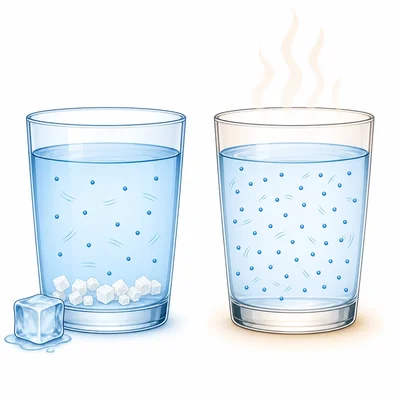
Explain how temperature can affect how much solid solute, such as sugar, dissolves in water.
- 10
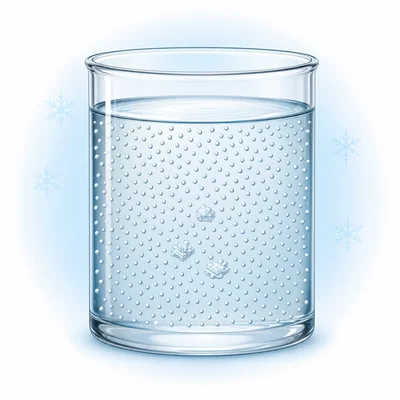
A warm saturated sugar solution is carefully cooled and still contains more dissolved sugar than it normally could at the cooler temperature. What kind of solution is this?
- 11
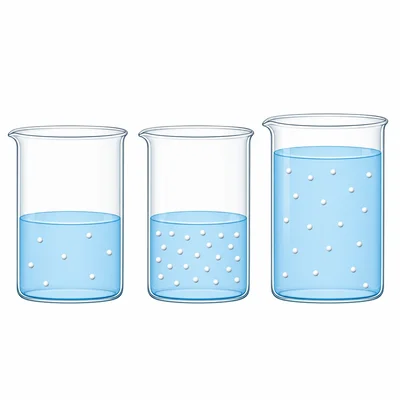
Look at the data: Solution A has 5 grams of salt in 100 milliliters of water. Solution B has 15 grams of salt in 100 milliliters of water. Solution C has 15 grams of salt in 300 milliliters of water. Rank the solutions from most concentrated to least concentrated.
- 12
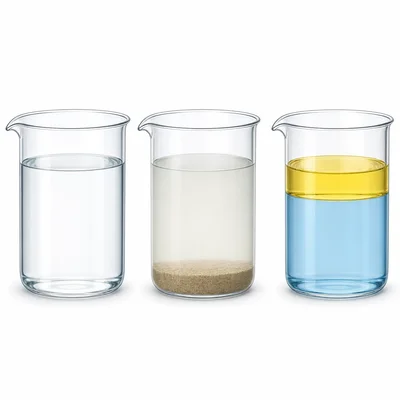
A diagram shows three beakers. Beaker 1 has clear salt water. Beaker 2 has sand and water with sand settled at the bottom. Beaker 3 has oil floating on water. Which beaker contains a solution, and how can you tell?