Practice using particle models to describe states of matter, temperature, energy, and changes between solids, liquids, and gases.
Read each problem carefully. Use particle motion, spacing, and energy in your explanations. Show your work in the space provided.
Explaining solids, liquids, gases, and changes of state with particles
Chemistry - Grade 6-8
- 1
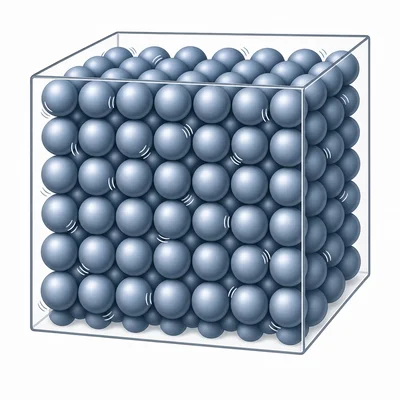
A student draws particles in a solid as tightly packed circles in a fixed pattern. Explain what the particles are doing even though the solid keeps its shape.
- 2
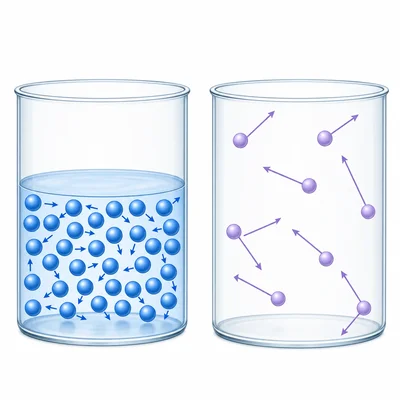
Compare the particle spacing and particle motion in a liquid and a gas.
- 3
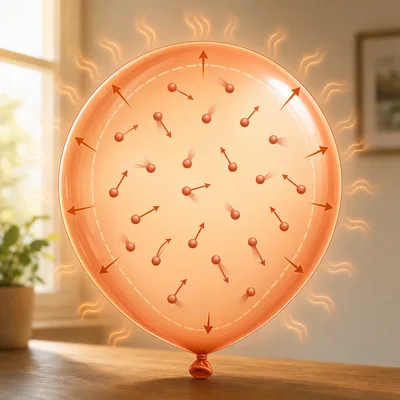
A sealed balloon is placed in a warm room, and the balloon gets slightly larger. Use the particle model to explain why this happens.
- 4
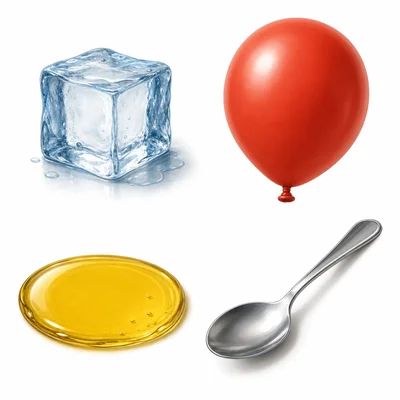
Classify each substance as a solid, liquid, or gas at room temperature: ice cube, helium in a party balloon, cooking oil, and a metal spoon.
- 5
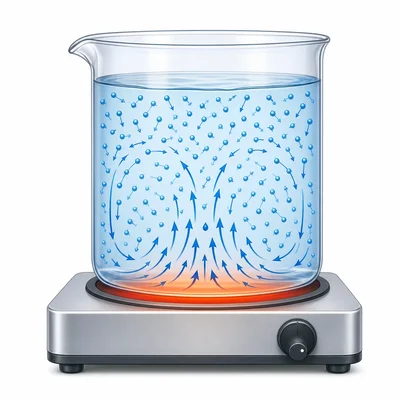
A beaker of water is heated on a hot plate. Describe what happens to the water particles as the temperature rises before boiling begins.
- 6
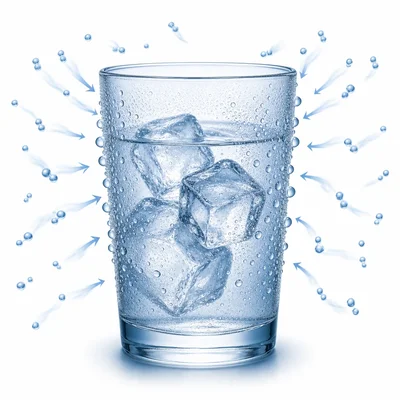
Name the change of state when water vapor cools and forms liquid droplets on the outside of a cold glass. Explain the particle change.
- 7
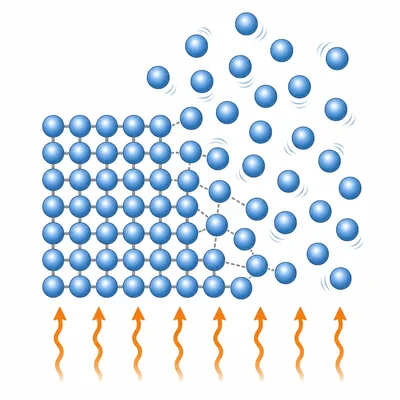
During melting, does the temperature of a pure substance usually keep rising, or does it stay nearly constant until melting is complete? Explain why.
- 8
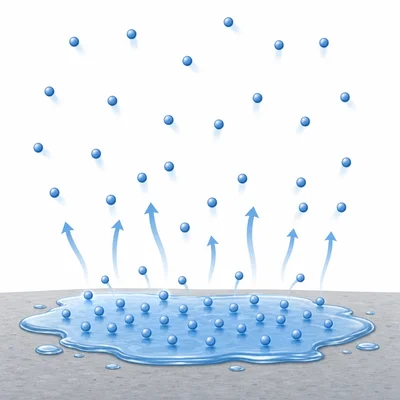
A student says, "When a puddle evaporates, the water disappears and no longer exists." Correct this statement using the particle model.
- 9
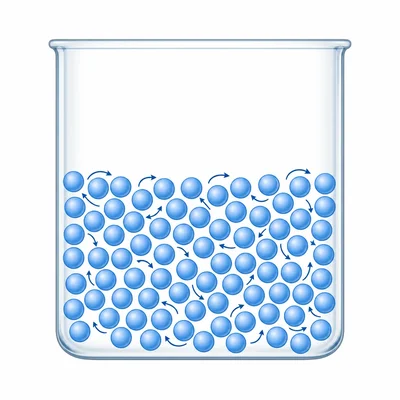
Look at a particle diagram showing particles packed close together but arranged randomly and able to slide. Which state of matter does the diagram represent? Explain your answer.
- 10
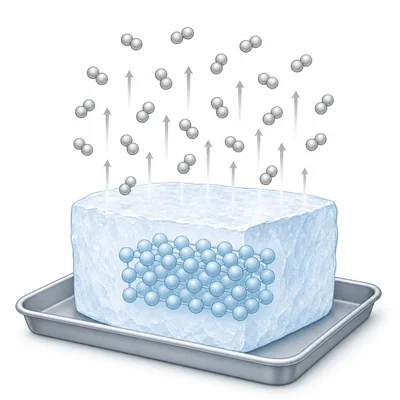
Dry ice is solid carbon dioxide. At room temperature, it changes directly from a solid to a gas without becoming a liquid. Name this change of state and describe the particle energy change.
- 11
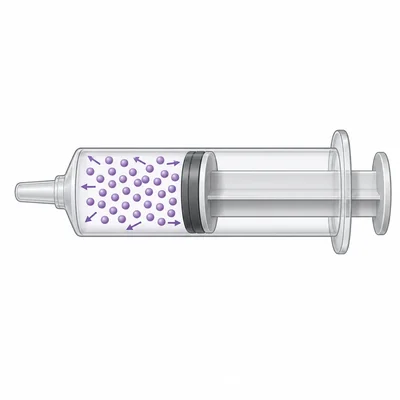
A gas is compressed in a syringe by pushing the plunger down while the tip is sealed. What happens to the spacing between gas particles and the volume of the gas?
- 12
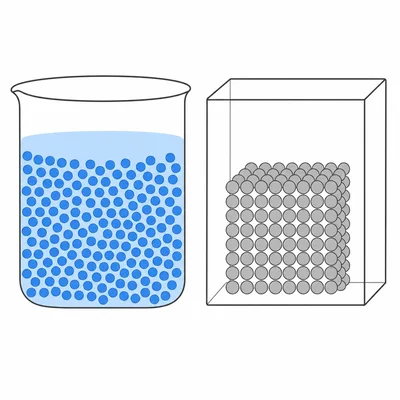
Explain why a liquid takes the shape of its container but a solid usually does not.