Practice identifying OSI model layers, comparing TCP and UDP, and explaining how data moves across a network.
Read each problem carefully. Show your reasoning in the space provided. Use complete sentences when explaining network concepts.
Comparing transport protocols and understanding layered network design
CS - Grade 9-12
- 1
List the seven layers of the OSI model in order from Layer 1 to Layer 7.
- 2
A web browser requests a webpage using HTTPS. Which OSI layer is most directly associated with the web browser's request, and why?
- 3
Explain one major difference between TCP and UDP.
- 4
A video call app needs low delay and can tolerate a small amount of lost data. Should it use TCP or UDP for the live audio and video stream? Explain your choice.
- 5
A file download must arrive exactly the same as it was sent, with no missing bytes. Should it use TCP or UDP? Explain your choice.
- 6
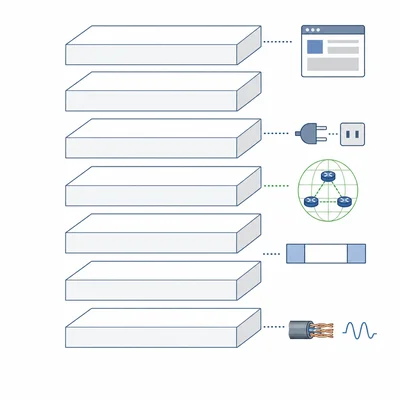
Match each item to the most appropriate OSI layer: Ethernet frame, IP address, TCP port number, and electrical signal on a cable.
- 7
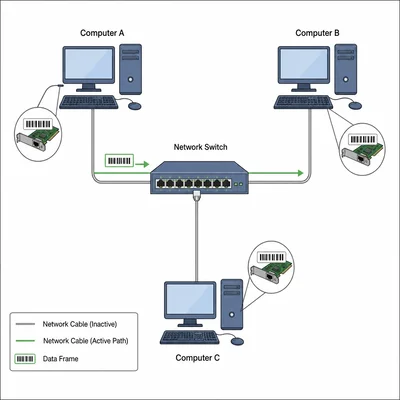
A device uses a MAC address to deliver data on the same local network. Which OSI layer is responsible for this type of addressing?
- 8
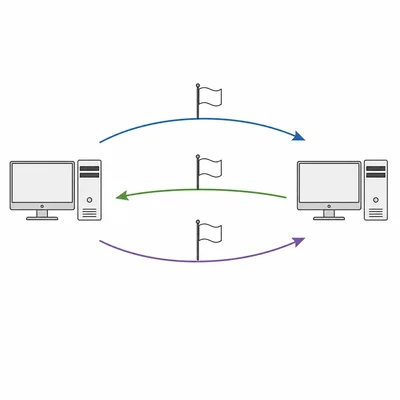
Describe what happens during a TCP three-way handshake. Include the terms SYN, SYN-ACK, and ACK.
- 9
A student says, "UDP is always worse than TCP because it is unreliable." Explain why this statement is not fully correct.
- 10
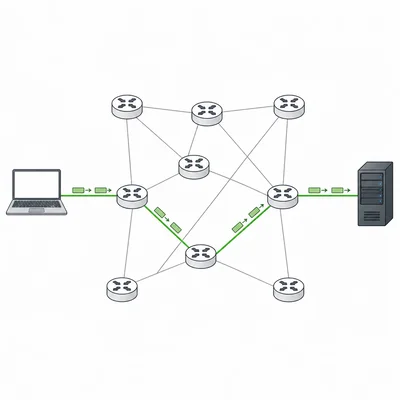
An IP packet travels from your computer to a server across several routers. Which OSI layer is mainly responsible for choosing the path between networks?
- 11
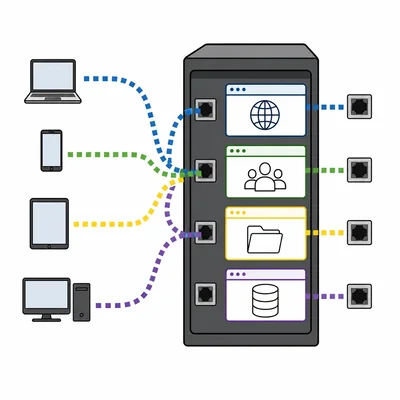
Explain the purpose of port numbers in TCP and UDP communication.
- 12
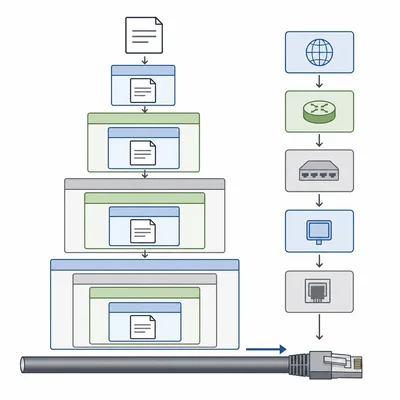
A message is created in an application, then passed down through the OSI layers before being sent over the network. Explain what encapsulation means in this process.