Analyze proposed geoengineering strategies, their possible climate benefits, environmental risks, and social tradeoffs.
Read each problem carefully. Use evidence-based reasoning and complete sentences. Show calculations when needed.
Evaluating climate intervention ideas, benefits, uncertainties, and ethics
Environmental Science - Grade 9-12
- 1
Define geoengineering in the context of climate change. Then name one example of solar radiation management and one example of carbon dioxide removal.
- 2
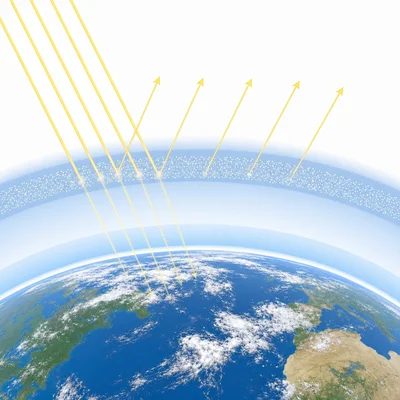
A proposal suggests adding reflective particles to the stratosphere to reduce incoming solar energy. Explain one possible climate benefit and two possible risks of this proposal.
- 3
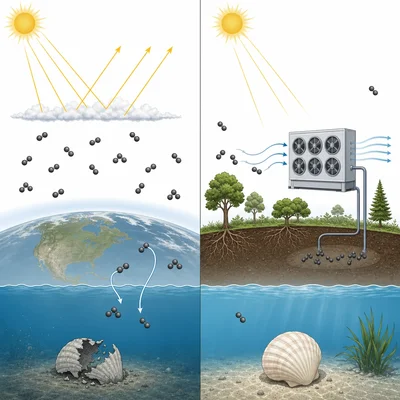
Compare solar radiation management and carbon dioxide removal. Which approach addresses the root cause of ocean acidification, and why?
- 4
A direct air capture facility removes 1,000 metric tons of carbon dioxide per year. A city emits 2,500,000 metric tons of carbon dioxide per year. What percent of the city's annual emissions would this facility remove? Show your calculation.
- 5
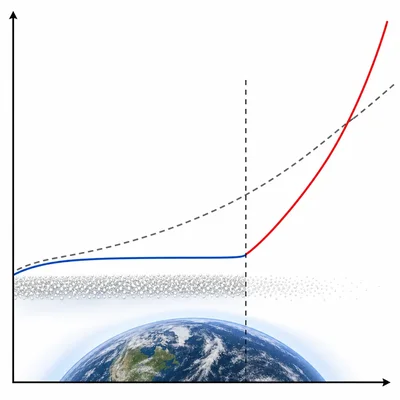
Explain the term termination shock in relation to solar radiation management. Why would this risk matter for ecosystems and human societies?
- 6
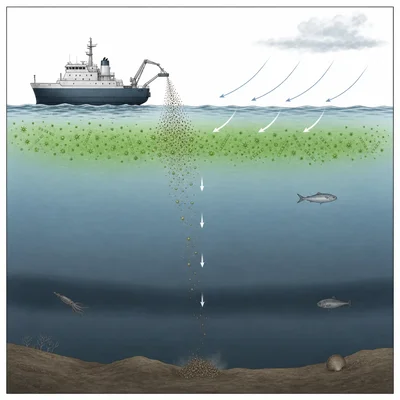
Some scientists have proposed ocean iron fertilization to increase phytoplankton growth and carbon storage. Describe how it is supposed to work and identify two environmental uncertainties or risks.
- 7
A country suffering from extreme heat wants to test stratospheric aerosol injection, but neighboring countries worry about changes to monsoon rainfall. Explain why geoengineering decisions raise issues of environmental justice and international governance.
- 8
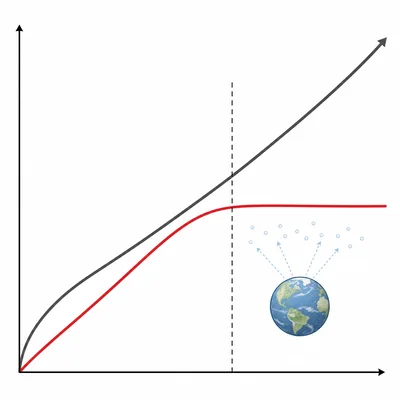
Look at a hypothetical climate graph where greenhouse gas emissions keep rising, solar radiation management begins in 2040, and global temperature stops rising for several decades. Explain why this graph might give a misleading impression if it only shows temperature.
- 9
List three criteria scientists and policymakers should use when evaluating a geoengineering proposal. For each criterion, explain why it matters.
- 10
Write a short evidence-based argument for or against conducting small-scale outdoor geoengineering research. Include at least one possible benefit and one concern.