Practice analyzing renewable energy sources, calculating simple energy values, and evaluating environmental and social tradeoffs.
Read each problem carefully. Show your work when calculations are needed, and explain your reasoning in complete sentences.
Comparing clean energy sources, impacts, and tradeoffs
Environmental Science - Grade 9-12
- 1
Define renewable energy and give three examples of renewable energy sources.
- 2
A school installs solar panels that produce an average of 120 kilowatt-hours of electricity per day. How many kilowatt-hours will the panels produce in 30 days if the average daily production stays the same?
- 3
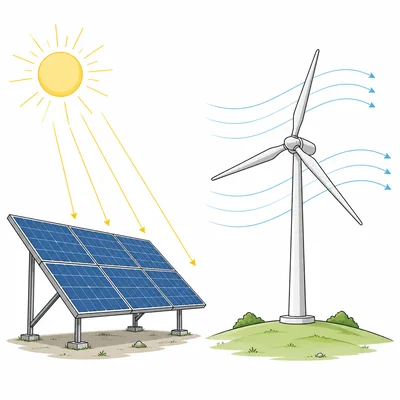
Compare solar photovoltaic energy and wind energy. Describe one advantage and one limitation of each.
- 4
A wind turbine has a rated capacity of 2 megawatts. If it operates at an average capacity factor of 35 percent for 24 hours, how many megawatt-hours of electricity does it produce in one day?
- 5
Explain why renewable energy sources can still have environmental impacts even though they do not burn fossil fuels during operation.
- 6
Look at a proposed energy mix for a town: 40 percent solar, 30 percent wind, 20 percent hydropower, and 10 percent natural gas backup. What percentage of the town's electricity comes from renewable sources?
- 7
Describe the difference between energy efficiency and renewable energy. Give one example of each.
- 8
A home uses 900 kilowatt-hours of electricity in one month. A rooftop solar system provides 60 percent of that electricity. How many kilowatt-hours come from the solar system, and how many must come from other sources?
- 9
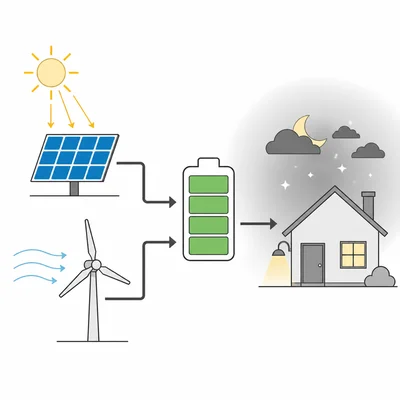
Explain one reason why energy storage, such as batteries or pumped storage hydropower, is important for solar and wind power.
- 10
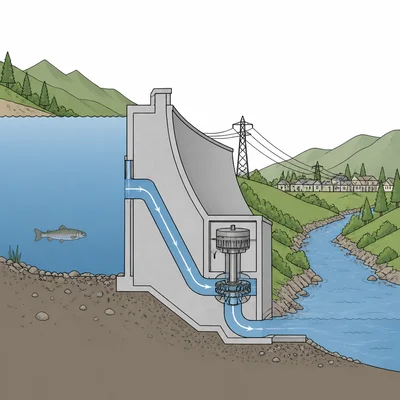
A city is deciding whether to build a large hydropower dam. List two potential benefits and two potential environmental or social concerns.
- 11
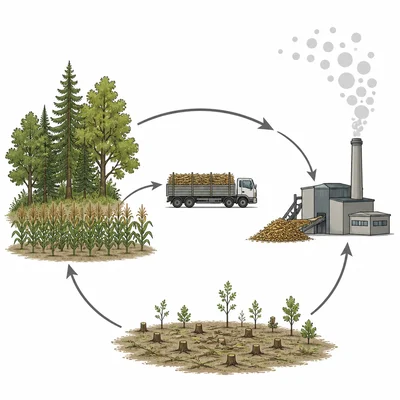
Biomass is sometimes described as renewable, but it is not always carbon neutral. Explain why.
- 12
A community wants to reduce carbon dioxide emissions from electricity. Its coal power plant emits about 1 kilogram of carbon dioxide per kilowatt-hour. If the community replaces 50,000 kilowatt-hours of coal electricity with wind electricity, about how many kilograms of carbon dioxide emissions are avoided?
- 13
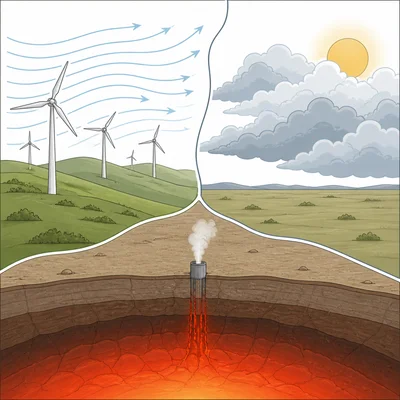
A map shows that one region has strong steady winds, another has frequent cloudy weather, and another has hot underground rock near the surface. Match each region with the renewable energy source that is likely to be most suitable: wind, solar, or geothermal.
- 14
Explain why a renewable energy plan should include considerations of environmental justice.
- 15
The table shows estimated costs for electricity sources: solar at 4 cents per kilowatt-hour, wind at 3 cents per kilowatt-hour, geothermal at 7 cents per kilowatt-hour, and natural gas at 6 cents per kilowatt-hour. Which renewable source listed has the lowest cost, and what other factor besides cost should planners consider before choosing it?