Practice key ideas about cryptocurrency, blockchain, wallets, exchanges, volatility, and risk management.
Read each problem carefully. Show your work when calculations are needed. Use complete sentences for written responses.
Understanding digital assets, risk, and price changes
Financial Literacy - Grade 9-12
- 1
Define cryptocurrency in your own words. Include two features that make it different from traditional money held in a bank account.
- 2
A student says, "Bitcoin is just a file saved on your computer." Explain why this statement is not accurate.
- 3
Match each term with its meaning: blockchain, private key, exchange, wallet. Write one sentence for each match.
- 4
A cryptocurrency price was $2,000 on Monday and $2,500 on Tuesday. Calculate the percent increase from Monday to Tuesday.
- 5
A cryptocurrency price was $80 on Friday and $60 on Saturday. Calculate the percent decrease from Friday to Saturday.
- 6
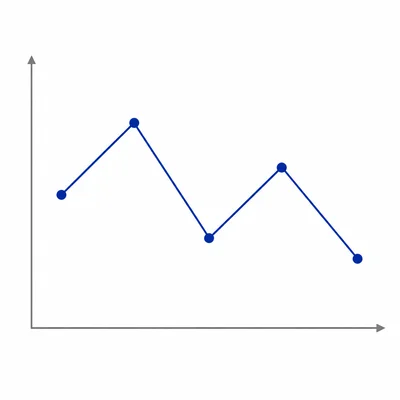
Look at a line graph showing a cryptocurrency that starts at $100, rises to $140, falls to $90, rises to $130, and ends at $70 over five days. Describe what the graph shows about volatility.
- 7
An investor buys $300 worth of a cryptocurrency. One week later, its value falls by 40%. What is the investment worth after the decrease?
- 8
An investor's cryptocurrency holding is worth $180 after a price drop. The next week, it rises by 50%. What is it worth after the increase? Explain why this does not return the investment to $300.
- 9
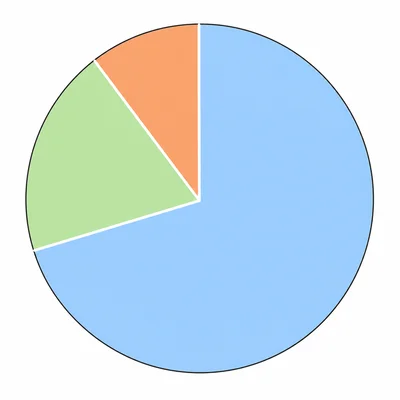
A pie chart shows a student portfolio with 70% in a savings account, 20% in a stock index fund, and 10% in cryptocurrency. Explain one reason a person might limit cryptocurrency to a small part of a portfolio.
- 10
List three risks a person should consider before buying cryptocurrency.
- 11
A table compares two assets. Asset A changes by 1% to 2% most days. Asset B changes by 8% to 15% most days. Which asset is more volatile, and what does that mean for risk?
- 12
Explain why researching a cryptocurrency project is important before investing. Include at least two things a person might research.