Practice choosing, using, and comparing checking and savings accounts in everyday money situations.
Read each problem carefully. Show your work in the space provided. Use complete sentences when explaining your answers.
Compare account types, fees, deposits, withdrawals, and interest
Financial Literacy - Grade 6-8
- 1
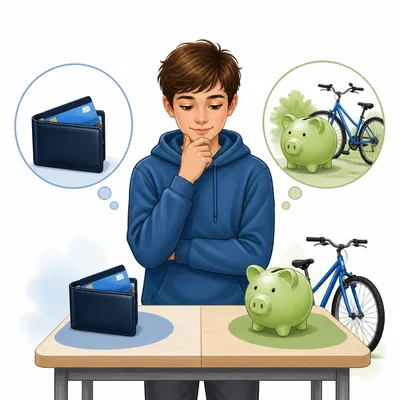
Maya earns $25 for babysitting. She wants to spend $8 this weekend and save the rest for a new bike. Which account would be better for the money she does not plan to spend soon, a checking account or a savings account? Explain your choice.
- 2
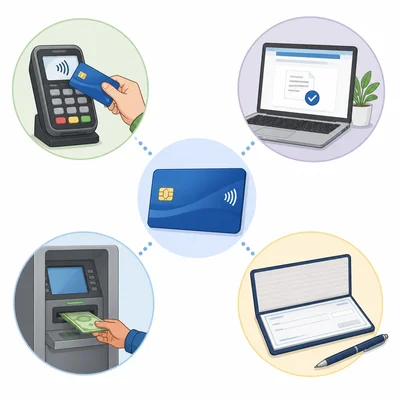
A checking account is often used for everyday spending. List two ways someone might use money from a checking account.
- 3
Look at this account activity: starting balance $120, deposit $40, debit card purchase $18, ATM withdrawal $25. What is the ending balance?
- 4
Jordan has $200 in savings. The bank pays $4 in interest at the end of the year. What is Jordan's new savings balance?
- 5
A bank charges a $5 monthly fee for a checking account unless the account holder keeps at least $100 in the account. Luis has $92 in his checking account at the end of the month. Will he be charged the fee? Explain.
- 6
Sofia has a savings account balance of $350. She deposits $30 each month for 4 months. If there are no withdrawals and no interest is added, what will her balance be after 4 months?
- 7
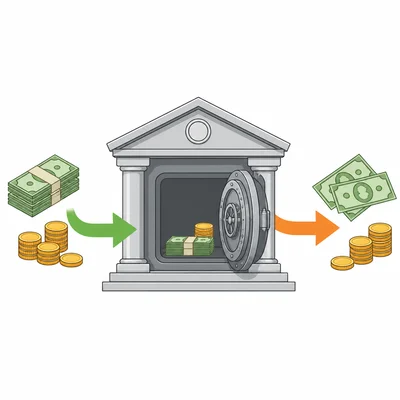
Explain the difference between a deposit and a withdrawal.
- 8
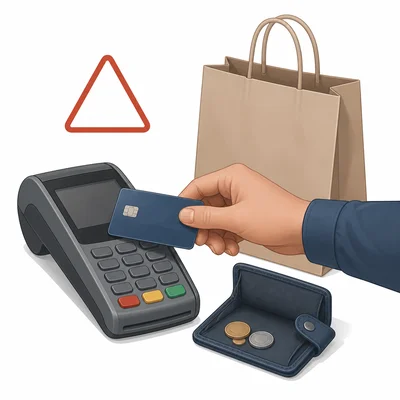
A debit card purchase is made from a checking account. If the account has $60 and the purchase is $72, what problem could happen if the bank allows the purchase to go through?
- 9
Use the account register: Balance $85.00, deposit $20.00, check written for $32.50, debit card purchase $14.75. What is the final balance?
- 10
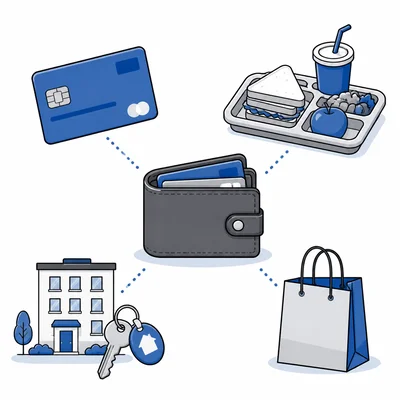
Which account is usually better for paying rent, buying lunch, and making frequent purchases, a checking account or a savings account? Explain why.
- 11

Which account is usually better for building an emergency fund, a checking account or a savings account? Explain why.
- 12
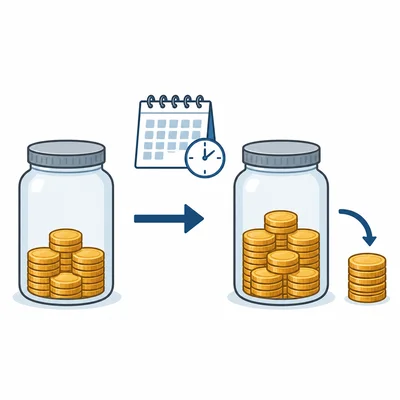
A savings account pays 2% simple interest per year. If Ava has $500 in the account for one year, how much interest will she earn?
- 13
Read the two account options. Account A has no monthly fee but requires online statements. Account B has a $6 monthly fee and paper statements. If Malik is comfortable using online statements, which account costs less over one year? How much less?
- 14
Nina wants to open a bank account. Give two questions she should ask before choosing a checking or savings account.
- 15
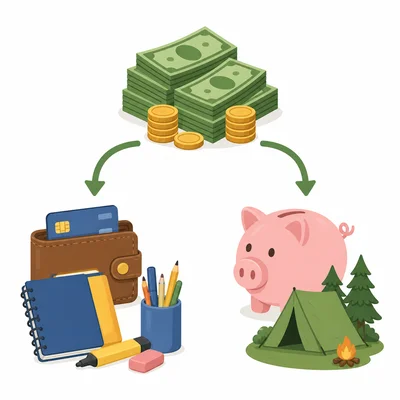
A student has $150. They put $50 in checking for school supplies and snacks, and the rest in savings for a summer camp goal. How much goes into savings, and why is this a smart plan?