Practice comparing college costs, calculating net price, and understanding financial aid options such as grants, scholarships, loans, and work-study.
Read each problem carefully. Show your calculations when needed and explain your reasoning in complete sentences.
Understanding tuition, aid, loans, and true college costs
Financial Literacy - Grade 9-12
- 1

A college lists tuition and fees as $14,000 per year, housing and meals as $11,500, books and supplies as $1,200, transportation as $900, and personal expenses as $1,600. What is the total estimated cost of attendance for one year?
- 2
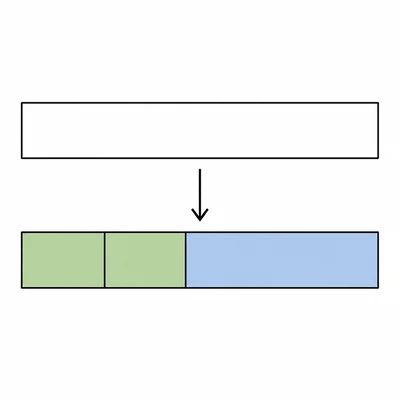
A student receives a $6,000 scholarship and a $4,500 grant. The college's cost of attendance is $28,000 for one year. What is the student's net price before loans or work-study?
- 3
Explain the difference between a grant and a student loan.
- 4
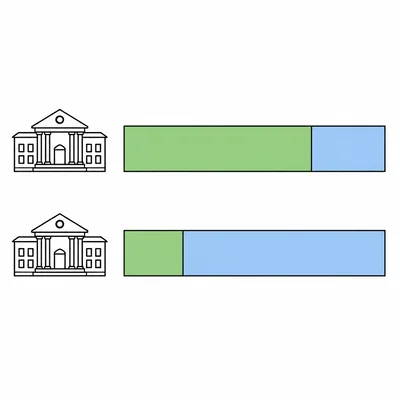
Two colleges have the same sticker price of $35,000 per year. College A offers $18,000 in grants and scholarships. College B offers $10,000 in grants and scholarships. Which college has the lower net price, and by how much?
- 5
A student is offered a federal work-study award of $2,000. Explain why this amount may not be applied to the bill in the same way as a grant.
- 6

A student borrows $5,500 for the first year of college at a 5% annual simple interest rate. If interest accrues for one year, how much interest is added?
- 7
A financial aid award letter lists a $7,500 federal loan as part of the aid package. Why should a student be careful when comparing this offer to an offer with more grants and scholarships?
- 8

College X has a net price of $16,000 per year. College Y has a net price of $19,500 per year. If a student attends for 4 years and costs stay the same, how much more would College Y cost than College X?
- 9

A student has saved $3,200 for college. Their family can contribute $2,500 for the year. The student's net price is $12,000. How much remains to be covered by additional aid, work, or loans?
- 10

Look at this aid package: $9,000 grant, $2,000 scholarship, $3,500 subsidized loan, $2,000 unsubsidized loan, and $1,500 work-study. What is the total amount of gift aid in the package?
- 11
Explain why students should consider graduation rates, major availability, and living costs in addition to tuition when choosing a college.
- 12

A student compares two ways to cover a $4,000 gap. Option 1 is a scholarship for $4,000. Option 2 is a loan for $4,000 at 6% annual simple interest for 3 years. How much more would the loan cost than the scholarship after 3 years of interest?