Practice the basics of retirement accounts, including 401(k) plans, traditional and Roth IRAs, employer matching, tax advantages, vesting, and compound growth.
Read each problem carefully. Show your calculations when needed and explain your reasoning in complete sentences.
Understanding workplace plans, IRAs, taxes, matching, and long-term growth
Financial Literacy - Grade 9-12
- 1
Define a 401(k) retirement account in your own words. Include who usually offers it and why workers use it.
- 2
Define an IRA in your own words. Explain what the letters IRA stand for and how it is different from a 401(k).
- 3
Maya earns $48,000 per year and contributes 6% of her salary to her 401(k). How much does she contribute in one year?
- 4
An employer matches 50% of an employee's 401(k) contributions up to 6% of salary. Leo earns $60,000 and contributes 6% of his salary. How much does Leo contribute, how much does the employer contribute, and what is the total yearly contribution?
- 5
Nia earns $42,000 per year. Her company matches 100% of her 401(k) contributions up to 4% of salary. If Nia contributes only 2% of her salary, how much employer matching money does she receive? How much matching money would she receive if she contributed 4%?
- 6
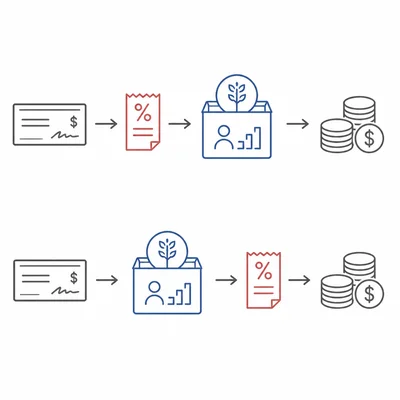
Explain the difference between a traditional retirement account and a Roth retirement account in terms of when taxes are usually paid.
- 7
A student sees this statement: Contributions to a traditional 401(k) can lower taxable income for the current year. Explain what this means using a simple example.
- 8
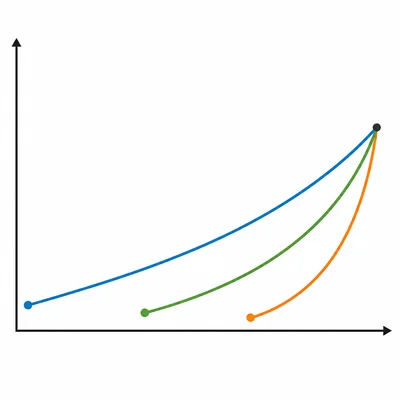
The chart shows three savers who invest the same amount each month but start at different ages. Explain why starting earlier can make such a large difference by retirement.
- 9
Jordan invests $100 per month in an IRA. Write an expression for how much Jordan contributes in 1 year and calculate the total. Then calculate how much Jordan contributes in 10 years, not including investment growth.
- 10
A retirement account balance is $5,000. It earns a 6% return for one year, and no new money is added. What is the new balance at the end of the year?
- 11
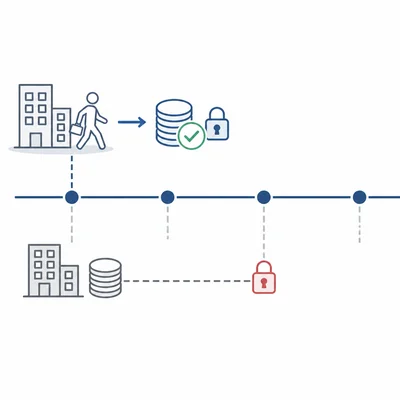
Read the scenario: Sam leaves a job after one year. Sam contributed $2,000 to a 401(k), and the employer contributed $1,000. The employer contributions vest after three years. Explain what money Sam definitely keeps and what money Sam might lose.
- 12
Choose the better explanation: A person should treat a retirement account like a regular checking account, or a person should usually leave retirement money invested for the long term. Explain your choice and include one possible consequence of early withdrawal.