Explore what makes scientific knowledge reliable by examining evidence, testing, peer review, bias, replication, and the limits of certainty.
Read each problem carefully. Answer in complete sentences and support your reasoning with examples when appropriate.
Evaluating evidence, methods, and trust in scientific knowledge
Philosophy - Grade 9-12
- 1
In your own words, explain what it means for knowledge to be reliable. Then give one example of reliable knowledge and one example of unreliable knowledge.
- 2
A student says, "I know this energy drink improves memory because I drank it before a test and got a high score." Explain why this is not enough evidence to make a reliable scientific claim.
- 3
Define the difference between observation and inference. Give one scientific example of each.
- 4
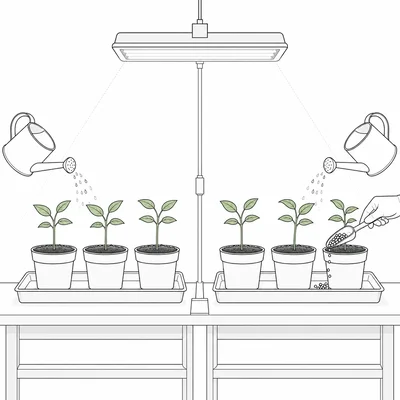
A researcher tests whether a fertilizer helps plants grow. One group of plants gets fertilizer, and another group does not. Both groups receive the same water, light, and soil. Explain why controlling variables matters for reliable knowledge.
- 5
Explain why replication is important in science. Use an example in your answer.
- 6
A study is funded by a company that sells the product being tested. Does this automatically mean the study is false? Explain what a careful thinker should consider.
- 7
Describe the role of peer review in making scientific knowledge more reliable. Also explain one limitation of peer review.
- 8
Look at this claim: "Scientists once changed their minds about the cause of a disease, so science cannot be trusted." Explain why this argument misunderstands science.
- 9
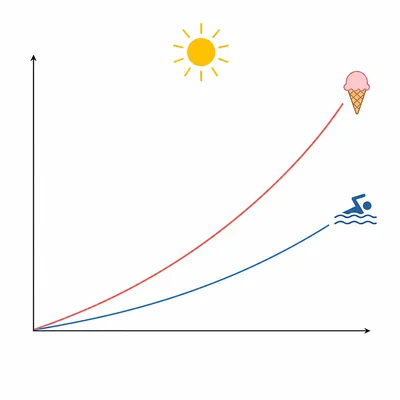
A graph shows that ice cream sales and drowning incidents both increase during summer months. Explain why correlation alone does not prove causation.
- 10
Compare skepticism and cynicism. Which attitude is more useful for evaluating scientific claims, and why?
- 11
A website claims that a new treatment cures a disease, but it provides no data, no description of methods, and only personal testimonials. Identify at least three reasons this claim is not yet reliable.
- 12
Create a short checklist of five questions you could ask to judge whether a scientific claim is reliable.